

intro
The Terroir and the Method
The Wines: Tasting, Serving and Matching

01Territory
02People
03Places
A Jaunt through the Lands of Alta Langa
A Jaunt through the Lands of Alta Langa
From an essay byMauro Carbone
Introduction
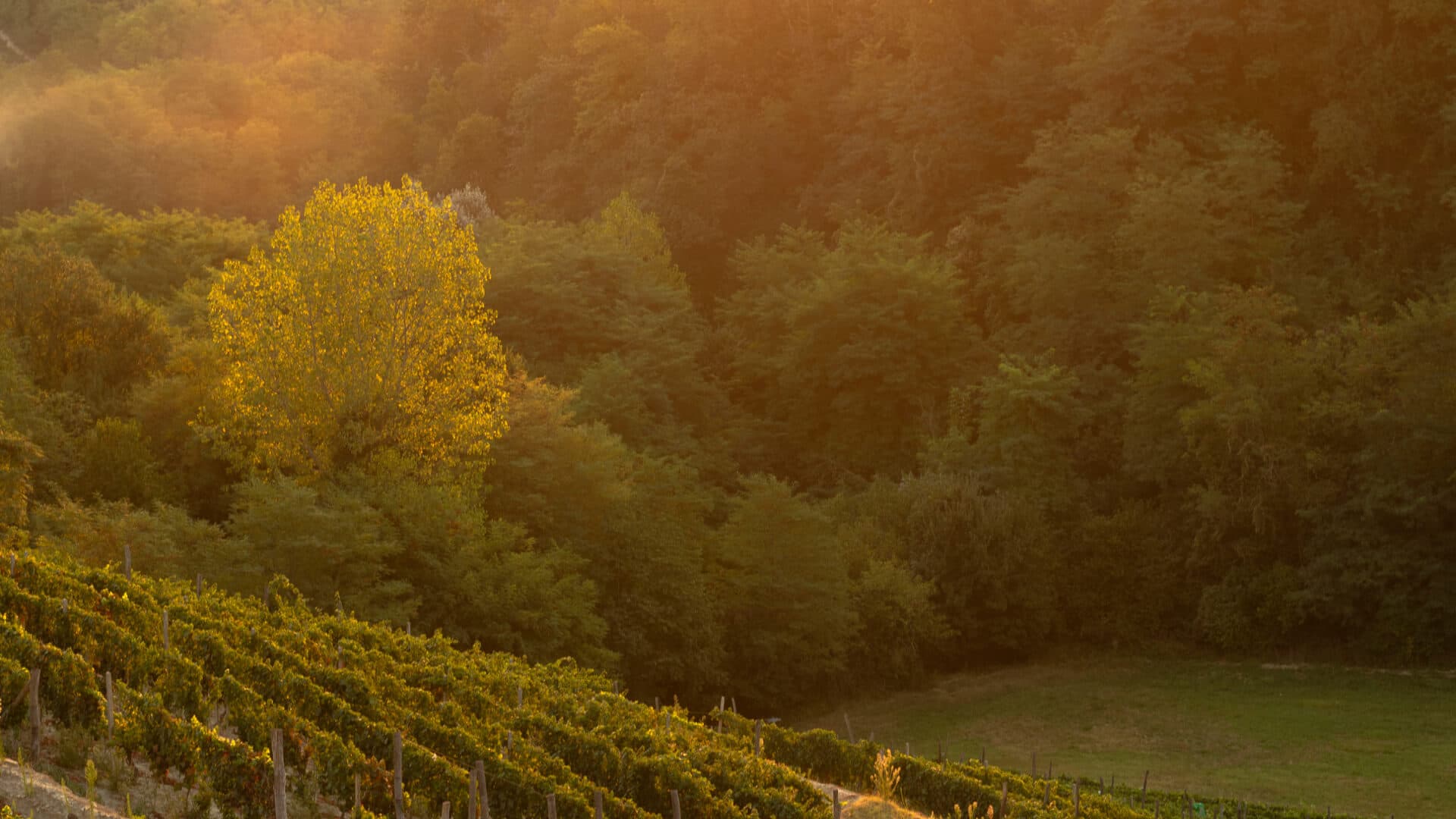
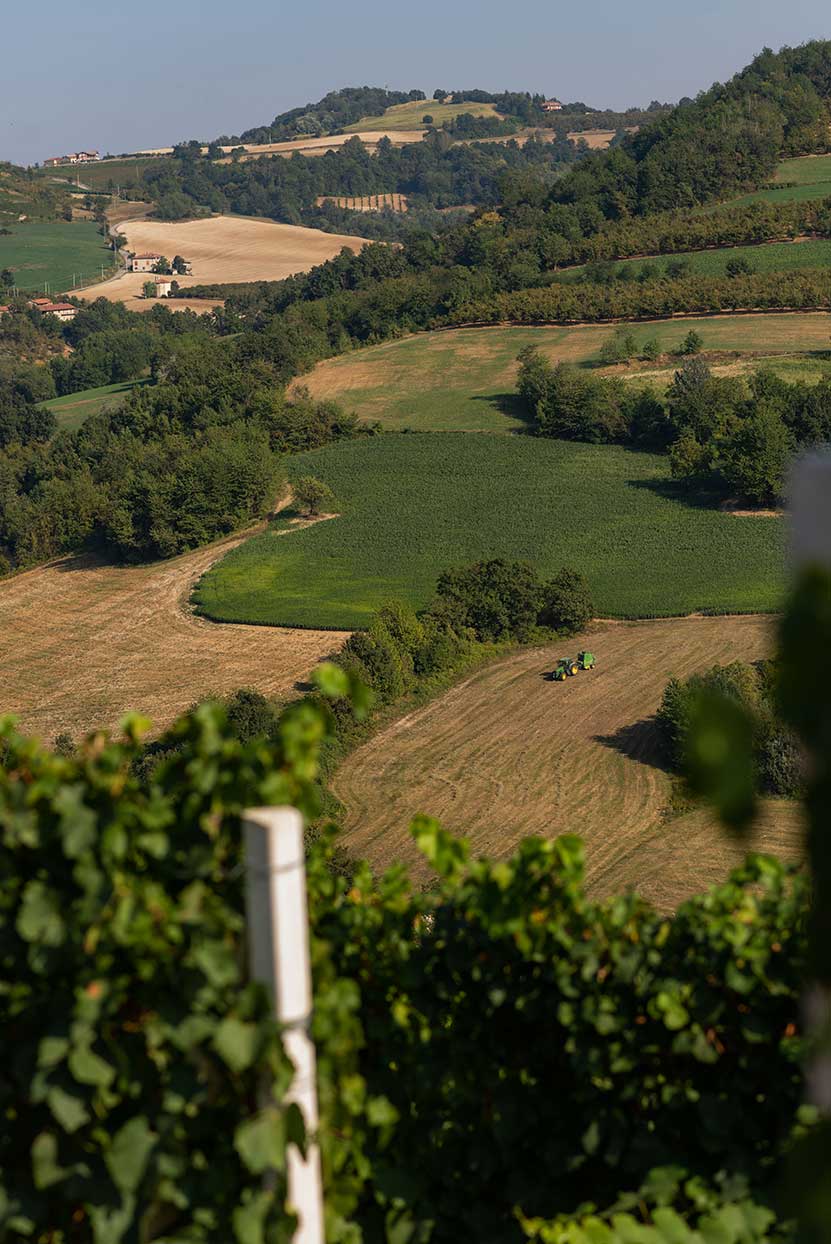
Alta Langa is a lovely place to get lost. First of all, it’s better to think in terms of valleys, which are the unit of measure that makes sense of the terrain of Alta Langa. Then you find out where the vineyards are, because here you can see and feel biodiversity in action.
You notice right off that Alta Langa grapes do not come from lands afflicted by monoculture, but are part of a variegated mix of fields of crops and pasture land, which means cheeses to be discovered at micro-dairies, to personalize every tasting. And then there are the people. Real people.
You can hear it when dialect is spoken: a dialect that changes every ten kilometers, as if medieval trails and boundaries had remained unaltered. You go into a tavern and you eat what comes out of the kitchen, without ordering. You hike up the bricchi (no one here has ever called them hills) and enjoy a series of spectacular views, each with an architectural element that marks the horizon.
Alta Langa encourages a different way of traveling, one where the destination may change at any moment, because even a farmer’s gaze, a fresh robiola sold by a rough-handed shepherd, a stop in a tavern to sneak a peek at a table of old men playing cards… all of these can become destinations. You just have to slow down, look around you and seize the moment. So then, off we go, up and down the bricchi, where Alta Langa DOCG is born.
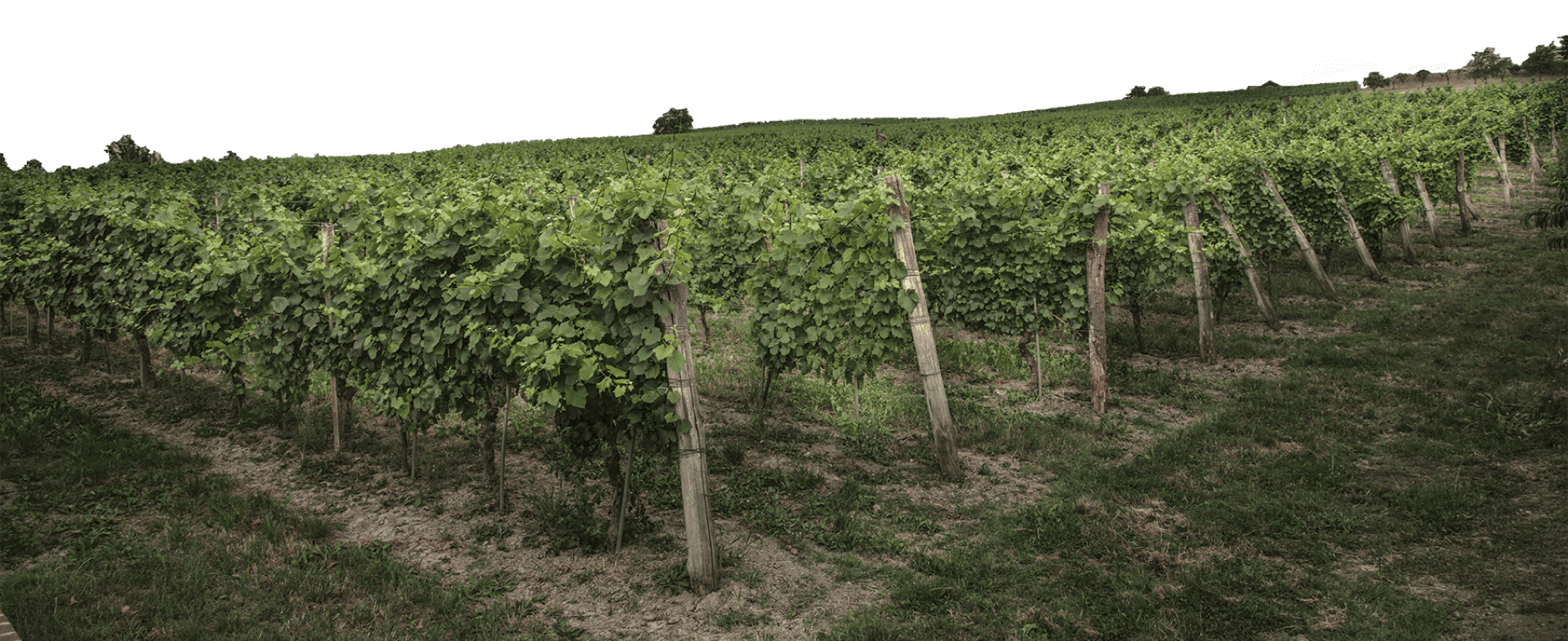
The urge to travel. Ridges, valleys, villages, panoramas. That’s all there is, and that’s just fine.
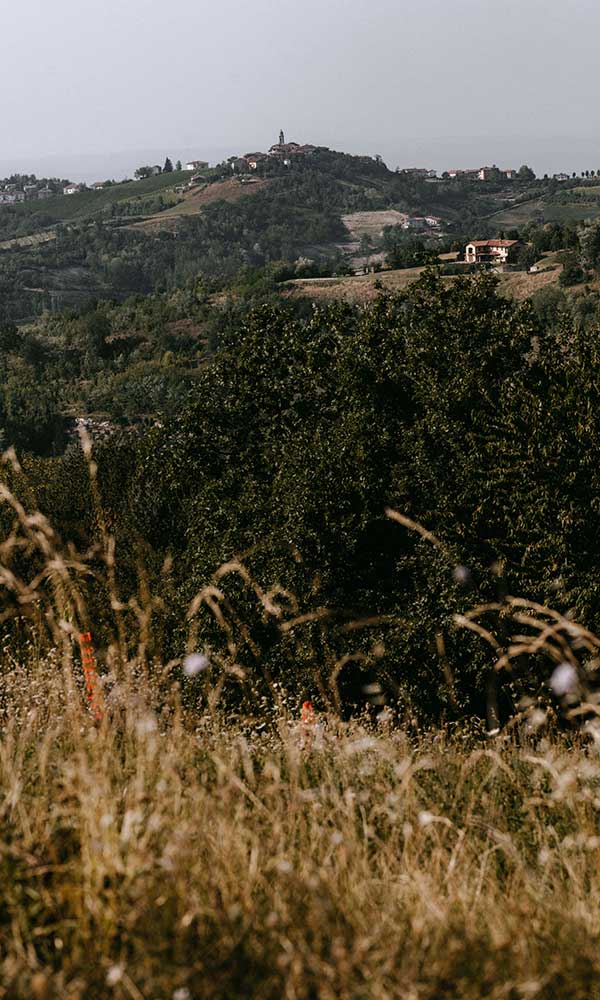
The turns are a natural feature of the landscape: they have been there for too many centuries to be insulted by new viaducts and tunnels. Without the twist and turns, travel times would be too short and speeds would be too high. Most of all, there would not be the thrill of a new perspective at every turn of the wheel: hurray for turns and steep climbs.
The terraced landscapes are a must-see. It is incredible to think of how many stones were dug up, carried and aligned to make this infinite series of drystone walls. Or imagine the technical expertise which, without any mechanical means whatsoever, molded the shape of entire valleys. The woods have not entirely reclaimed the fruit of their labor, which lasted for centuries. The landscape is worth the trip by itself, maybe with a stop in one of the many huts, which everyone has always called ciabot, to enjoy the view and ask oneself who in the world had built these places and sheltered in them when they took breaks from their work in the fields.
Roll down the car window, stop in the most exposed spots and savor the wind. It comes from the southwest, full of salinity and the scent of the sea, moist and warm. Here they call the wind Marin, or from the sea. It is more than just a breeze: it’s an enveloping sensation, an aroma that penetrates the food and wine, it’s the proof that you have reached the hills of southern Piedmont, where Alta Langa grapes find their favorite habitat. Marìn also brings low-lying, swiftly moving clouds and banks of fog that suddenly gather around you, turning the landscape white in a second.
And then there are the works of man: medieval castles, lookout towers, parish churches and frescoed chapels, up there in the middle of nowhere, testimonials of a civilization that has never disappeared, just moved a little ways off, leaving behind a few sentinels to watch you as you climb up to the tops of the hills.
Earth, Stone, Water (scarce)
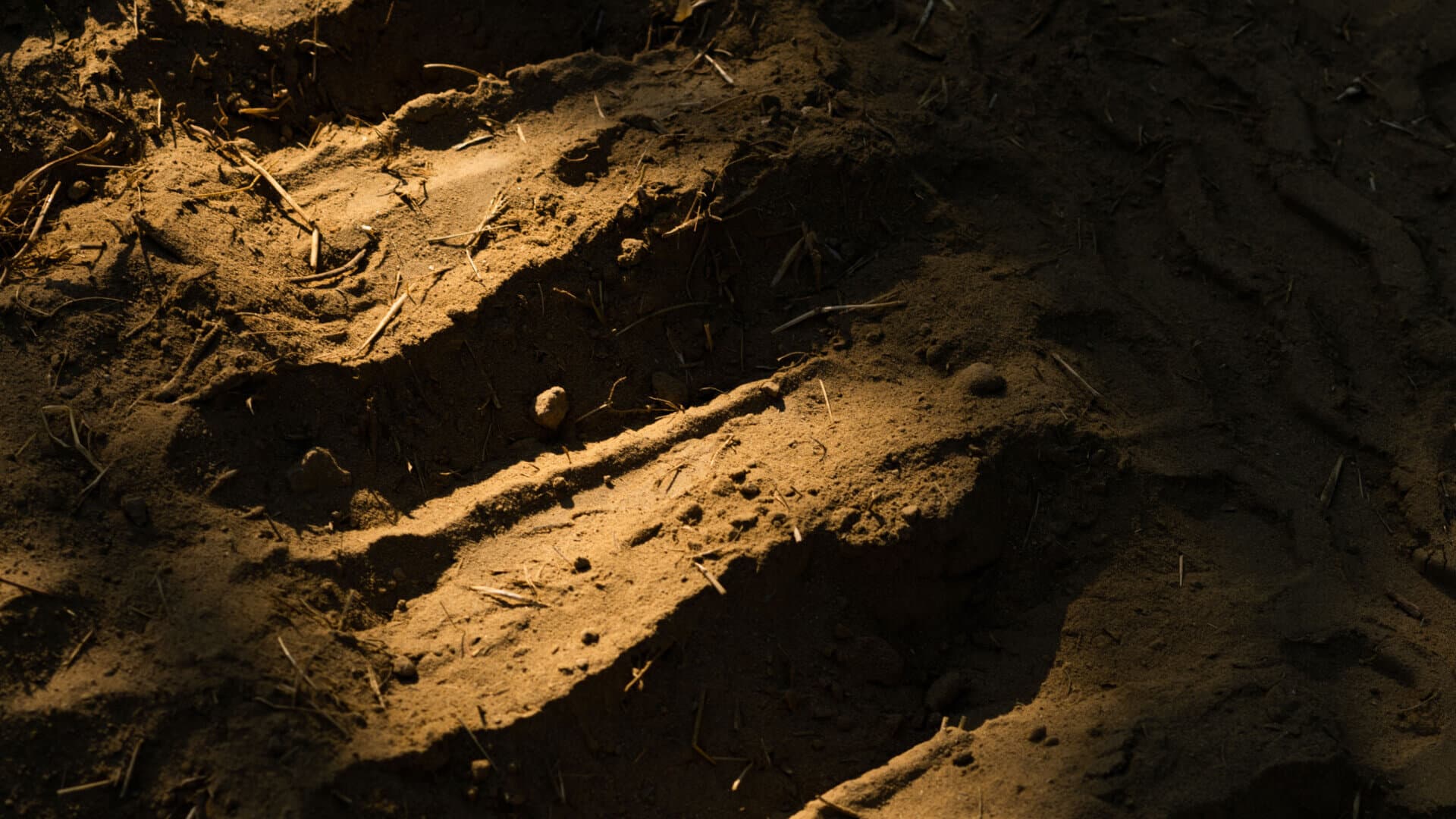
It all began by “facendo passare”. For non-natives, this Piedmontese expression means to dig down into the ground about a meter and a half (five feet or so), naturally all by hand, and turn over the ground before planting a vineyard. That renews the soil, bringing the part richest in nutrients up to the surface and breaking it up. This maneuver also turns up lots of sandstone rocks, which are removed from the fields, and which we can admire as they interweave in a majestic symphony of rural architecture: the stone terraces and the old farmsteads, with their lovely exposed stone walls.
Working the soil also means cutting down trees, but here the woods have not been entirely eliminated. Instead, it has meant creating sunlit meadows and clearings bounded by the groves of trees that have always grown along the creeks and on the ample areas of the hillsides that are unsuitable for cultivation.
A harmonious and extraordinarily sustainable mix: vast areas of intense natural greenery and woods that yield extraordinary mushrooms alternating with cultivated meadows, fields of crops and orchards.
It is a welcome, heartwarming homecoming: the grapevines that were once here and had disappeared in the years of the great emigration are back. Grapevines must be tended with care, you can’t do it in your spare time, so vineyards are tended where they make sense economically. For too long a time that was not the case, but now, on the wave of the high-end spumante boom and climate change that makes even the higher elevations cultivatable, much is changing. Including the landscape, which has in recent years seen an increase in rows of grapevines and the geometric patchwork typical of viticultural lands.
The calanchi, or gullies, are great deposits of marl that are most common in the Bormida di Spigno valley. They form a lunar landscape, nearly devoid of vegetation, with huge grey dunes that give the area a wild and harsh appearance.
The Langhe is still populated and productive thanks to the prodigious infrastructure of the Langhe aqueduct, which brings water from the mountains around Limone Piemonte, a hundred kilometers away, all the way down valley.
Actually, there are rivers, too, but they are mostly useful for orienting oneself. Going from west to east, the first is the Tanaro. It is the largest, and also the longest of them all, touching on the main towns of southern Piedmont and dividing the Langhe from the Cuneo plains and Roero before splitting Monferrato in half.
Just beyond the Tanaro there are the two Bormida valleys – Millesimo and Spigno – that come together at Bistagno and continue on to Acqui Terme and Alessandria. This is the wildest part of the Alta Langa production area, along with Valle Uzzone, formed by a short torrent that is almost always dry and that marks the border with Liguria until Cortemilia.
The Belbo flows down between the Bormida and the Tanaro, through steep slopes that in the first few kilometers are carpeted with meadows and woods, while in mid valley the land is more open and covered by vast stretches of vineyards.
Two torrents descend from the Apennines around Alessandria to become tributaries of the Bormida: the Erro, which cuts through the hills from Sassello towards Acqui Terme, and the Orba, which runs near Ovada and borders on the Alta Langa production area.
The Bormida valleys were the heart of the region’s medieval civilization, when the Del Carretto family, feudal lords, controlled the roads the merchants’ wagons used and collected protection money in exchange for safe passage. It is the area richest in medieval art, towers and castles, and bridges with a historic past but still evocative today.
The People of Alta Langa
If you want to get to know the people of Alta Langa, go to a fistball match. The fistball court is a stadium, but it is also the agora of these hills, where local people have always played streetball (pantalera), throwing the ball off a downward-slanted roof.
The fistball court or the tavern: that’s where you’ll find the people of Alta Langa.
A down-to-earth place is easily recognized, because it is not built to satisfy the demanding palates of visiting gourmands, but to meet people’s basic needs: eating good, nutritious food, especially if one is traveling, and socializing with one’s peers in a comfortable setting.
The tavern is the birthplace of many an idiomatic expression, a place where knowledge is passed on orally, where a wealth of gastronomic expertise is handed down from generation to generation by extraordinary women who have fine-tuned their cooking talents preparing delicious dishes from products grown, gathered and raised a stone’s throw from the wood-burning stove.
The other crucial function of the tavern was that of shaping popular opinion. We would not be drinking Alta Langa if in this area, in the eighties, they had not said ‘enough’ to ACNA, the chemical company that for a century poisoned the Bormida valley, laying waste to lives and farms, people and traditions.
The tavern is this, too: the place where you can check out what is going on at the moment, see what’s in the air and maybe hear a story you’ll remember for a long time.
But what do the men and women of Alta Langa do, when they’re not working in the vineyards?
First of all, hazelnuts: round, smooth, three-lobed and above all delicious. They are even delicious raw, but after being shelled and toasted their aroma is unforgettable. They make the many sweets they are used in irresistible. Varietal, soil and microclimate make up the winning formula of a nut coveted by the best pastry chefs and transformed by small growers into creams, cakes and cookies to take home as souvenirs.
It would be a shame to leave without tasting another of this area’s delicacies: robiola cheese. There are various versions, but the best-known brand is “Roccaverano DOP”, made from 100% goat’s milk and with an extraordinary aroma, an explosion of scents that changes from one day to the next and from one pasture to another.
But robiola is also worth the trip because you get to know the people who milk twice a day, who make cheese before sundown every day, who walk the fields and meadows every day, on the lookout for the wildflowers that will characterize the cheese made from the milk of the animals that graze on them.
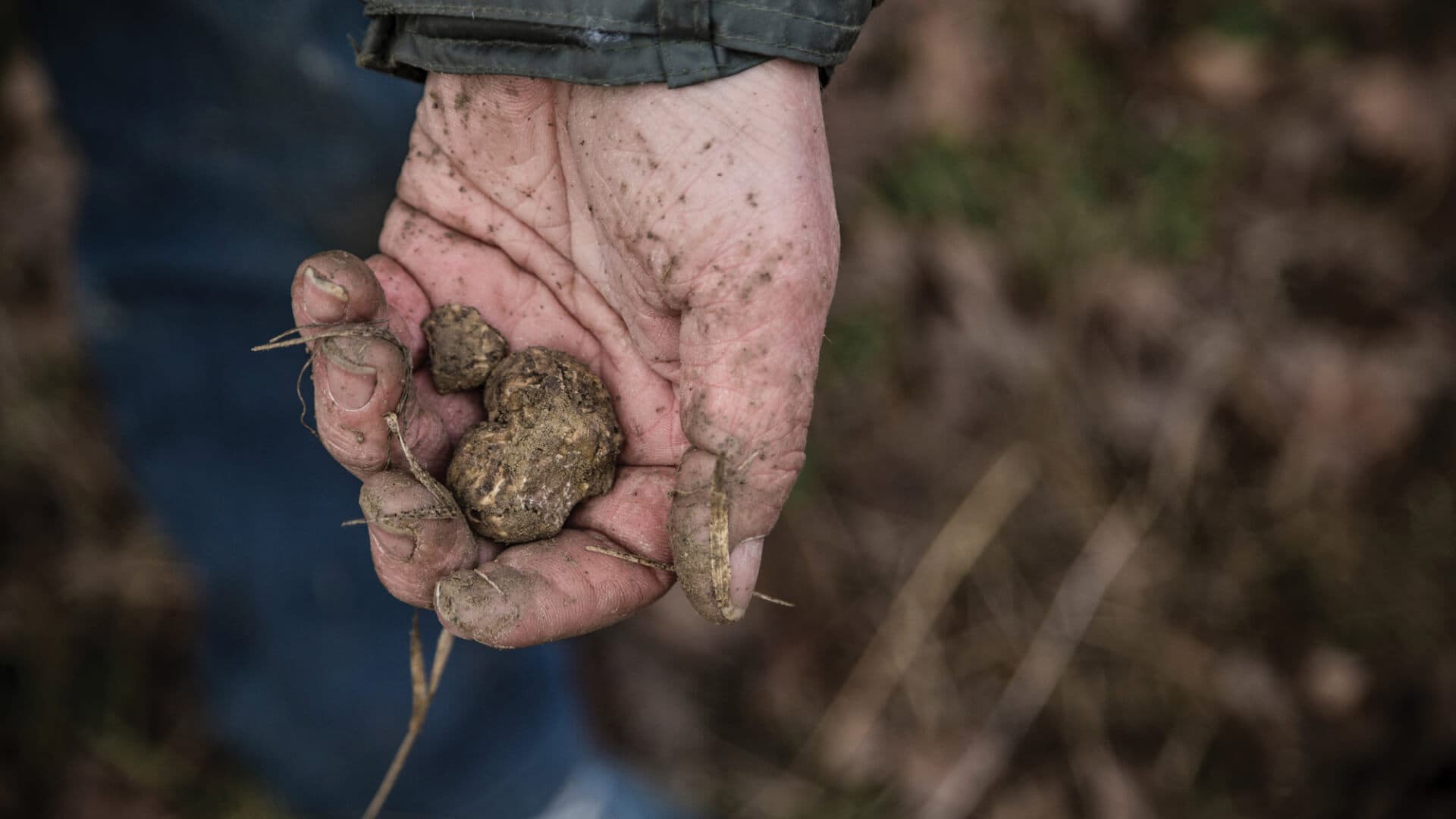
Between a vineyard and a planted field, there are always a handful of trees. Hard to say whether they could host truffles, only the experts know.
It is not hard to find the scent of their harvest: in autumn, every restaurant, farmstead and tavern has truffles, delivered at sunrise by the truffle hunters on their way home from the night’s wanderings.

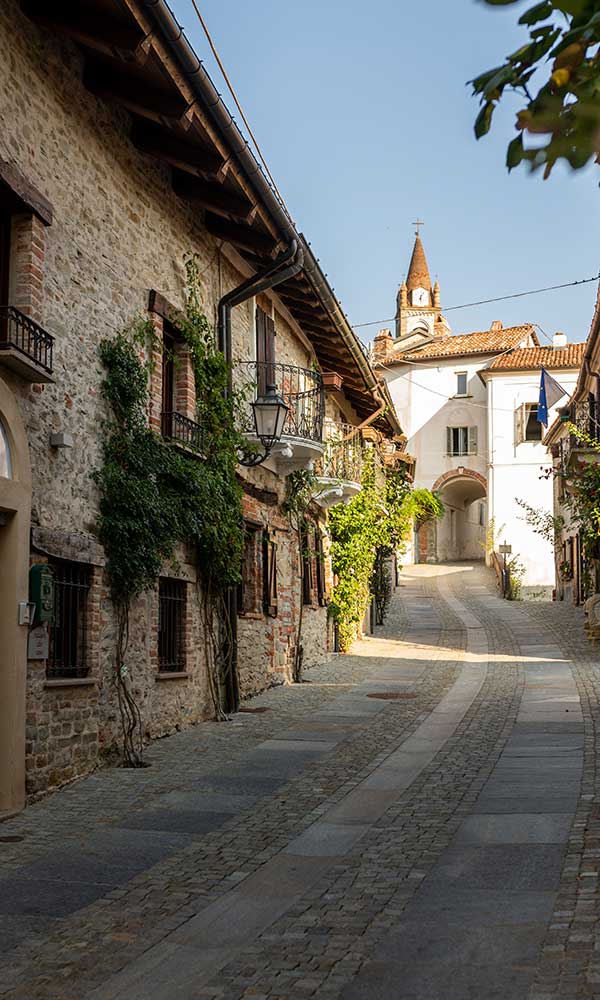
Bossolasco
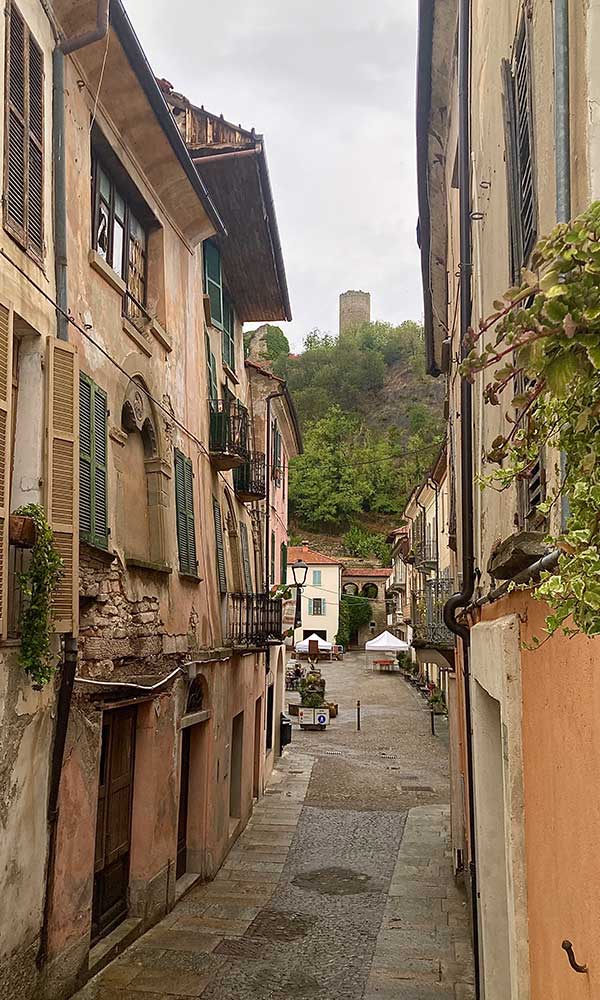
Cortemilia
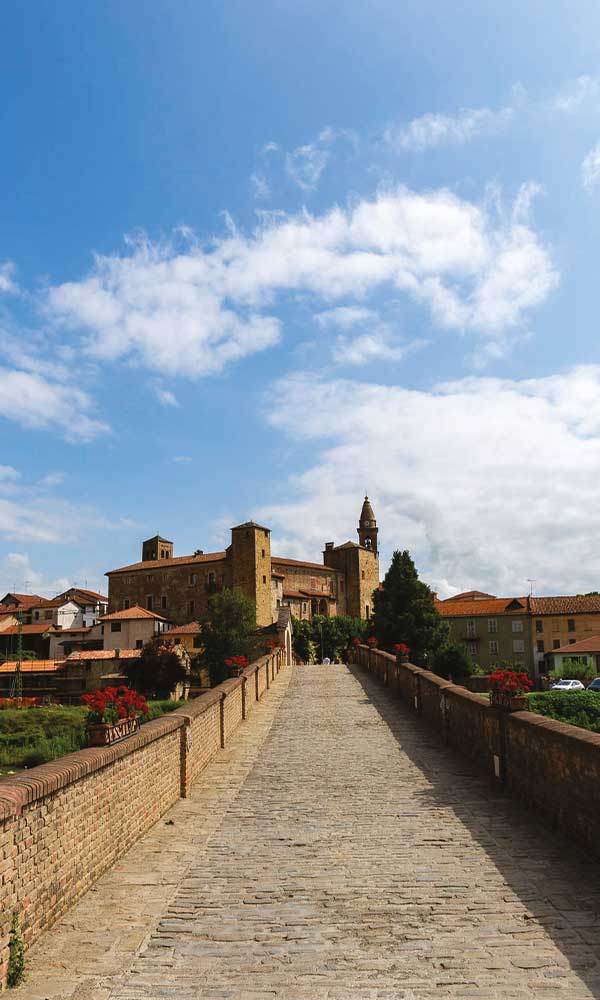
Monastero Bromida (ph. Ente Turismo LMR)
The Must-See Places
In the Alta Langa area, in a few dozen kilometers there are almost a hundred and fifty townships. Every village has its mayor, its coat of arms and its own identity, which is important to all of its inhabitants.
In strict alphabetical order, here are ten “must-see places” you won’t want to miss when you are traveling through Alta Langa.
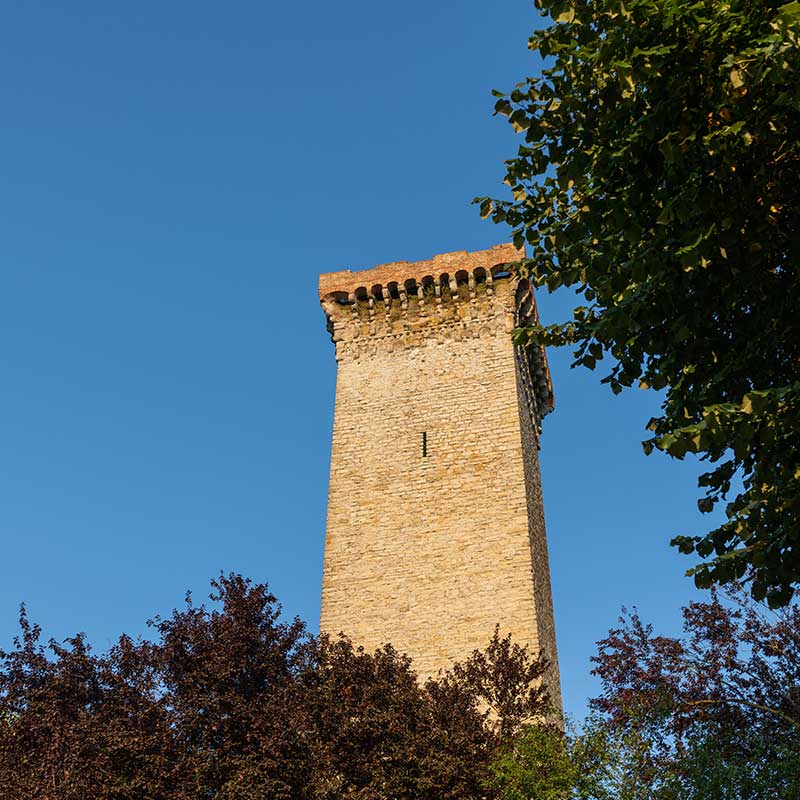
Murazzano tower
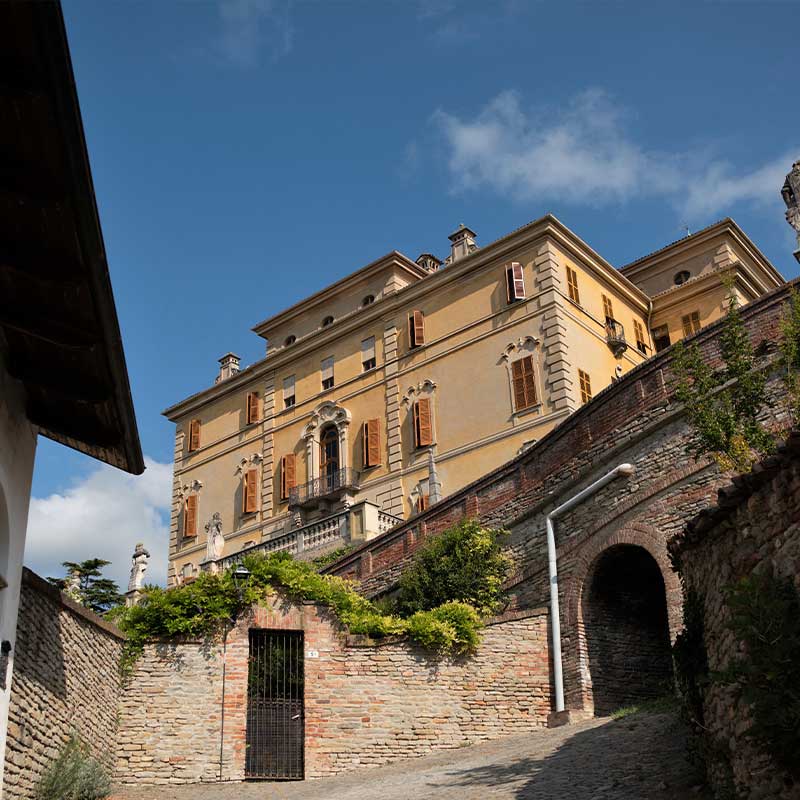
Gancia Castle in Canelli (LMR Tourist Board)
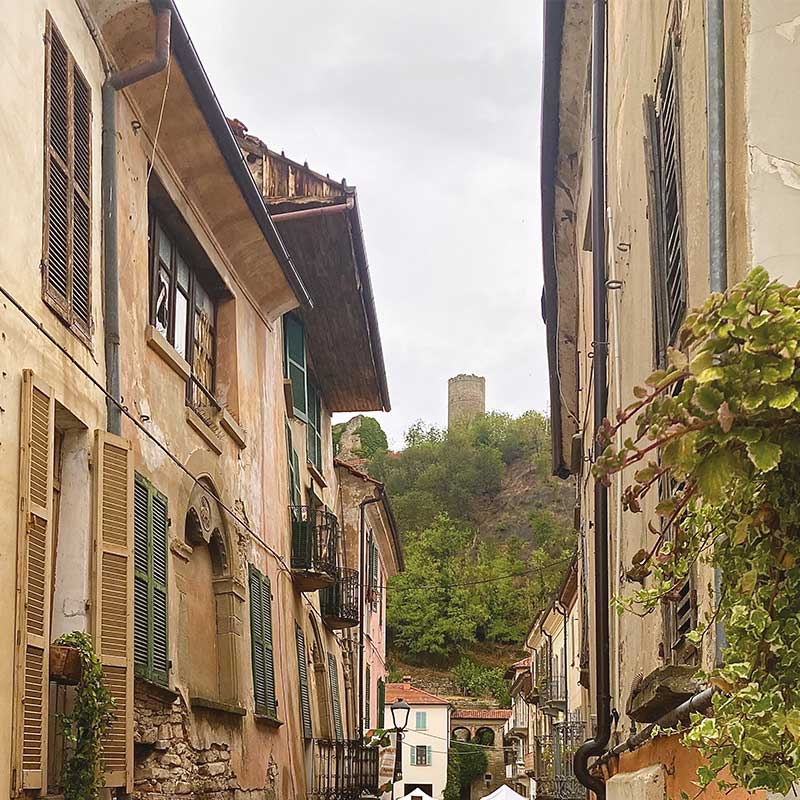
Cortemilia: historic center
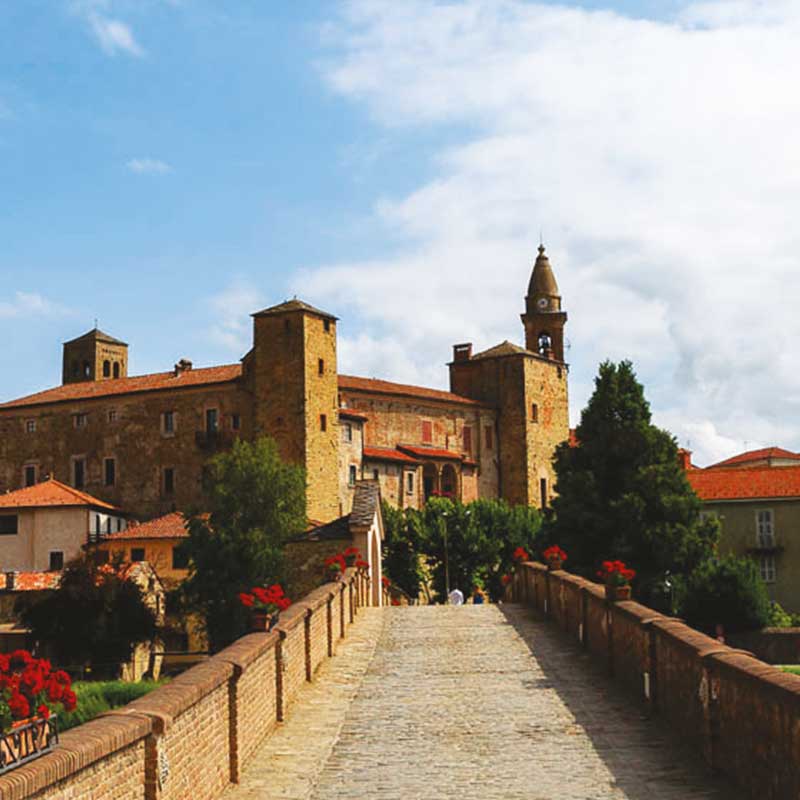
Monastero Bormida (LMR Tourist Board)
Ovada (ATL Alexala)
Prunetto Castle (LMR Tourist Board)
Roccaverano: historic center (LMR Tourist Board)
Parish church of Sant'Ambrogio, Spigno Monferrato (ATL Alexala)
Bossolasco and Murazzano
8 kilometers separate these two villages, the symbols of Alta Langa. The stunning views of the Alpine peaks and the silent, narrow lanes are the common denominator of these two fascinating municipalities, antagonists in an enduring rivalry. The aromas are captivating, and their dedication to fine dining is evident when strolling by the restaurants situated in the streets of the historic centers.
Canelli
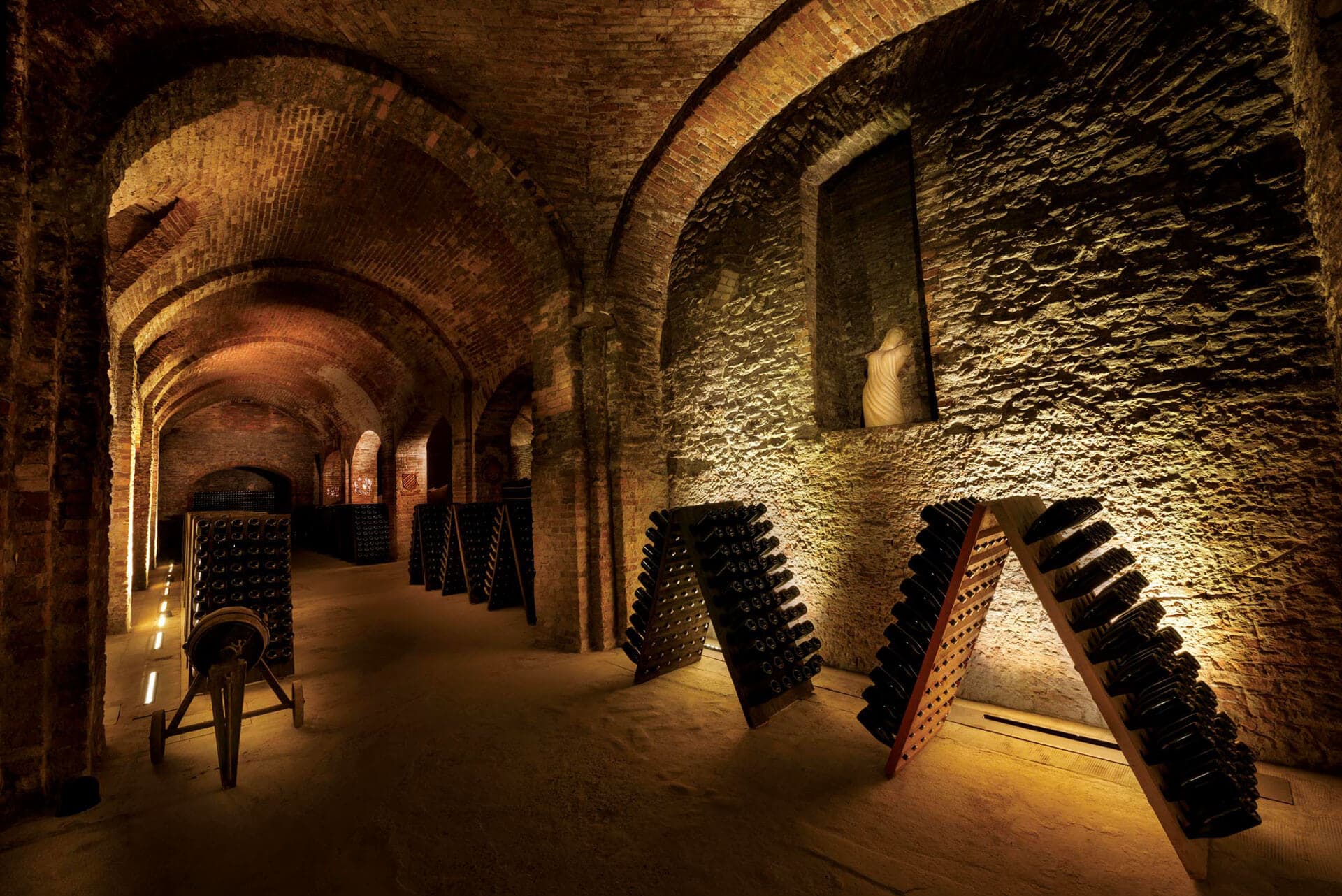
It was in Canelli that Italian spumante was born, in the second half of the nineteenth century. A few meters under street level, the four underground cathedrals that made history are still there for visitors to explore as expert hands demonstrate how spumante is made. Once back in the open air, the walk up the Sternia, the cobblestone street that leads up the steep hillside to the castle, offers breathtaking views of the Belbo valley.
Cortemilia
The capital of the famous round,sweet hazelnuts. Divided in half by the Bormida di Millesimo river, it has two historic centers, with inviting settings for a pause in a pastry shop. A stone’s throw from the ovens where the excellent Piemonte IGP hazelnuts are roasted, ancient recipes for sweets still deliver memorable bites. The town is also a good point of departure for hikes up to the hamlets on high and the terraced vineyards nearby.
Monastero Bormida
Monastero is the archetype of the medieval town: castle, tower, piazza, bridge. Culturally active all year, the town’s program features an ample array of exhibits and shows. It is also the starting point of the 5T, the hiking trail that includes all five towers in a circular route that winds for over 30 kilometers through pristine landscapes and tiny hamlets, places from another time.
Ovada
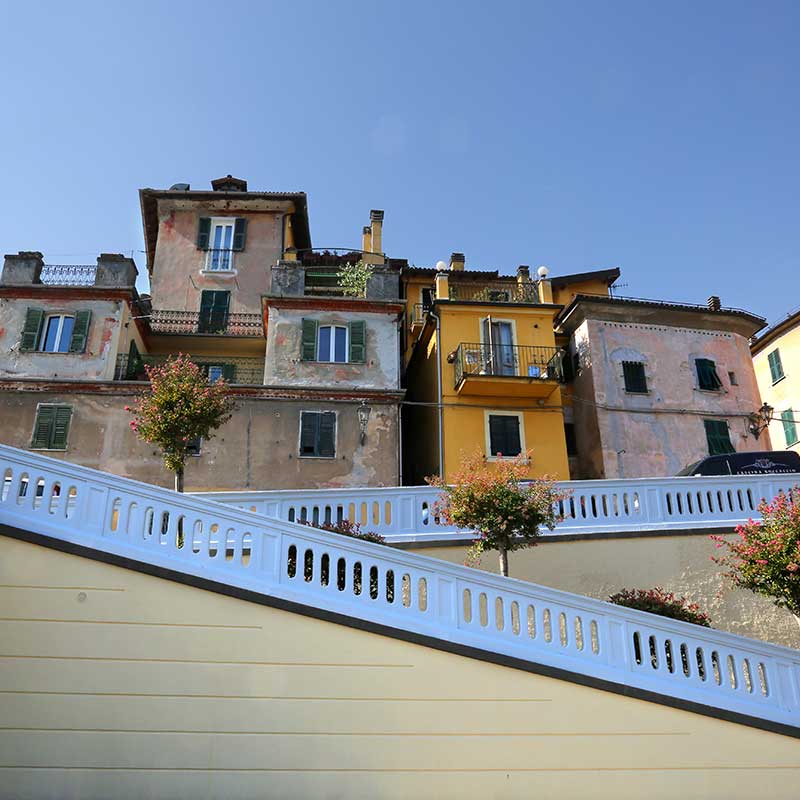
Situated at the confluence of two rivers, Ovada lies at the heart of Upper Monferrato, at the foot of the roads that scale the Apennines and quickly reach Genoa. Liguria is just over the mountains, you can sense it in the narrow alleys of the center of town, which closely resemble Genoa’s caruggi, and you taste it in the anchovies of the bagna caoda sauce, which have always made the trip to Piedmont through Ovada. It’s the ideal point of departure for visiting the Upper Monferrato, the castles of Tagliolo, Trisobbio and Rocca Grimalda, as well as the natural environment, progressively more untouched as we scale the wilder heights of the Apennines.
Prunetto
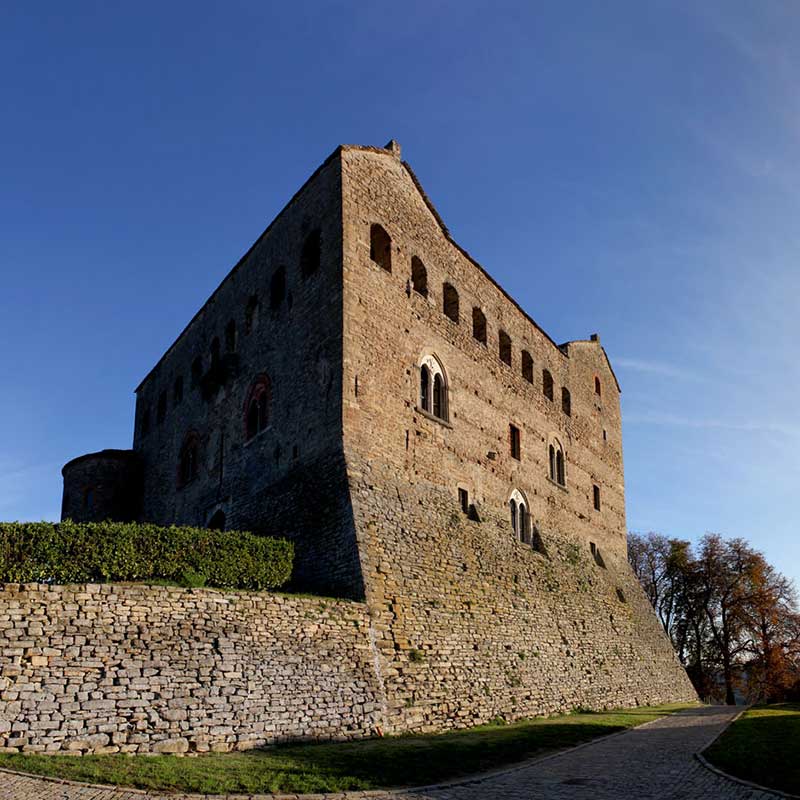
A massive castle built of Pietra di Langa, seemingly eternal, stands close by a marvelously frescoed medieval church. It feels like you are part of a scene from seven hundred years ago, when the castle loomed over the roadways to and from the sea and dominated unruly locals. All is still now, and you are free to sit on the grass of one of the most beautiful lawns in all of the Langhe.
Roccaverano
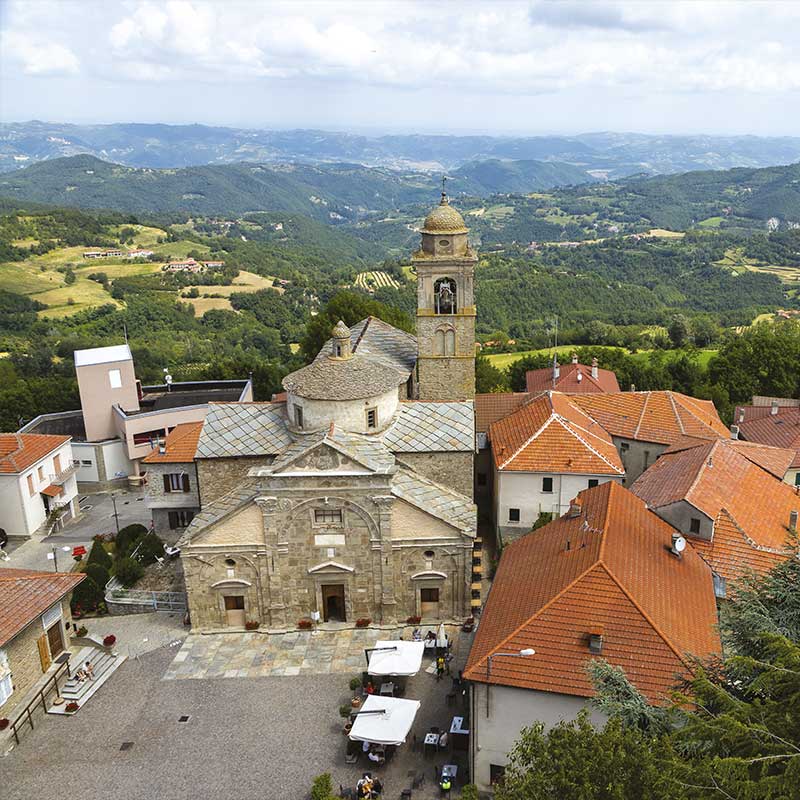
When you say Roccaverano you are saying robiola. Goat cheese. From goats raised on pastures bursting with wildflowers, which you can admire from the top of the 30-meter-tall cylindrical tower that is always open to visitors. It offers an extraordinary view, with the Alps forming a spectacular background for the facade of the Bramante-inspired church that overlooks the small piazza just below the tower. There is no question of moving on without having sampled the differently aged varieties of Roccaverano DOP and having spoken to at least one cheesemaker.
Spigno Monferrato
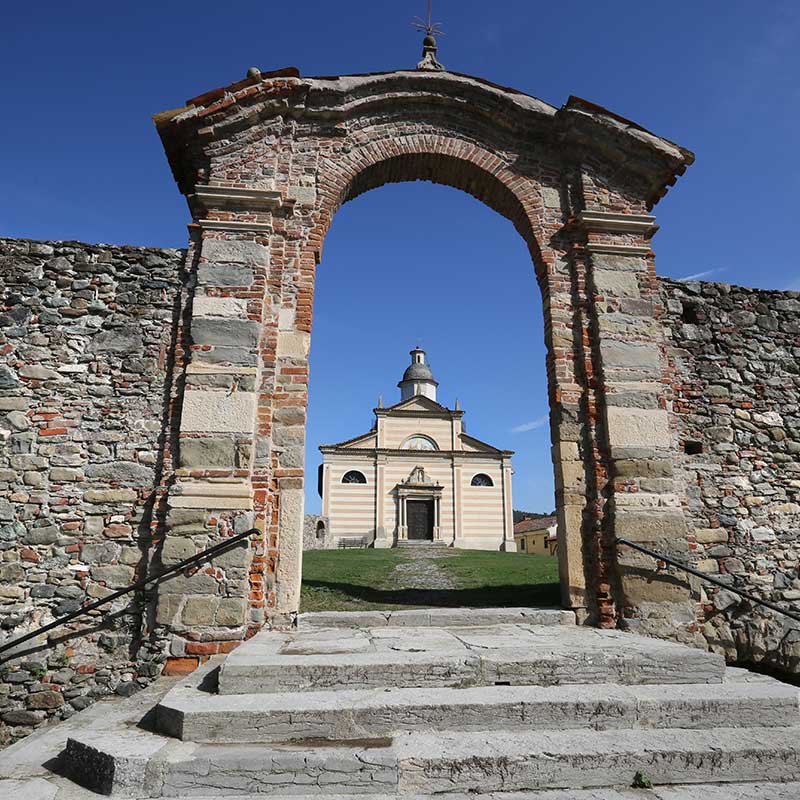
Situated in the middle of the Bormida valley of the same name, Spigno is a fascinating example of a medieval town, with a historical center that can be walked comfortably and reveals interesting curiosities and signs of ancient traditions. The natural beauty of its surroundings is exceptional, marked by majestic ravines and crops of lavender that tinge the landscape in bright tones in early summer.
Next page:
The Terroir and the Method