

intro
The Terroir and the Method
The Wines: Tasting, Serving and Matching

01The spumante project
02Experimentation
03Designation of Origin
The ’90s, the Spumante Project and the Birth of the Designation
The ’90s, the Spumante Project and the Birth of the Designation
From an essay byGiancarlo Montaldo e Teresa Baccini
Alta langa, an evocative name
Those who wonder about the name Alta Langa, which seems natural enough for a spumante whose birthplace is in the high hills, in that corner of Piedmont where grapevines have plunged their roots deepest, should know that it was chosen after careful deliberation.
After all, “alto” [TN: high or tall] is synonymous with prestige and unparalleled stature. And in wine, “alto” expresses the fragrance, the nobility, the ability to withstand the test of time: up high the air is fresh and mild, the best conditions for making wines that are consistently expressive, year in, year out.
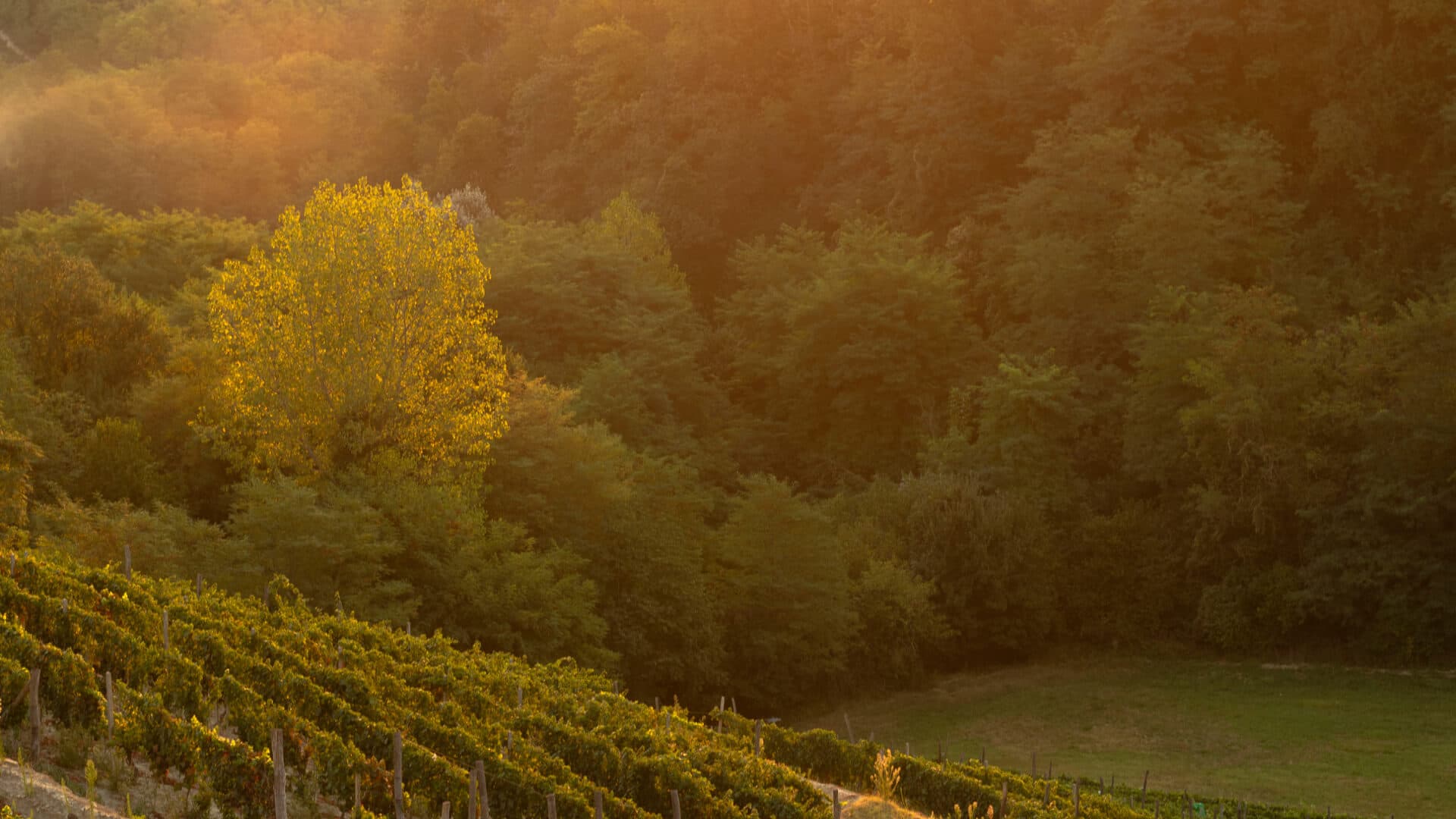
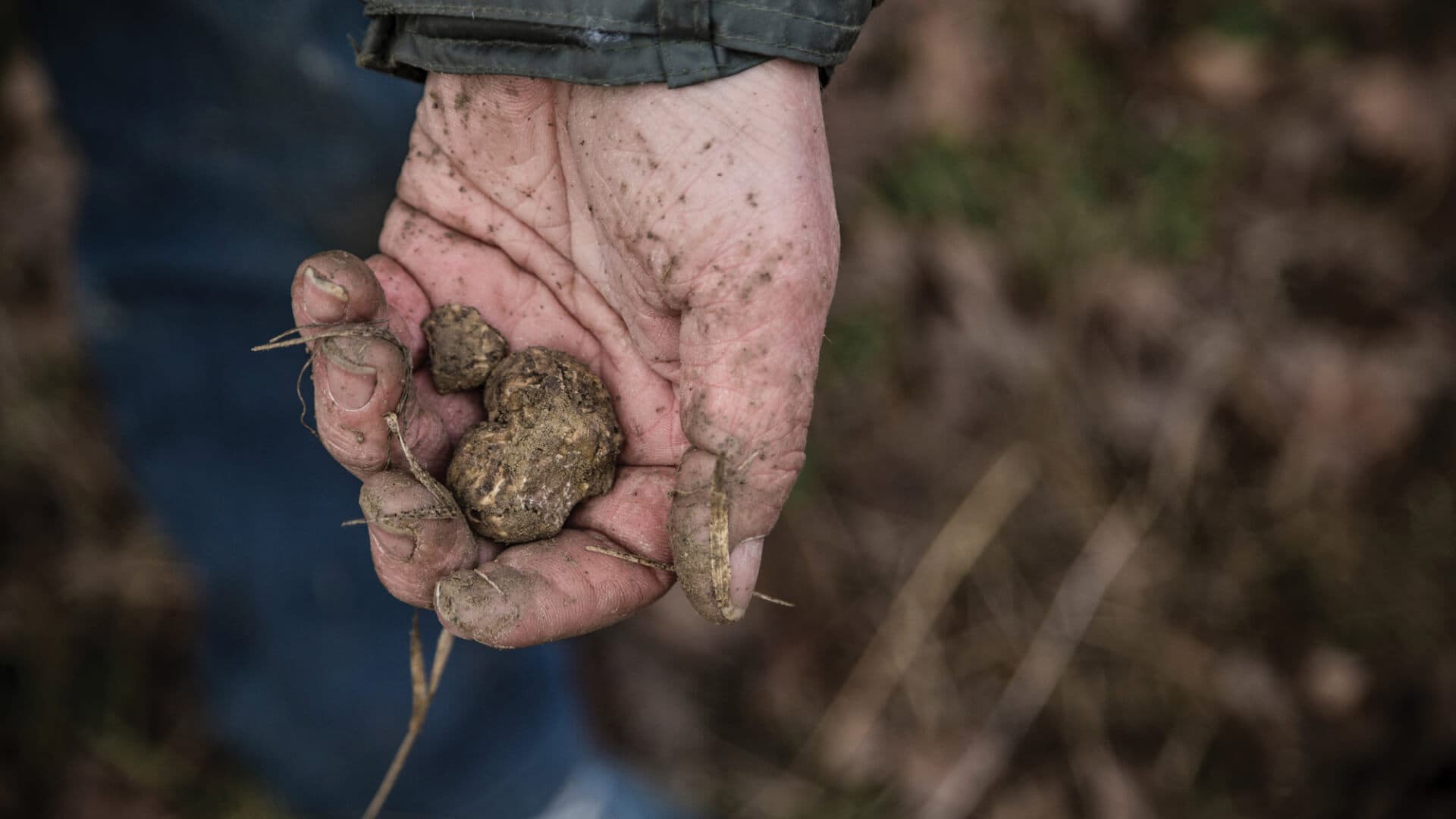
And then there’s the second part of the name, “Langa”. It reminds you of those rounded, solid hills, clear skies, the fruits and flowers that seem somehow more colorful here and the woods, with muted shades and intense scents, where the truffles promise an exuberant gourmet season.
Put the two together (Alta Langa) and you have a winning combination, a synthesis that represents a long swath of hilltop territory…
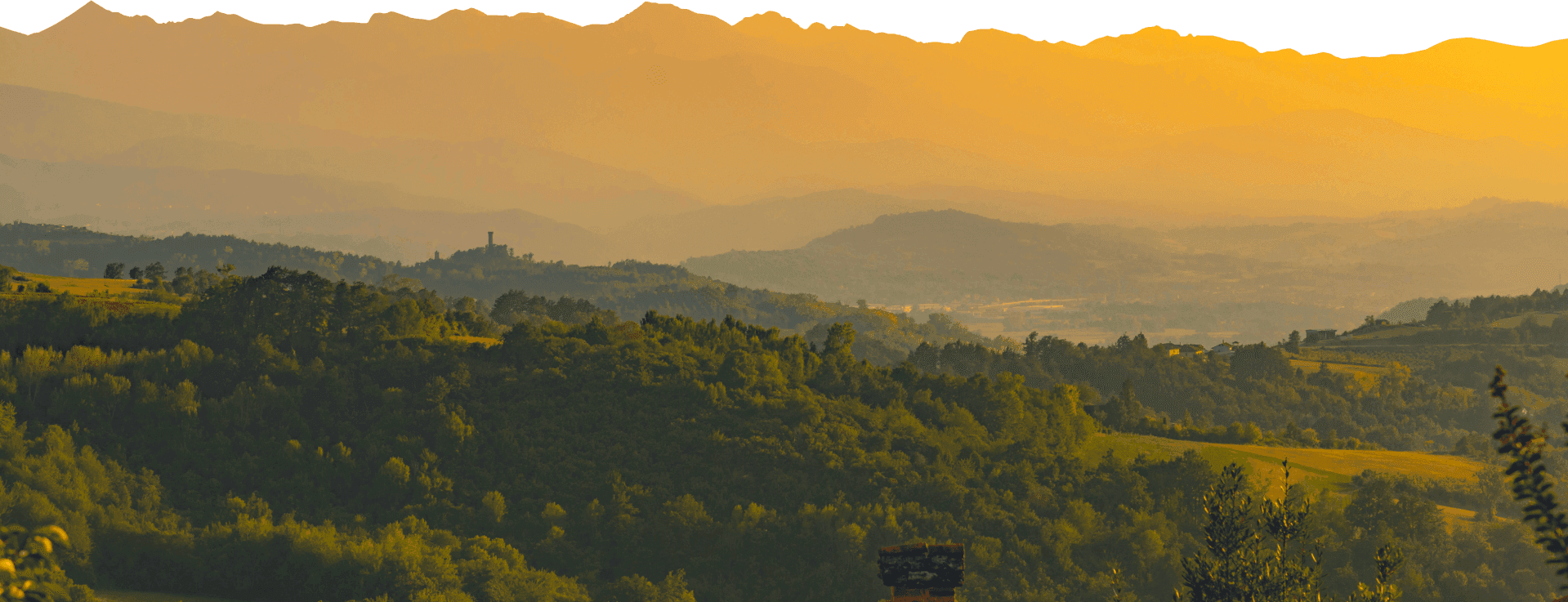
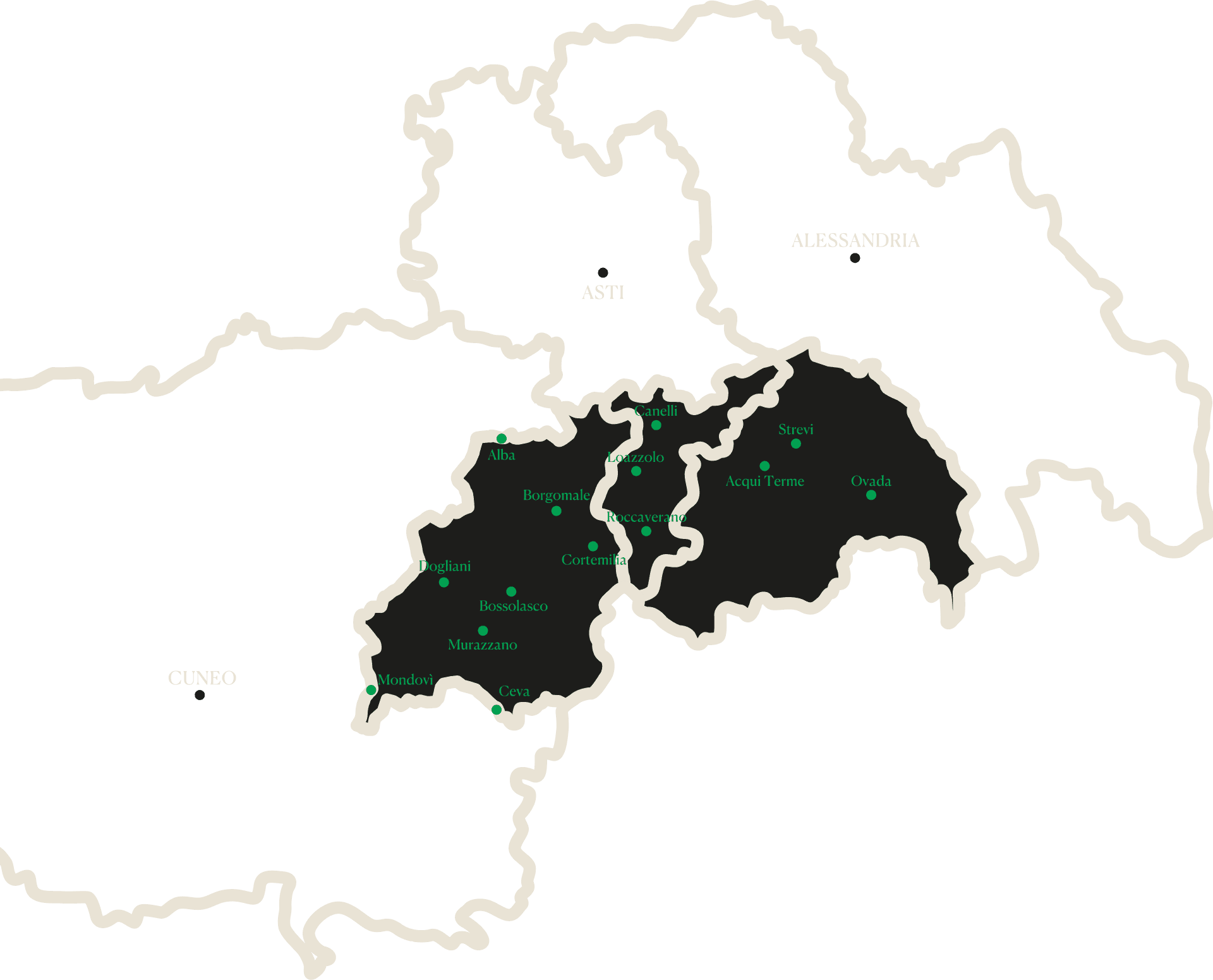
Morphologically, it is rather homogenous and crosses the borders of the provinces involved; Alessandria, Asti and Cuneo.
The word Langa has Celtic roots and means “tongue of land”, a reference to the elongated hills that characterize the area.
At their highest altitudes, they are known as the “Alta Langa”. It’s a special world, a world of men and women, places and times, innovation and tradition. A world that has gradually drawn – from the soil, the sky and the grapevines – the soul of its wines, and one fine day decided that it was the right time for “Alta Langa” spumante to see the light.
That’s why, although Alta Langa Metodo Classico wines haven’t been around very long – only since October 2002 – they actually go much farther back.
It all began...
It all began a bit by chance and a bit because of the others.
On January 15th, 1990, the telephone rang in the office of Giancarlo Montaldo, a freelance professional in the winemaking sector. It was Ugo Conti, oenologist and technical manager at Riccadonna, in Canelli. He said he was with the head of the company, Ottavio Riccadonna, and that they were on their way back from Turin, where they had attended an important meeting of the leading Piedmont spumante makers.
In mid-November 1989, Italy’s spumante community had been shaken by the “proclamation” issued by the producers and the public bodies of Franciacorta, Oltrepò Pavese, and Trentino and Alto Adige, who, in a memorandum of understanding, had maintained that the only areas of Italy suitable for the production of classic method spumantes were the ones they represented. Piedmont was glaringly excluded.
To the Piedmont spumante houses, this seemed like a provocation. And it was exactly this that Riccadonna and Conti wanted to discuss. Their idea was to mount a media campaign in response.
Everything hinged on one question: the need for Piedmont, the region that had been the birthplace of Italian spumante, to organize and regulate the production of Pinot nero and Chardonnay grapes earmarked for those wines.
A group of Piedmont spumante-making houses came together to work towards obtaining recognition of a particular vocation for the classic method, a seeming no-brainer: Cinzano, Gancia, Martini & Rossi and Riccadonna, along with three smaller brands: Banfi, Contratto and Fontanafredda.
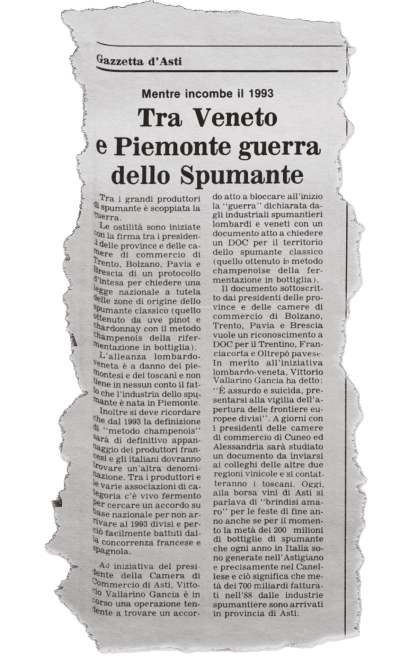
Article drawn from the Gazzetta d'Asti, 18 December 1989
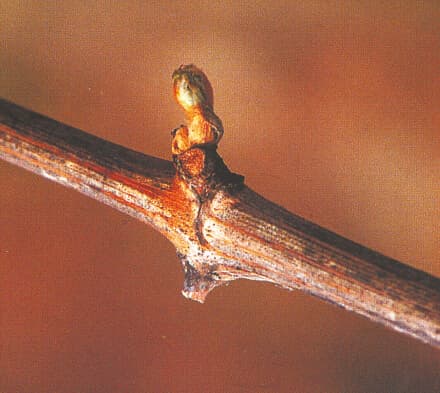
Budbreak

DA SINISTRA A DESTRA > Livio Testa (Fontanafredda), Giorgio Giusiana (Martini & Rossi), Pier Filippo Cugnasco (Cinzano), Giuseppina Viglierchio (Banfi), Vittorio Vallarino Gancia (F.lli Gancia), Ezio Cantù (Riccadonna), Alberto Contratto (Giuseppe Contratto)
There’s no time to lose. Let’s get to work.
The people called upon to examine these issues were Gianfranco Caci and Pier Filippo Cugnasco for Cinzano, Alberto Contratto for Contratto, Alessandro Abruzzese, Livio Testa and Giovanni Minetti for Fontanafredda, Vittorio Vallarino Gancia for Gancia, Giorgio Giusiana for Martini & Rossi, Ottavio Riccadonna for Riccadonna and Giuseppina Viglierchio for Banfi.
In thinking over the problem, Montaldo understood that it would be a mistake to reply to the proclamation issued by the other spumante-making areas with only a media campaign. The time had come to bring the Piedmont grape growers into the fold.
Piedmont’s Spumante Metodo Classico Project Kicks off
The project title was “Piedmont Spumante Metodo Classico Project”. On February 28th, 1990, representatives of the seven houses – the Seven Sisters, as they were later dubbed – signed a protocol in which they committed to funding the project until its completion.
Studio Montaldo was tasked with following the work and the Experimental Institute for Viticulture, in Conegliano Veneto, whose Asti division was very dynamic, was seen as the ideal subject to take responsibility for the scientific and technical aspects with authority.
Its two most prominent members, Antonio Calò for Conegliano and Lorenzo Corino for Asti, were present at the first official event, the public meeting held on March 5th at the Asti Chamber of Commerce, chaired by Vittorio Vallarino Gancia, who at the time was also president of the Chamber of Commerce.
There were many participants: the representatives of the Seven Sisters, with their technical experts, farmers’ union representatives (Coldiretti, Unione Agricoltori and Confcoltivatori) and some producers’ associations (Piedmont Asprovit and Viticoltori Piemonte), representatives of the Chambers of Commerce and the provincial administrations of Alessandria, Asti and Cuneo and the Piedmont regional councilor for Agriculture, Emilio Lombardi.
The plans for the project were approved in full.
From the start, the title was “Piedmont Spumante Metodo Classico Project”. It remained unchanged until its completion.
At the end of the meeting, the involvement of the Asti division of the Conegliano Veneto Experimental Institute for Viticulture was ensured, and a provisional joint committee was formed, with representatives from the grape growers and the spumante-makers, who intended to take part in the process with their technical advisors.
While Lorenzo Corino worked on the program and the agreement, Giancarlo Montaldo focused on direct meetings with the leading players of the Piedmont winemaking sector.
He met with the directors of the two producers’ associations, Gianluigi Biestro of Piemonte Asprovit and Ezio Borgio of Viticoltori Piemonte, and representatives of the farmers’ organizations, with the aim of defining a common ground and commitment from all the players involved.
The Seven Sisters were willing to fund an experimental study that would also benefit the growers.
On May 9th, 1990, Corino presented the multi-year plan.
The Provisional Joint Committee underscored the main thrust: work was needed on the hills of the three provinces of southern Piedmont (Alessandria, Asti and Cuneo), combing over the soil and the environment from the Monregalese area to the hills around Tortona.
It was thought advisable to limit the study to two varietals, Pinot nero and Chardonnay, based on generations of experience dating back to the mid-eighteen hundreds.
The Grape Harvest is Nearing, Got to be Ready
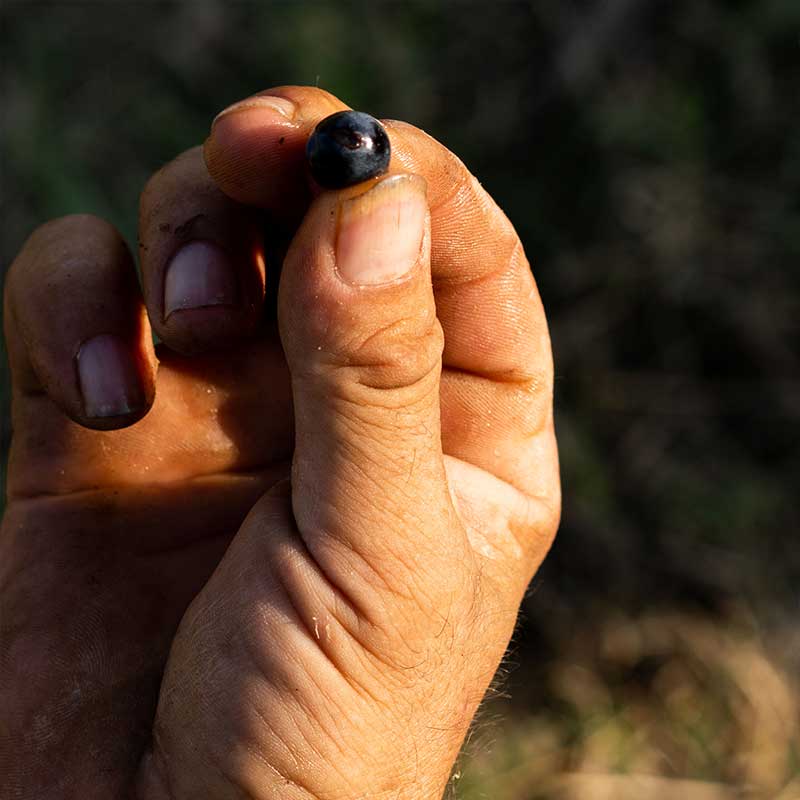
Pinot nero grapes
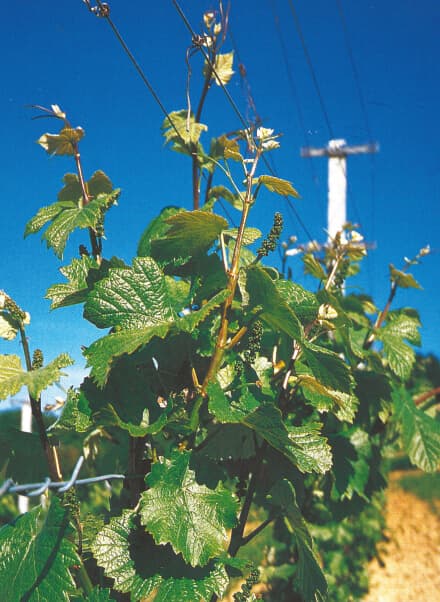
Pinot nero budbreak in spring
On August 1st, 1990, Giovanni Malerba, an oenologist from the Alta Langa around Asti, began working with the Institute of Viticulture and the historic spumante houses as technical supervisor of the vineyards.
Having found some vineyards of Chardonnay and Pinot nero on the right bank of the Tanaro, it was decided to take samples of the grapes to study their development during maturation. The same sampling would have been performed in the following years, so as to accumulate a series of technical data that could also be used as evidence of the Piedmont’s excellence in Metodo Classico.
The technical committee, composed of the oenologists overseeing the production of the various spumante makers, began assessing the steps to be taken in the future.
It became clear that the data collected from the existing vineyards would not be sufficient to establish the area’s suitability.
This meant that experimental vineyards would have to be set up.
On January 31st, 1991, on the fifth floor of the building housing the Piedmont Regional Authority’s Department of Agriculture, Emilio Lombardi personally urged the spumante-makers to follow that path.
In 1991 the sampling was repeated on the vineyards identified the previous year and the experimental vineyards were planned out.
The technical committee met at year’s end to review the results of the work performed during 1991. In light of the findings, the group decided to proceed with the project and go into more depth. In particular, to meet again with the Piedmont regional councilor for agriculture and see if there was anything concrete that could be done. As promised the year before, the councilor did not deny his support. Emilio Lombardi established a ceiling of 118 hectares of experimental vineyards for the project.
The land to be planted had to have a surface area of about one hectare per vineyard, at an altitude between 250 and 550-600 meters above sea level, with compact, mostly lime and clay soil and a preference for the so-called “white soils” over the “red” ones.
It was thought advisable to exclude soils with significant amounts of sand. The varietals were limited to Pinot nero, which would occupy the largest surface area (75-80% of the total) and Chardonnay, both represented by clones used specifically for sparkling wines.
In all, the new vineyards would be home to 28 different clones of Pinot nero and 12 of Chardonnay.
But the most ambitious effort was finding and selecting the growers who would realize and tend the experimental vineyards. In addition to the uncertainty of keeping the vineyard until the end of the experimental study, there was another obstacle: they needed some guarantees that the spumante houses were ready to purchase their grapes.
The logical move was to sign a mutual commitment of supply and purchase that would last for at least five years, but which instead lasted much longer.

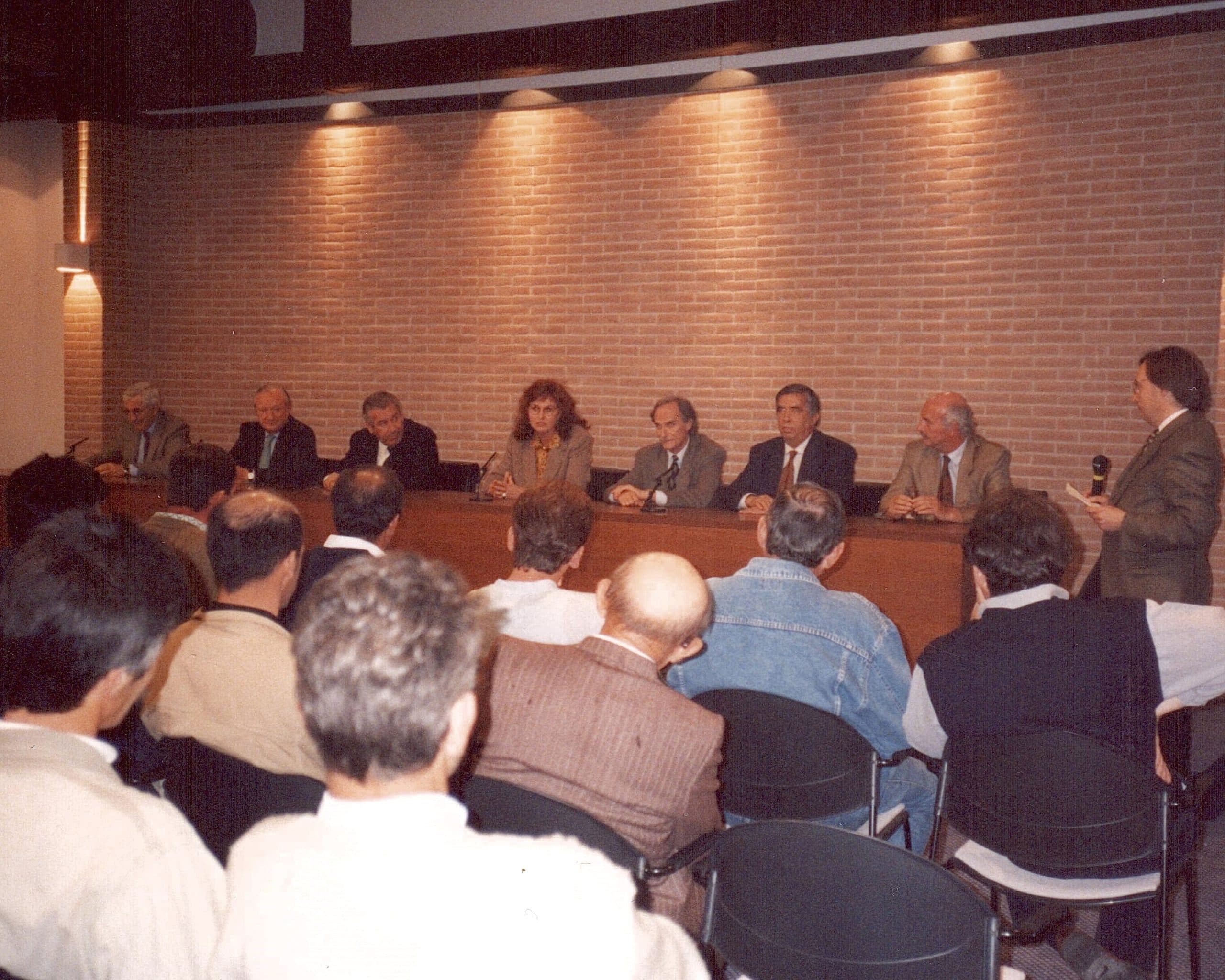
May 1995, ceremony for the first experimental harvest
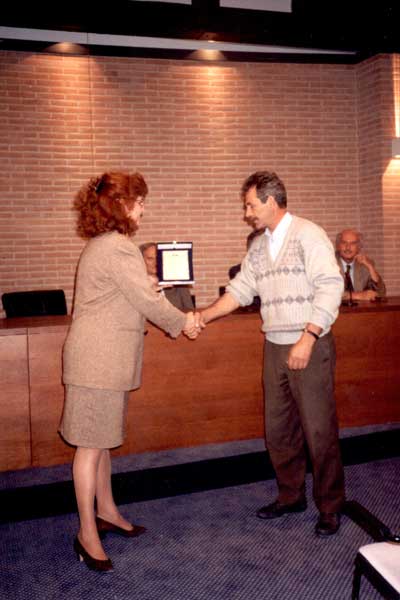
Giuseppina Viglierchio and Luciano Chiarle
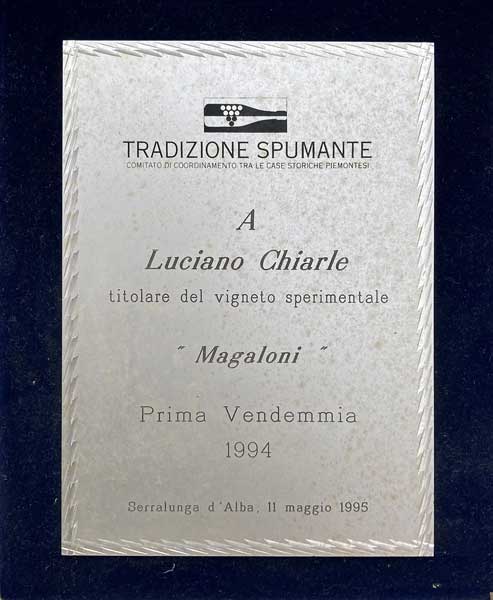
Commemorative plaque for the first grape harvest
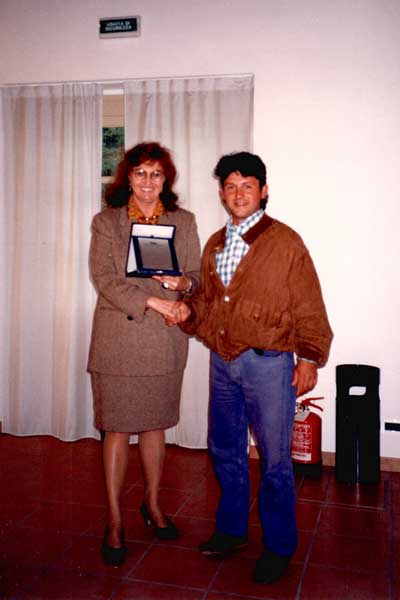
Giuseppina Viglierchio and Piero Culasso
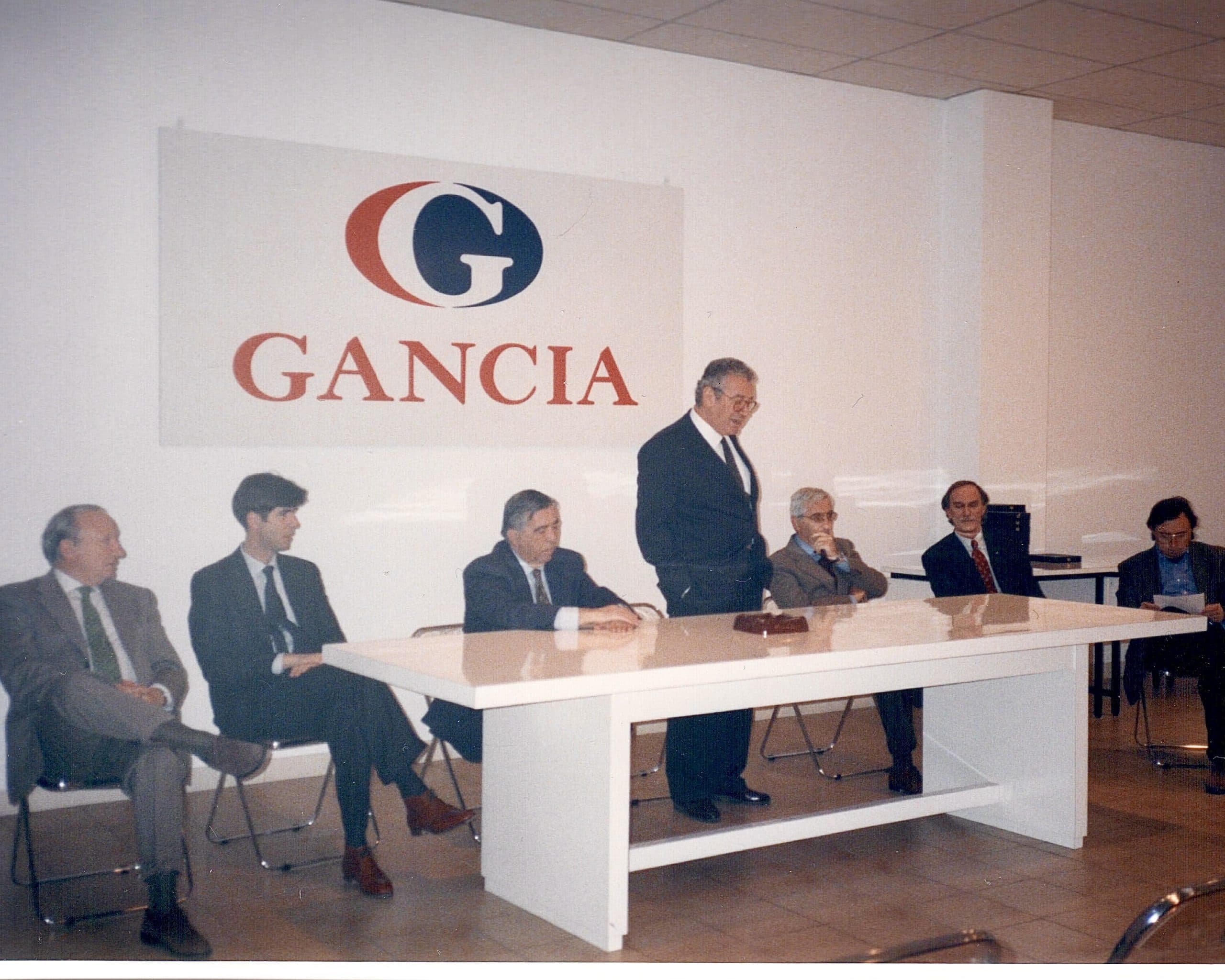
November 1995, ceremony for the second experimental harvest
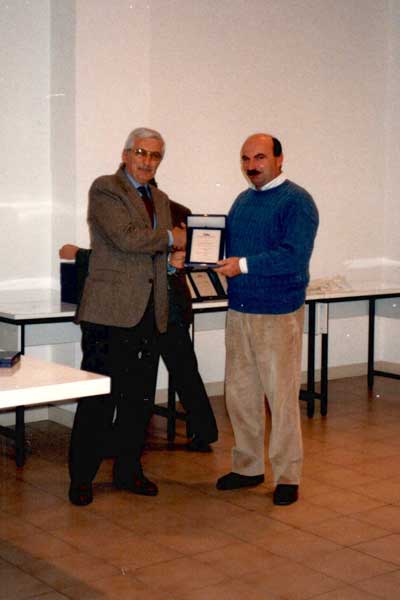
Emilio Barbero and Carlo Giovanni Bussi
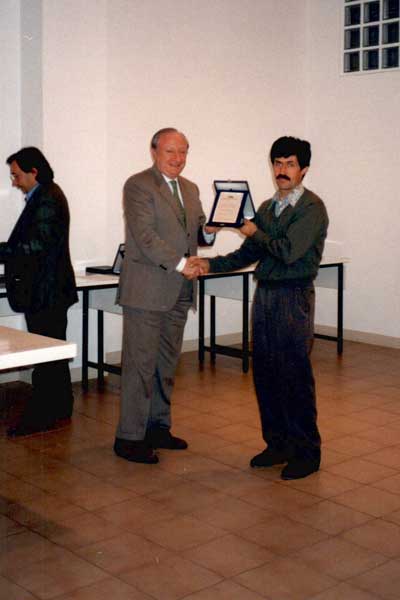
Gianfranco Caci and Luciano Ferrero
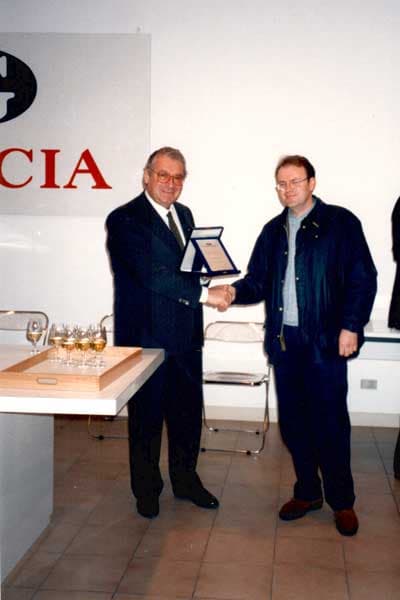
Vittorio Vallarino Gancia and Franco Franchini
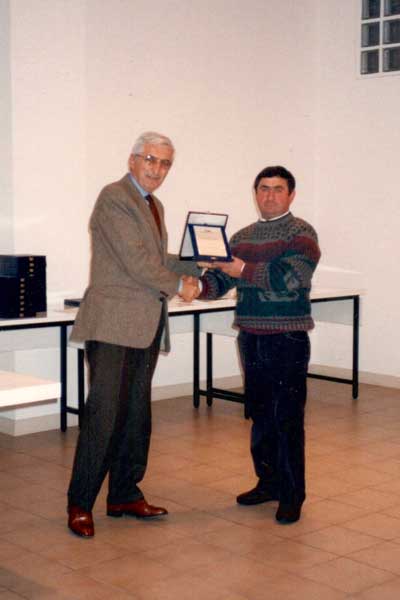
Emilio Barbero and Giacinto Balbo
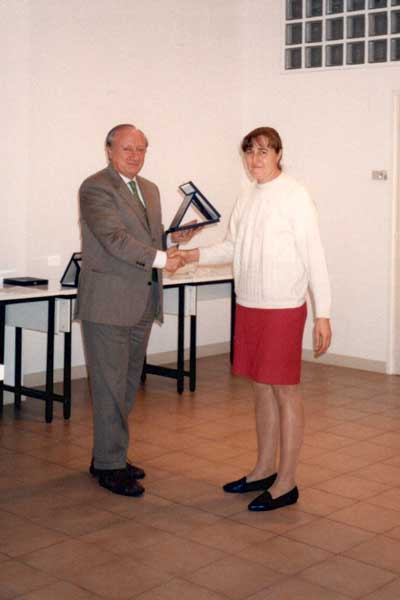
Gianfranco Caci and Clementina Reggio

Group of winemakers
Experimentation in the Vineyards
A major confidence booster was a study trip to the birthplace of sparkling wines, Champagne, and Giancarlo Montaldo’s meeting with the top management of the Comité Interprofessionnel du Vin de Champagne. Particularly productive was the meeting with Philippe Le Tixerant, who was the Committee’s Director of Public Relations.
Thanks to the impetus from this visit, in the following months work on the spumante project tripled its pace and increasingly concrete results were obtained.
The time had come to meet with the vineyard operators. From the very start, the project’s aim had been to identify many vineyards, each with their own distinct personality, so as to be able to concretely test the adaptability of the spumante clones of Pinot nero and Chardonnay to the hills of southern Piedmont.
The adventure of the experimental vineyards began in the spring of 1992. When the cuttings arrived from France, they were distributed to the vineyard operators who had agreed to plant them, and they took root impeccably.
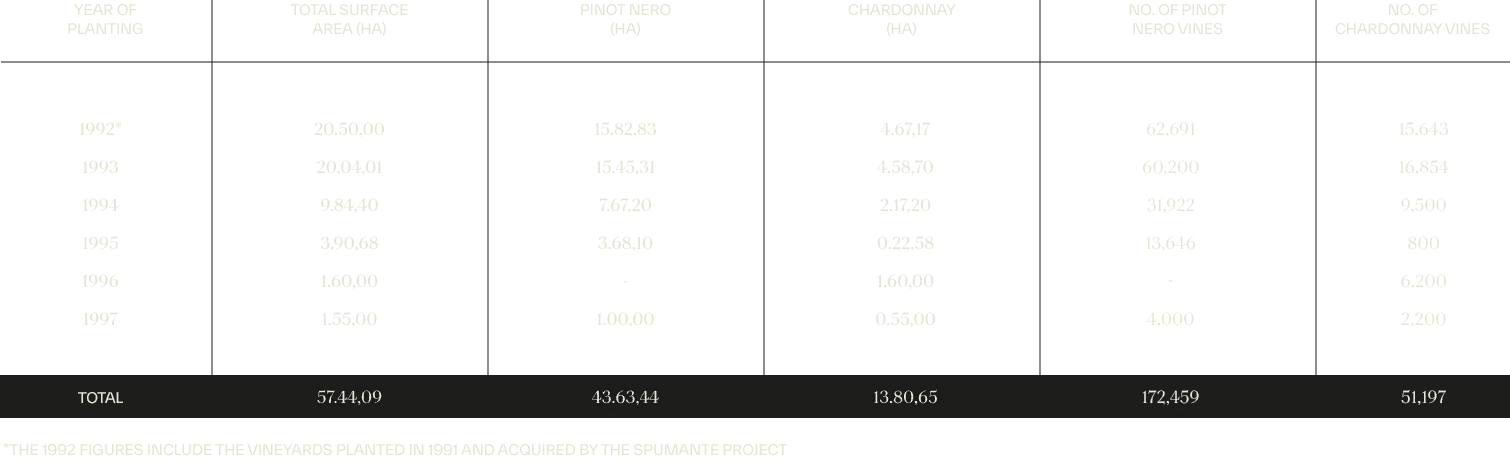
17 hectares of experimental vineyards were planted that year, and another 20 hectares in 1993, followed by 18 each in the next four years.
The institute also recovered three hectares that had been planted in 1991, so the total for the project came to 57 hectares of experimental vineyards: an amount rarely duplicated in the world of Italian winemaking.

Surface area under vines Experimental vineyards planted for the spumante project
1992 was a crucial year for the project, being also the year in which the first official communications towards the outside world were issued. At the Turin Unione Industriale, on the morning of May 21st, the initiative’s objectives were illustrated to a large group of journalists, other producers and the authorities.
Meanwhile, maturation tests were being carried out on the Pinot nero and Chardonnay vineyards already in place in the region, with special assistance from Tenuta Cannona’s Experimental Viticulture Center.
On June 4th, 1993, a coordinating committee of spumante makers was founded, the “Tradizione Spumante – Comitato di coordinamento tra le Case Storiche Piemontesi”.
Over the years, some companies left and others joined the Association: in 1994, the historic Contratto winery of Canelli was replaced by Barbero 1891 of Canale, proprietor of Enrico Serafino. Giulio Cocchi of Asti instead joined the group in 1999, shortly before Cinzano’s departure, at the end of 2000, thus bringing the number of members back to 7, the “Seven Sisters of spumante”.
On March 19th, 1997, the members met to modify the Association’s name, which was changed from “Tradizione Spumante” to “Case Storiche Piemontesi”..
Experimentation in the Vineyards and the Cellars
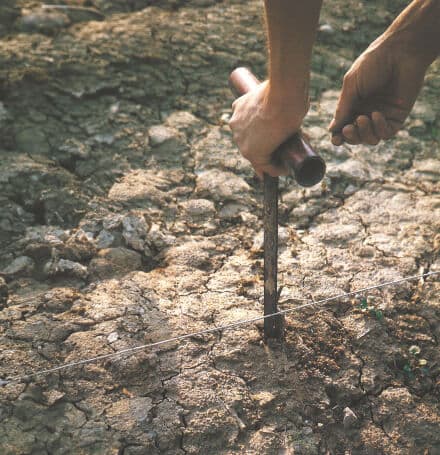
Planting a cutting
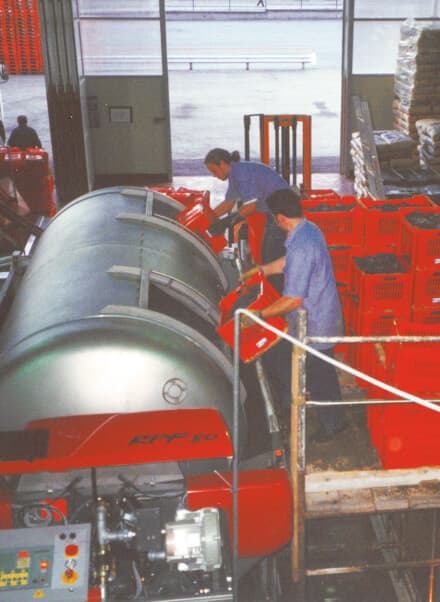
Manually loading the press at the Cinzano facility, 1996 grape harvest
First of all, the features of the experimental vineyards had to be defined, and towards the end of 1991, a detailed layout had already been designed.
Over the years, the experimental study carried out three kinds of tests in the vineyards and in the specific productions: climate data, growth and fruit-related parameters and tests on the musts.
Having completed this step, the territory under consideration was measured scientifically, obtaining results that unequivocally proved that the characteristics of the Piedmont hills ensured that Pinot nero and Chardonnay grapes would thrive there, and yield spumante Metodo Classico of superior quality.
Special attention was paid to the evaluation of base wines and the results of the many secondary fermentation trials, which, starting in 1994, were developed using blends of Pinot nero and Chardonnay in differing proportions.
All the winemakers of the companies participated, usually together, in the tastings, along with the Association’s operational, technical and organizational staff. From the first years of the 2000s, when products to be marketed were still being defined, the task of evaluation was externalized, involving various market and consumer categories as well as the Historic Spumante Houses’ group.
Each time, the results of these evaluations were both flattering and meaningful, even though the spumantes were produced by experimental vineyards in their very first years of planting and production.
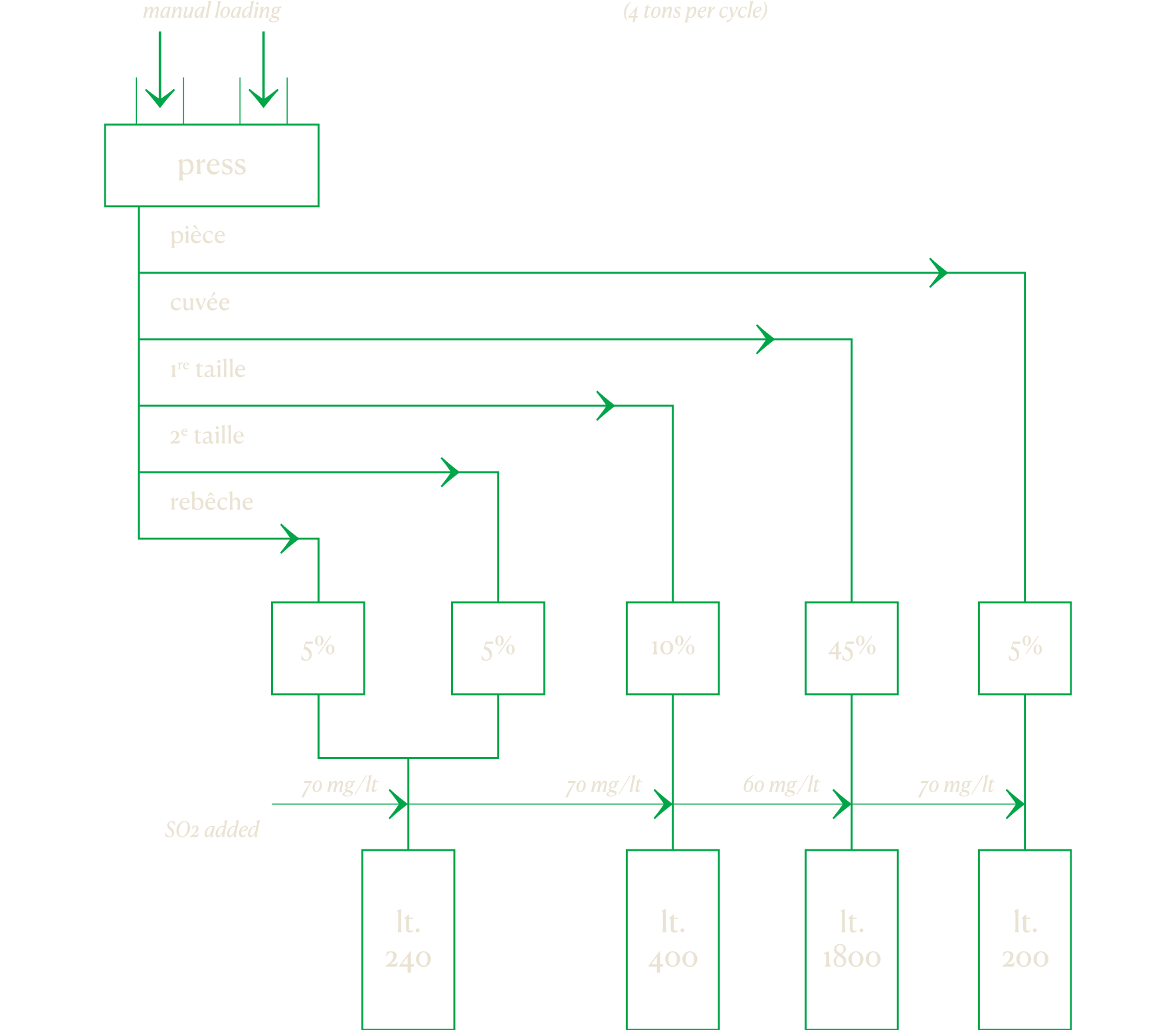
Processing workflow at the center in St. Stefano Belbo
Piedmont Spumante Metodo Classico Project – 1994 grape harvest
Layout of the experimental vineyard (1991)
Environmental characteristics
moderate exposure to sunlight
pronounced temperature differences between day and night
low relative humidityHuglin Bioclimatic
Index1.700 – 1.800
Altitude
(meters asl)250 – 550 metri
Soil type
marly soils, with limestone and clay
Grape varietals
Pinot nero and Chardonnay
Training method
low espalier and arched Guyot
single fruiting branch of cord
spurred 40 -70 cm above the groundMinimum planting
density4,000 vines per hectare
Maximum distance
between the vines110 cm
Area
under vines0,50 – 2 ettari
Vineyard
lifespan25 years

The Designation of Origin Was the Outcome of the Experimental Study
It became increasingly evident that the final objective of the experimental work was the attainment of a designation of origin status. Naturally, this influenced the drawing up of a rigorous production rulebook.
With regard to the production area, initially it had been thought advisable to limit the area to the hills in the provinces of Alessandria, Asti and Cuneo, on the right bank of the river Tanaro. The Metodo Classico was chosen, with a second fermentation in the bottle.
The thorniest problem soon revealed itself to be the choice of a name for the new spumante: it had to contain a geographical reference that would allude to the area’s landscape, history and traditions.
The Council met on November 3rd, 1998, and in the end came up with two alternatives: “Alba” and “Altalanga”, with a distinct preference for the latter. Initially, it was a single word, but subsequently it was decided to divide it into two words: “Alta Langa”.
The production rulebook with the designation “Alta Langa” was made official on December 21st, 1998.
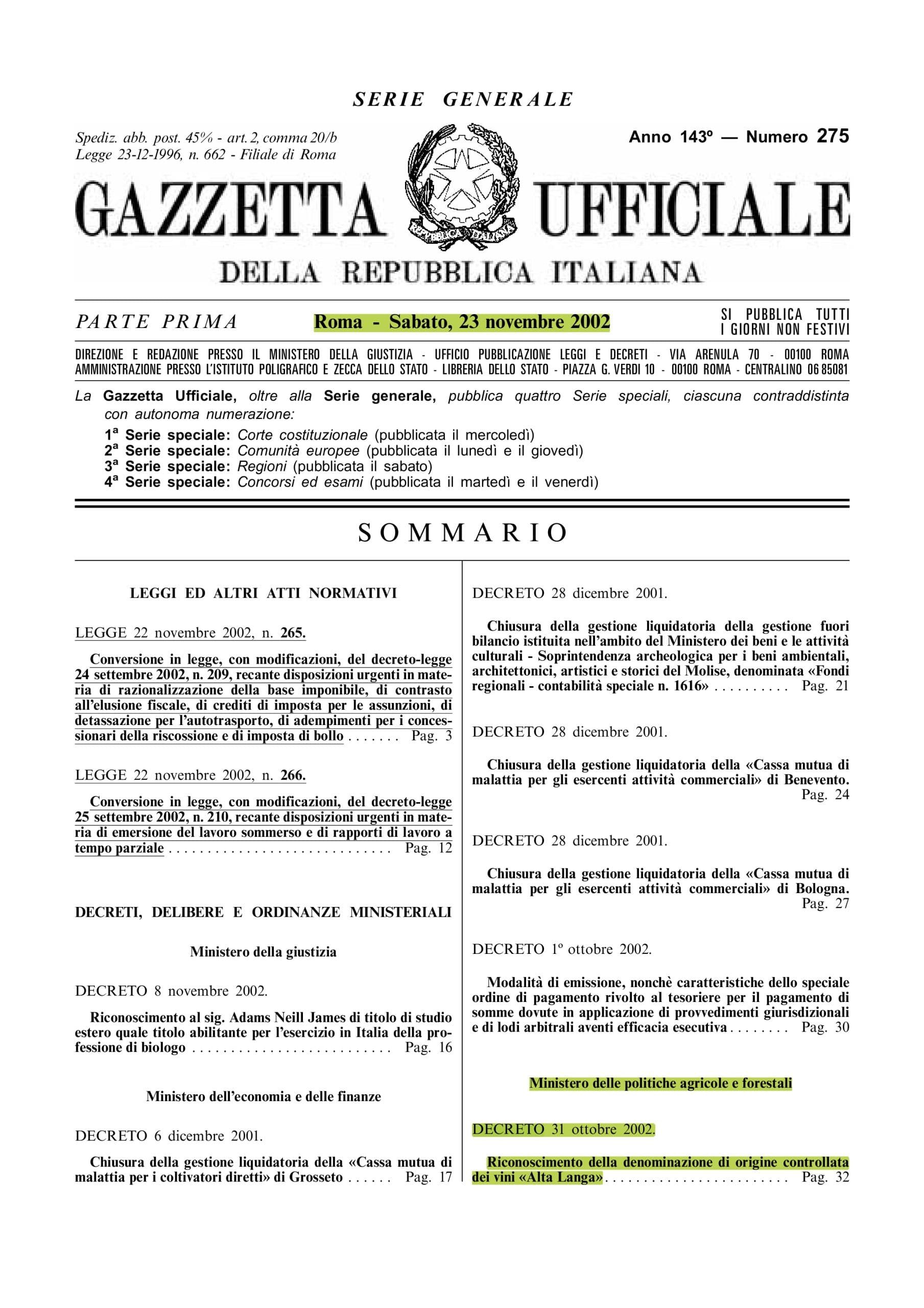
At the end of the application process, which went on for a few years, the Decree granting its status was issued on October 31st, 2002, in the Official Gazette no. 275 of 23 November 2002, just in time to exercise its effect on the recent 2002 grape harvest.
Nearly 13 years after the start of the Piedmont Spumante Metodo Classico Project, the desired outcome had finally been attained.
The Consorzio Alta Langa had instead seen the light the previous year, on Friday, June 15th, 2001, at 5:30 p.m., precisely at the Studio Notarile Cantamessa, in Asti. The five founding fathers, all rape growers, appropriately enough, were Carlo Bussi, Luciano Chiarle, Piero Culasso, Gianpaolo Menotti and Gian Carlo Zunino. They formed the first provisional Board of Directors, whose functions were limited to admitting other companies as members and to call the first General Assembly, which would then elect a president and other company officers and make the Consorzio fully operational.
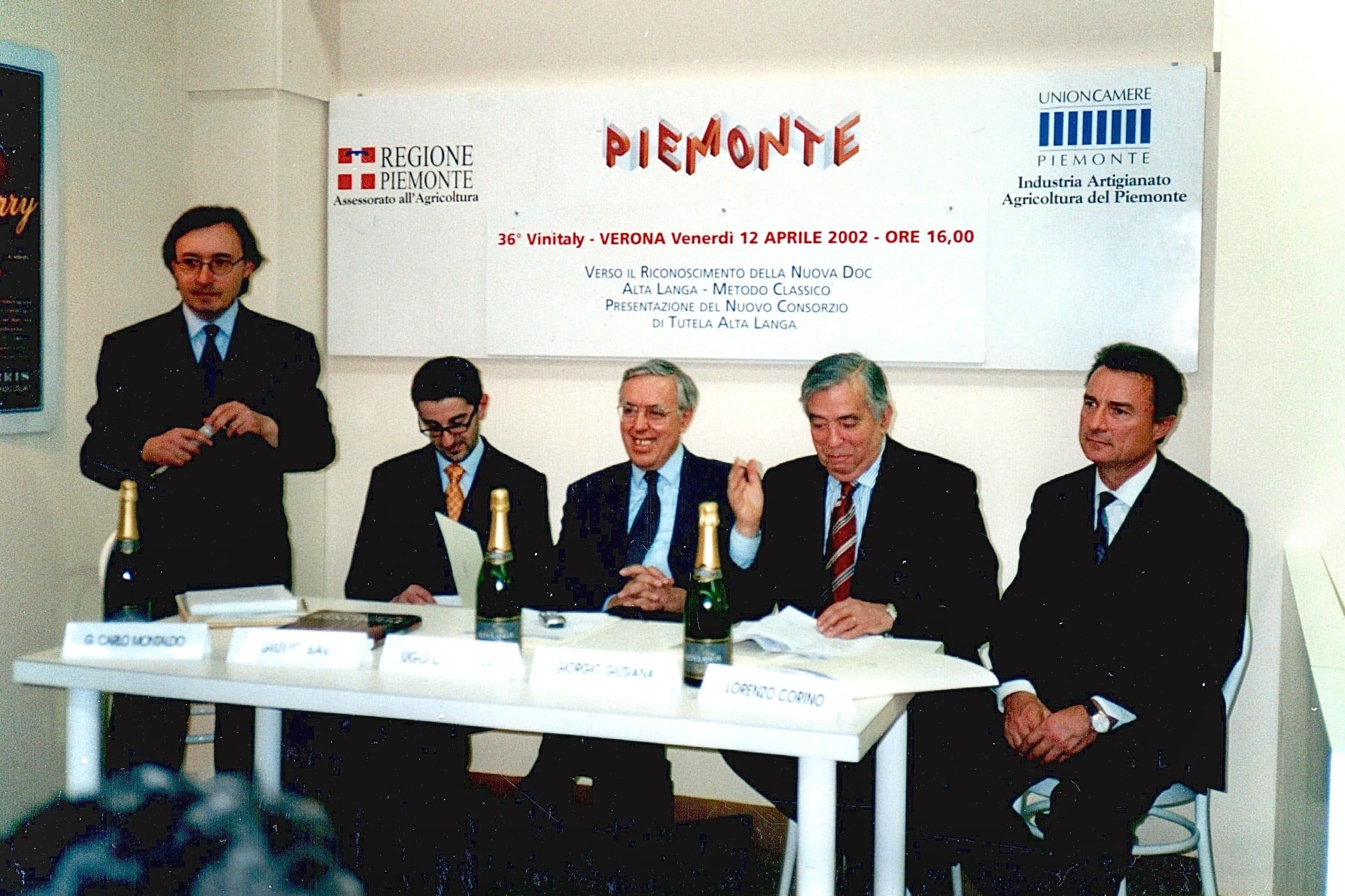
The Consorzio Alta Langa was in full swing by the start of 2002 and, most importantly, its activities were very quickly ramped up at the end of that year, with the awarding of the Alta Langa DOC designation.
The original logo of the Consorzio Alta Langa (2001)


Areal map Alta langa
Next page:
The Wines: Tasting, Serving and Matching