

intro
The Terroir and the Method
The Wines: Tasting, Serving and Matching

01Cellaring
02Serving
03Tasting
04Pairings
05Mixology
How to Best Appreciate a Bottle of Alta Langa docg
How to Best Appreciate a Bottle of Alta Langa docg
From an essay byVincenzo Donatiello
Cellaring
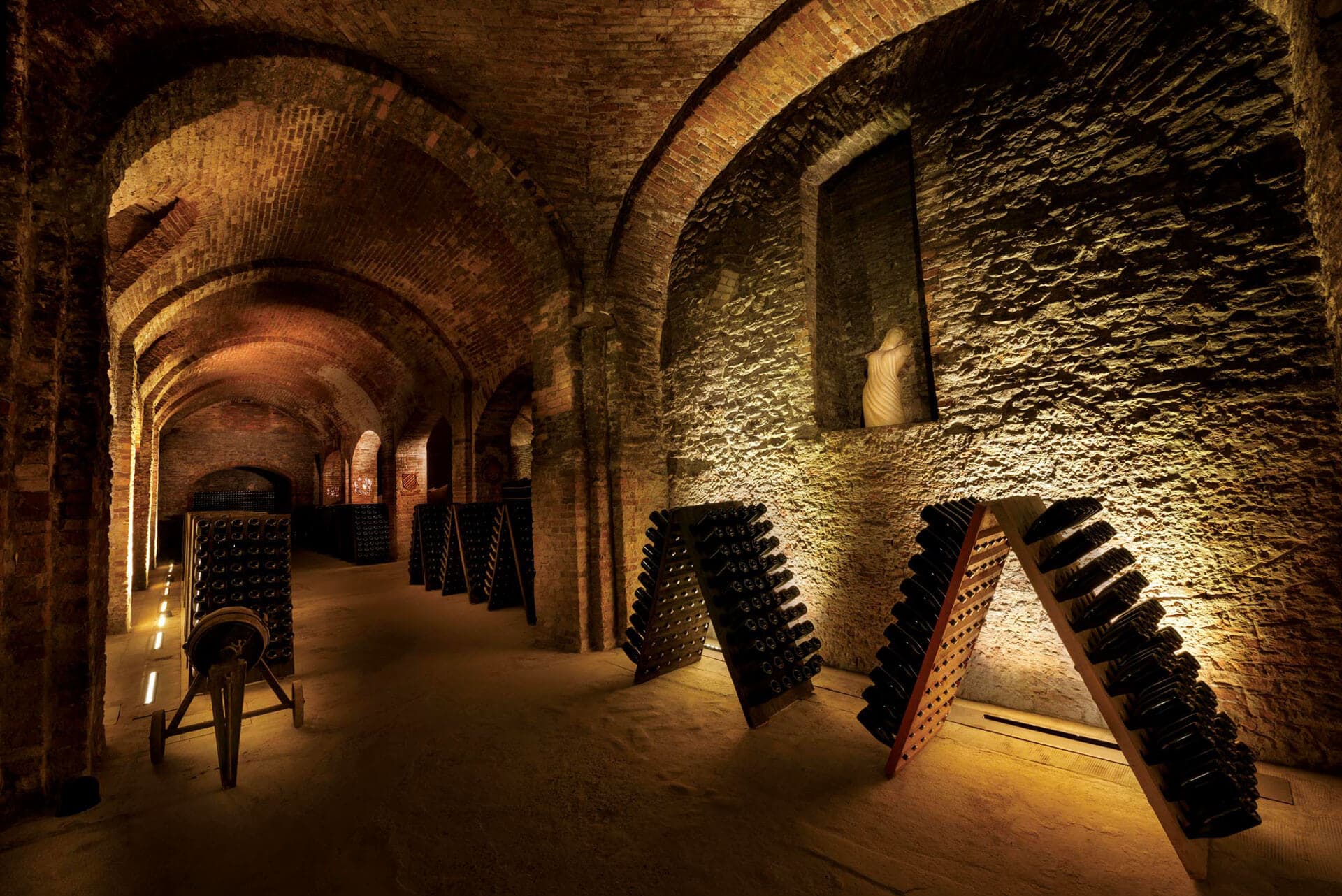
Alta Langa DOCG is one of Italy’s most representative sparkling wines. This calls for particular care when storing it in the cellar. Be sure to always follow the guidelines below in order to preserve all of the wine’s sensory characteristics intact.
- Store in a well-ventilated, dry place: this will help preserve the wine and its packaging as well, as it cannot be deteriorated by high humidity, which should never be over 70%.
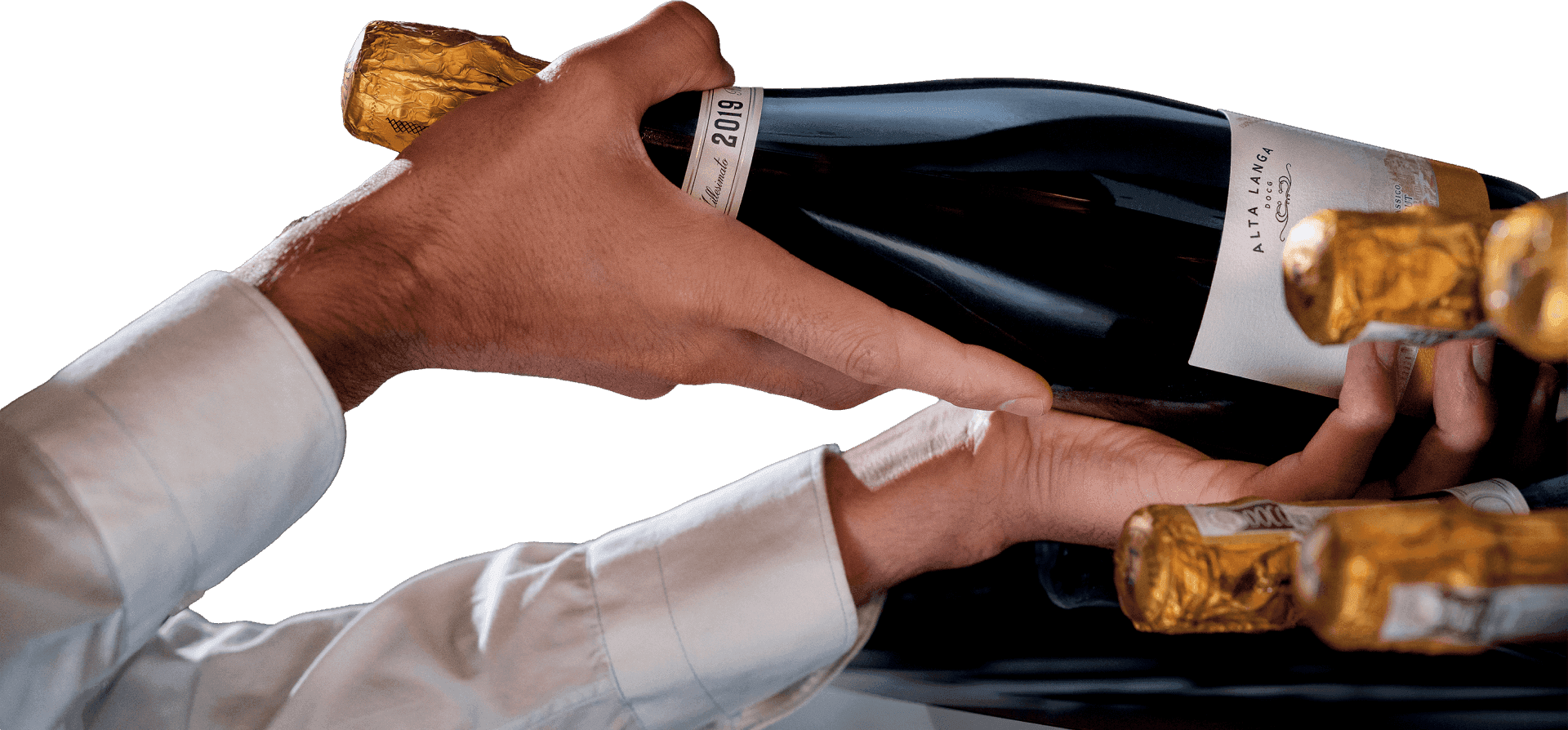
- Always store the bottles in a horizontal position: this ensures continuous contact between the wine and the cork, so that the latter does not dry out and lose elasticity and to avoid contact with oxygen. The natural pressure of Alta Langa wine will keep the cork elastic for a few months even if kept in a vertical position.
- The ideal temperature in the wine cellar should be a constant 10° to 14°C.
The space should be dimly lit or the lights shaded, so as to avoid altering the wine’s characteristics. - It is advisable to age cheeses and meats separately from wine, as they can transmit unpleasant odors, from lactic notes to mold.
Always follow the above rules if you want to preserve all the wine’s organoleptic qualities intact.
Serving Alta Langa
The ideal serving temperature is between 6° and 8°C. At this temperature, all the wine’s components are at their best: from the bead and the aromas to the freshness on the palate. An aged Alta Langa can be served at about 2°C more, but the best thing is to let the wine warm a couple of degrees in the glass, naturally, to allow the scents to open up slowly.
HOW DO YOU OPEN A BOTTLE OF ALTA LANGA?
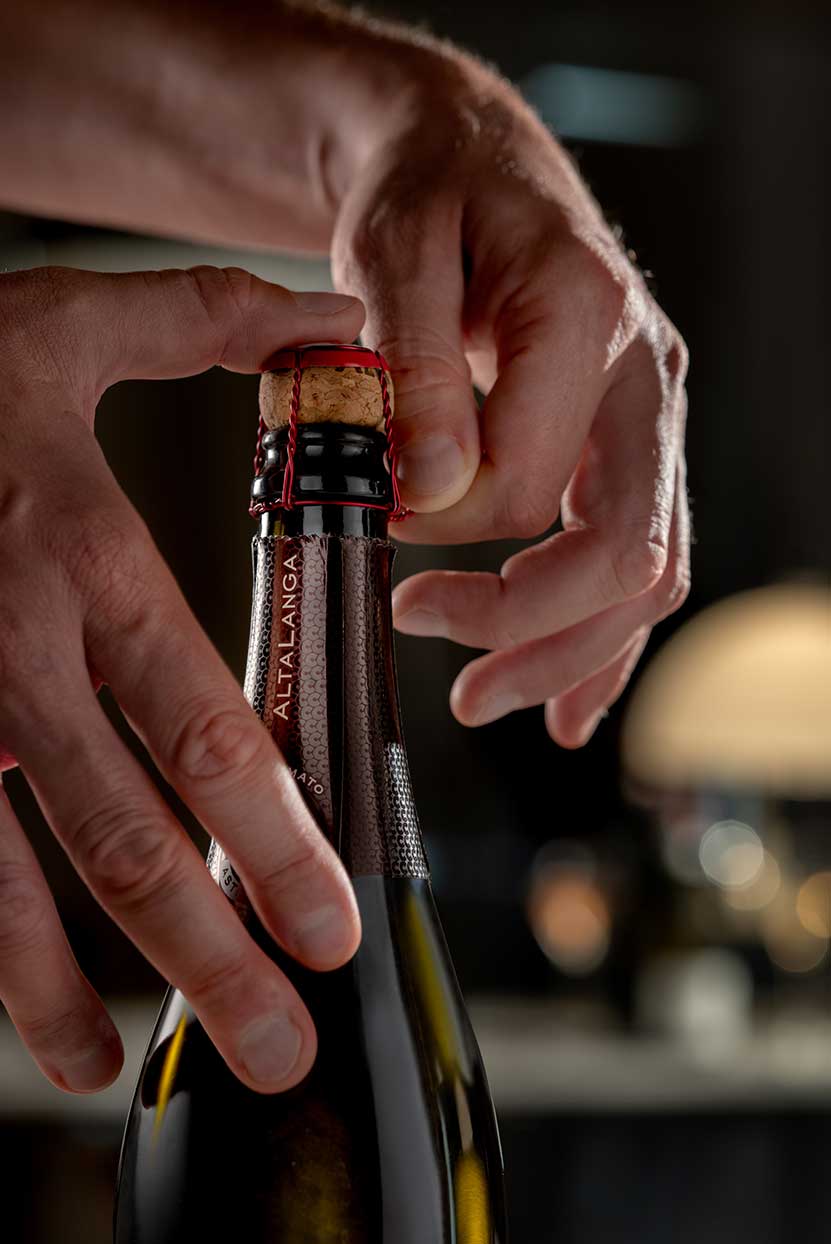
First, remove the aluminum foil and the capsule. Then, holding your hand over the cork to make sure it doesn’t pop off by itself, hold the bottom of the bottle in your other hand and rotate the bottle while gripping it firmly. The important thing is to rotate the bottle, not the cork. After having popped the cork, sniff both the part that had been in contact with the wine and the side of the cork, to make sure it was not defective.
WHAT KIND OF WINE GLASS ARE YOU USING?
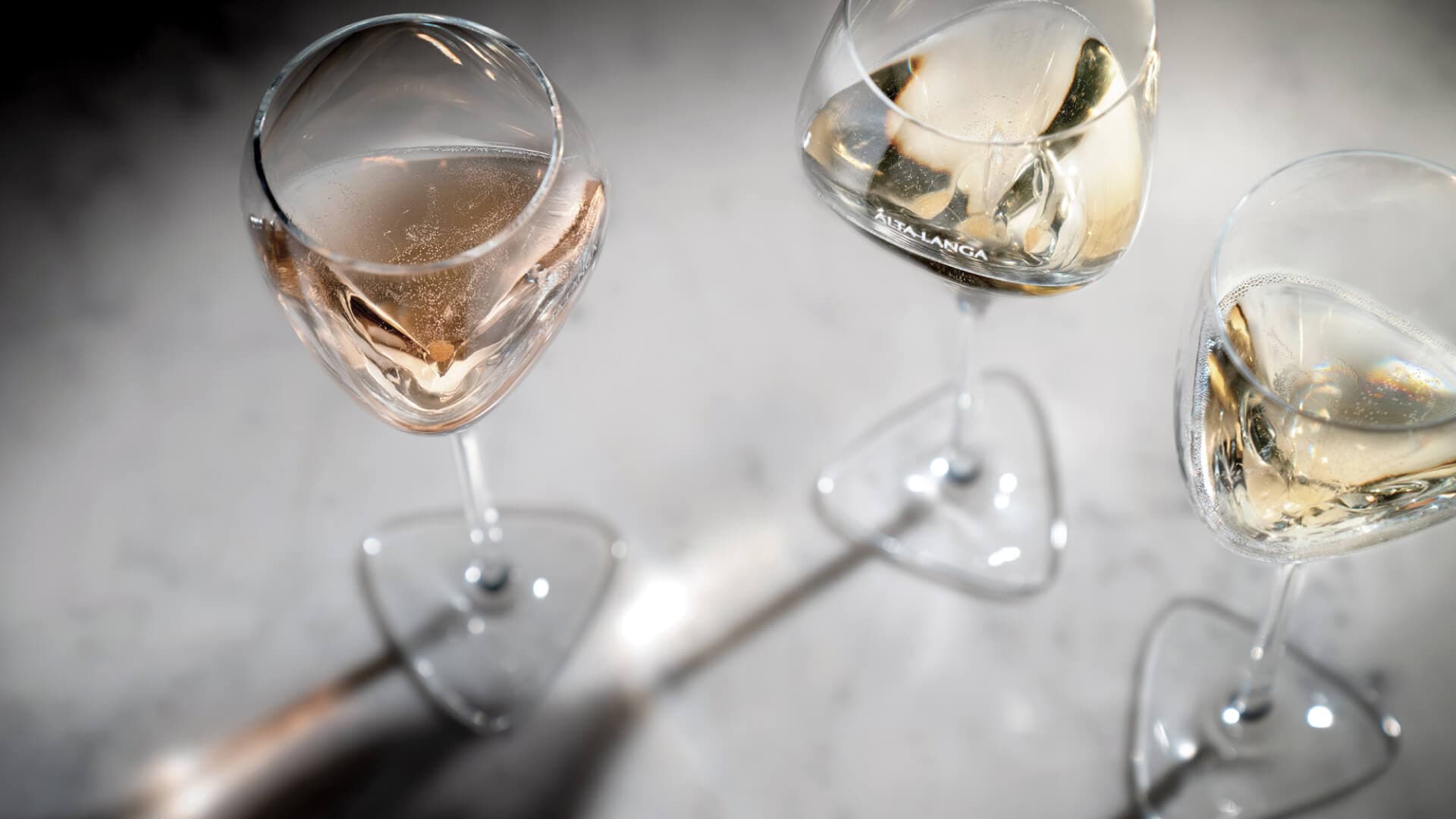
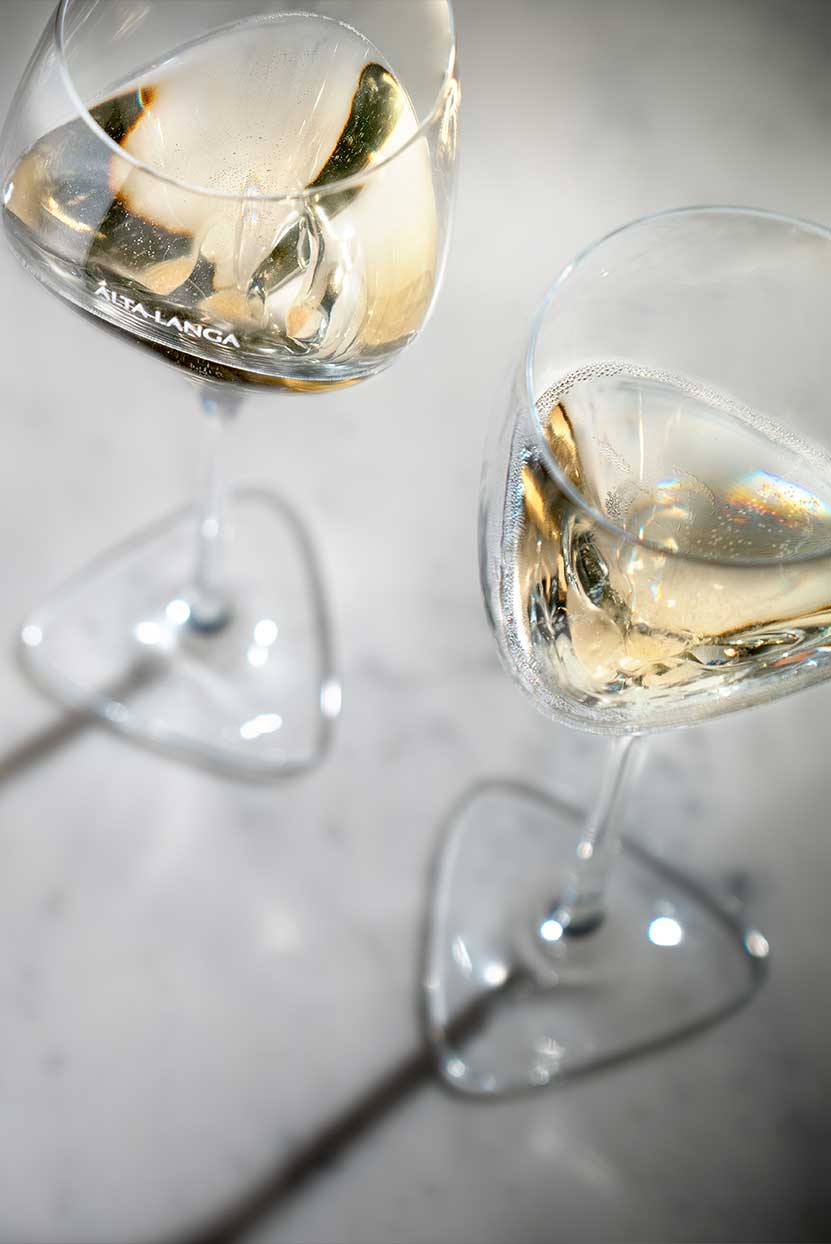
Forget champagne flutes, narrow and tall. We are partial to a wider glass that narrows progressively. This is the shape that permits an optimal development of the effervescence and the release of aromas, which will be funneled to the nose. Of course, it is fundamental that the glasses be perfectly clean and odorless and that they contain no residue of any kind, neither dust nor detergent. The latter, above all, would impede the development of the bead, creating undesirably large bubbles. Our advice is to pour a small quantity in the glass and wine it in preparation.
Tasting

AUDITORY TEST
Listening to the sound of the wine as it is poured into the glass can tell us much: the sound of a continuous flow means there are many small bubbles, guaranteeing first-rate effervescence.
VISUAL TEST
The color will help us understand a wine’s age and stage of development: straw yellow, more or less saturated and with the right golden highlights, indicates a wine in the full freshness of youth, while a more mature wine takes on a golden hue. In the case of Alta Langa Rosé, the color palette is quite ample, ranging from onion red to all the shades of cherry red and deep pink; here what makes the difference is how long the must is left to macerate on the skins.
But let us continue with an analysis of the perlage, evaluating the number of bubbles and their size: a top-quality wine will have myriads of tiny bubbles, rising to the surface continuously.
ESAME OLFATTIVO
When we inhale the air in the glass, we are searching for a sharp, qualitative perception, the number of descriptors and the different aroma families.
Floral and fruity notes, bakery smells – largely associated with the classic method, like Alta Langa – must surely be present in the glass.
What are the aromas we will find in Alta Langa wines? White flowers, like linden, jasmine and hawthorn, and fresh fruit; white peaches, plums and rennet apples. There are also notes of roasted nuts, like almonds and hazelnuts, notes of vanilla or honey, bread crust and yeast, yogurt and fresh butter. And let’s not forget hints of minerals, like chalk and stone.
The rosés exude scents of roses, berries, redder, riper citrus fruit, pomegranate and prune.
With age, these aromas evolve and take us on to candied fruit, dried figs, cocoa and spice.
When these aromas become more intense and the aromatic palette is enriched, we know we are holding a glass of top tier Alta Langa.
GUSTATORY TEST
When we taste a glass of wine, we try to identify its qualities and characteristics; the acidity that freshens the sip, the bubbles that elicit a tactile sensation, the wine’s fruity notes, its alcohol content. Because it is the alcohol that underscores the wine’s aromas and flavors.
With aging, the saline and mineral notes emerge, lending even more elegance to a glass of Alta Langa.
Another characteristic, typical of spumante, is the creaminess produced by the fine beading.
Pairings
Alta Langa is more than just a fine aperitif. The depth of many Alta Langa bottles, their completeness and harmony, the aromas and the tactility of many products give Alta Langa wines a gastronomic passkey. Whether with traditional dishes or in the company of more contemporary cuisine, the possible pairings are infinite and multi-faceted.
Traditional Dishes
BAGNA CAUDA
The main caveat is to avoid pairing it with vegetables that have strong aromas, like peppers. Turnips and cardoon are perfect. The ideal pairing is with an Alta Langa Blanc de Blancs, which holds its own from an aromatic standpoint, and whose fine bubbles cleanse the palate of the oily sauce.
HAND CHOPPED BEEF TARTARE
The meat’s natural sweetness pairs perfectly with the freshness and saline notes of Alta Langa. In this case, a Rosé, for a pairing that also matches chromatically.
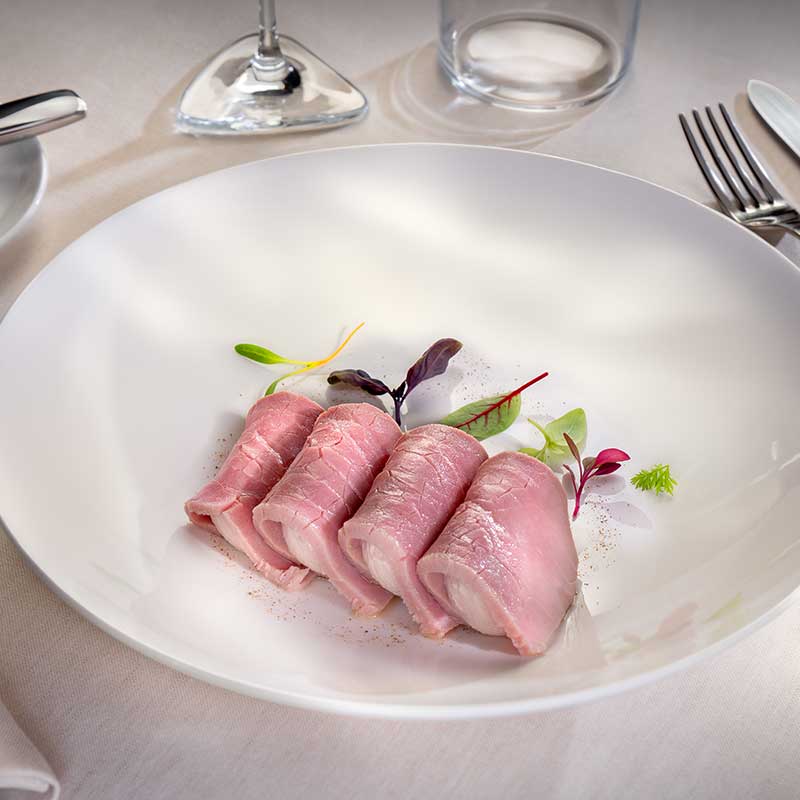
VEAL WITH TUNA SAUCE
Its succulence finds a perfect match with an Alta Langa made with only red grapes, full-bodied and aromatic with floral and fruity notes: it closes the mouthful, leaving the palate ready for the next one.
RABBIT IN A JAR
The meaty taste and oily texture of the rabbit call for a harmonic pairing. A young Alta Langa, fresh and lively, would be just the thing.
TAJARIN (EGG NOODLES)
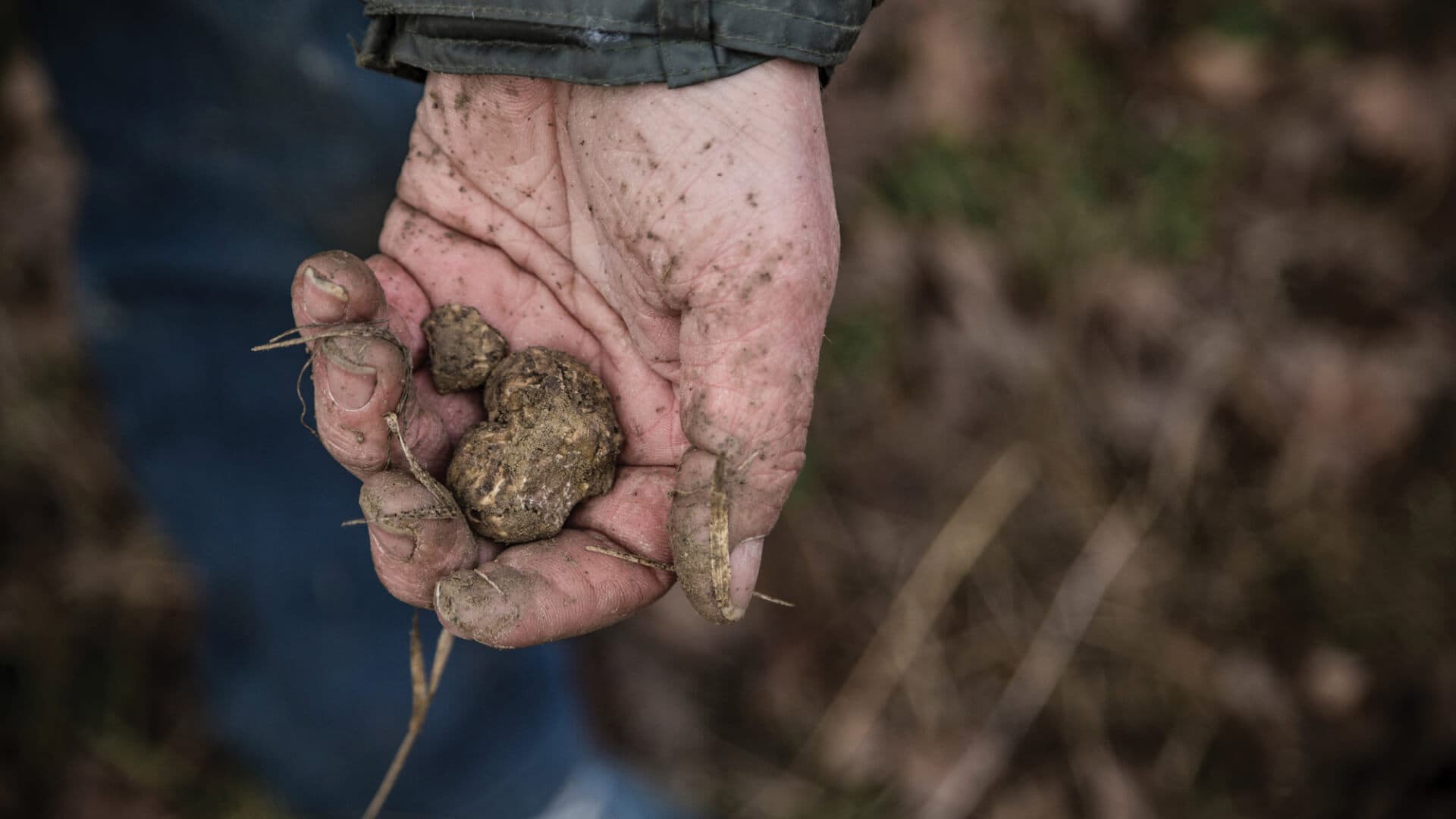
Whether they are served with a beef or Bra sausage ragu, with butter and grated cheese or flakes of white truffle from Alba, Tajarin noodles are even better with a glass of Alta Langa. Full-bodied as a Blanc de Noirs or a Rosé for starters; the purity of Chardonnay for pasta dishes with butter. And if you add white truffle, choose an Alta Langa that has spent some time in the bottle, developing its aromas.
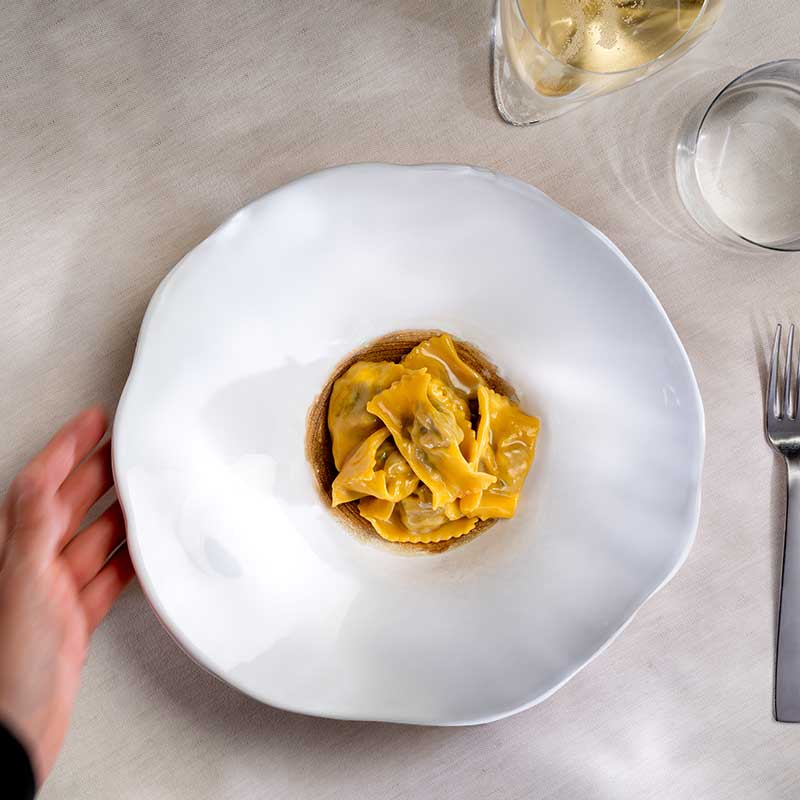
AGNOLOTTI DEL PLIN (PIEDMONTESE RAVIOLI)
While for those served with butter and sage, a Blanc de Blancs would do nicely, with agnolotti served dry (al tovagliolo) it would be better to choose an Alta Langa with a more saline side.
BOILED MEAT
An Alta Langa made from red grapes, perhaps with a vin clair fermented or aged in oak, makes a fitting companion for the succulent meat and oiliness of the sauces.
PIEDMONT FRY-UP
What could be better than a cool, fresh glass of Alta Langa to go with the fatty and sweet notes of a Piedmont fry-up?
RUSSIAN SALAD
The oiliness of Russian salad, with its sweet notes of egg, calls for the refinement and elegance of a great Alta Langa Blanc de Blancs.
CARPIONE (COLD SOUR MARINATED MEAT & VEGETABLES)
Don’t be put off by the acidity of this dish, because everything has been thoroughly fried before being marinated. The zucchini, the sage leaves, the egg and the cutlet will be ideally complemented by the citrus notes of a Blanc de Noirs or a Rosé.
FINANZIERA (COCKSCOMBS & VEAL OFFAL)
This dish needs a pairing that will bring aromatic notes and a full body, especially if prepared with porcini mushrooms. A well-developed Blanc de Noirs comes to mind.
GNOCCHI WITH CASTELMAGNO CHEESE
Tasty, succulent, rich and colorful. Nothing beats an elegant Alta Langa in combination with this classic Piedmont opener.
CAPONET (CABBAGE & PORK)
Pork and Savoy cabbage. Tending towards sweetness, succulence and sapid notes: the perfect court for a match with Alta Langa. Choose a fresh version composed mostly of Chardonnay.
COLD CUTS & CHEESE
Fresh cheeses and local cured meats are ideal partners for Alta Langa wines. A bit of advice: turn things around, choose the wine first…
Italian and international cuisine
POULET DE BRESSE
Tender, tasty chicken pairs well with delicate, fresh wines, like Alta Langa.
OYSTERS
Raw oysters bring the full taste of the sea to the palate, and the effervescence and acidity of an Alta Langa would yield an unpleasantly metallic taste. Oysters and Alta Langa can be friends, but only in the company of puréed peas, or if they are grilled or in tempura.
PRAWNS
The natural sweetness of shrimp meat calls for the characteristics Alta Langa brings to the glass. Raw or cooked, grilled or as a component of more elaborate preparations, prawns are always perfectly accompanied by our Metodo Classico.
MOZZARELLA DI BUFALA
Its succulent fattiness and milky notes make it a perfect match for an Alta Langa Blanc de Blancs.
CLUB SANDWICH
A great Alta Langa is just perfect for the sweetness and tastiness of a sandwich. Not to be missed out.
CROQUE MONSIEUR
The famous French grilled cheese and ham toast is ideally matched by a Blanc de Blancs, vertical and mineral.
SMOKED DISH
By themselves or in combination, marinated or cooked: what they need is a glass of Alta Langa to cut the oiliness and exalt the aromatic notes.
ZUCCHINI FLOWERS
Stuffed with ricotta and served with fresh tomatoes, these flowers deserve a great Rosé, but if they are battered and fried, we would instead recommend a vintage Alta Langa Millesimato, made with equal parts of Chardonnay and Pinot nero, to bring out its aromas and accompany the dish.
RICE, POTATOES AND MUSSELS
In this dish, the salinity of the mussels, tempered by the sweetness of the potatoes and rice, calls for a fresh pairing with a full taste. The recommendation is an Alta Langa Rosé.
PUMPKIN RAVIOLI
This Mantua dish plays on the sweet and sour notes of butter, pumpkin and amaretto cookies. A Blanc de Blancs, absolutely.
COTECHINO & CO.
A sumptuous “porky treasure” in one dish: cotechino, pork loin and trotter must be sublimated in a perfect chromatic match with an Alta Langa Rosé.
FISH SOUPS AND BROTHS
Although best with tomatoes and aromatic herbs, all fish soups are ideally accompanied by an Alta Langa Rosé.
HOT & SPICY
The elegant freshness of a glass of Alta Langa Brut or Rosé – with a few years of aging under its belt – refreshes the taste buds after hot and spicy bites.
ROASTS
Each region has its own way of roasting meat, white or red though it may be. There is no better companion for it than an Alta Langa that is prevalently – or exclusively – made from Pinot nero.
COSTOLETTA ALLA MILANESE
Rich, tasty and juicy, Milanese breaded cutlet needs a partner in the glass that will cut through the fattier parts: from Brut to Rosé, take your pick.
RISOTTO AL PARMIGIANO
Intense to the nose and palate: its creaminess and fat, together with its smooth, full notes, call for a glass that will “reset” the taste buds. Nothing beats an Alta Langa here, especially a zero dosage.
CARBONARA
The sweetness of the egg and fat of the guanciale (pork cheek), along with the persistence of the pecorino romano, provide the perfect setting for an Alta Langa Blanc de Blancs, persistent and full-bodied.
PIZZA
One of the best gastronomic complements for pizza is a classic method wine, like an Alta Langa. Any of the many choices offered by the designation could be picked, depending on the topping.
RAGÙ
Prosciutto, salami mix, veal and pork can find no greater gourmet partner than an Alta Langa Rosé.
CHEESE
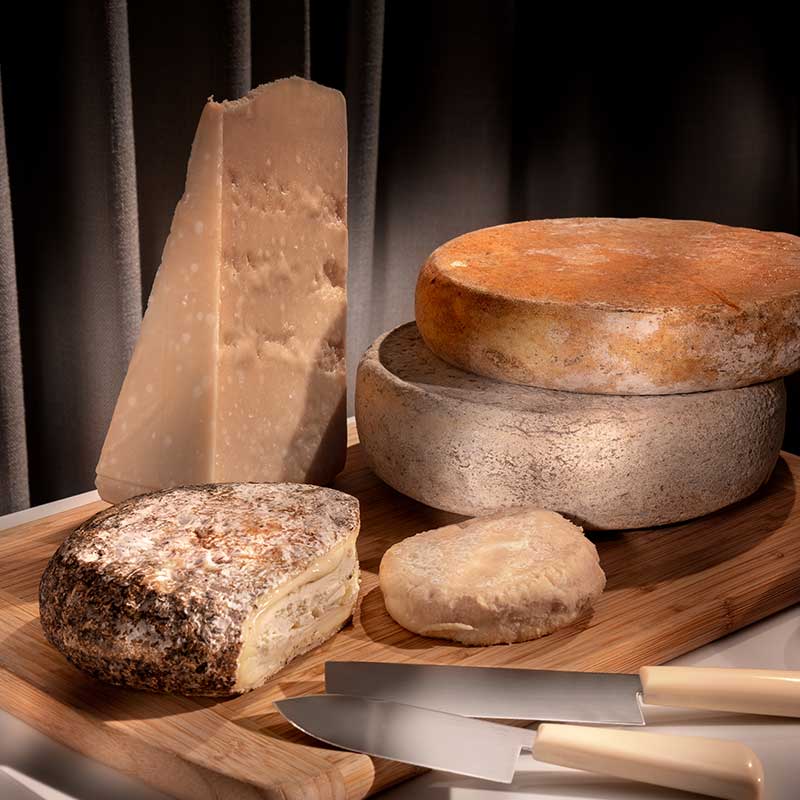
The variety of Italian and international cheeses is mind-boggling: from fresh to aged, from blue cheese to mozzarella, there’s something for everyone. Just like Alta Langa wines. Depending on how fresh the cheese you’ve chosen is, pair it with an Alta Langa that is less or more structured, and match the aging to that of the cheese.
DESSERT
Well, actually, no. The palate will suffer an onslaught of sugar, with the dessert’s sweetness making the wine taste even sweeter than it is. If you must have an Alta Langa at the end of the meal, make it a stand-alone drink.
Mixology
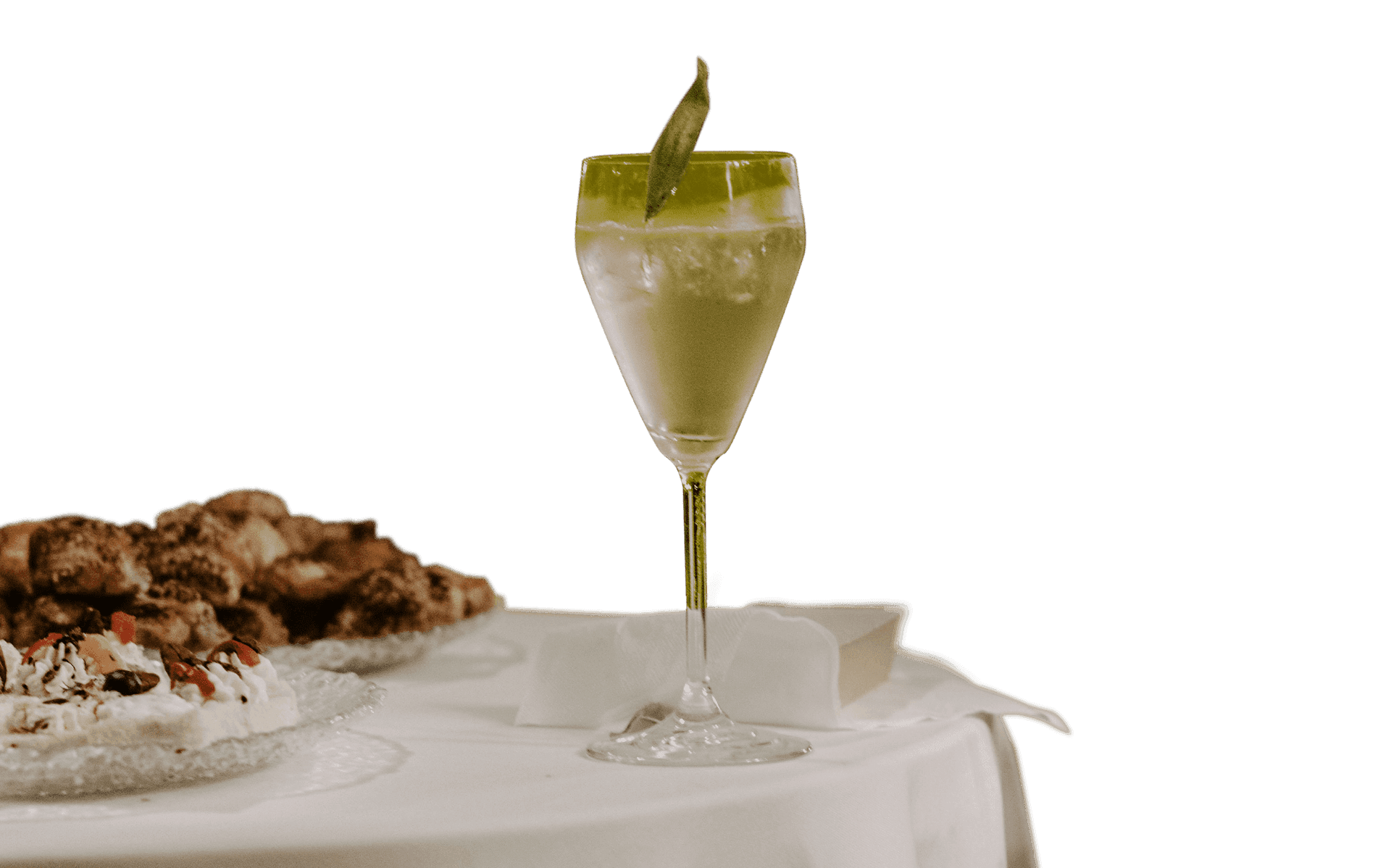
If one finds the right balance and the right couplings of taste, a cocktail containing our Metodo Classico wines can help many people discover and appreciate the world of Alta Langa DOCG. The key is to go easy on the ingredients. Add a dash of Vermouth di Torino or Barolo Chinato to an Alta Langa or, in the hottest months, serve it in a glass with ice and a slice of apple or cantaloupe. And if you’re going for a white Sangria of superior quality, remember that the wine must also be up to snuff.
Alta Langa cocktails, by Il Confessionale Vermouth&Mix
Alta Langa in Grande
- 45 ml Vermouth di Torino IGP white
- 15 ml cumin-flavored liqueur
- top with Alta Langa DOCG
"Regio 50" by Il Confessionale Vermouth&Mix
- 80 ml Alta Langa docg
- 30 ml Vermouth di Torino igp extra dry
- 15 ml brandy
- 1 teaspoon linden honey
"Alta Langa Roma" by Agostino Musichini
- 40 ml Campari
- 30 ml pomegranate juice
- 45 ml Vermouth di Torino igp red
- top with Alta Langa docg
"Torino Royal" by Christian Comparone
- 30 ml Vermouth di Torino igp red
- 30 ml hazelnut liqueur
- 30 ml Rosolio di Torino
- 30 ml lemon juice
- 100 ml Alta Langa docg extra brut
"ALTA LANGA PASSION" by Giacomo Colamarino
- 60 ml vodka
- 30 ml lime juice
- 30 ml passion fruit syrup
- top di Alta Langa docg
Next page:
Genius loci