


intro
The Terroir and the Method
The Wines: Tasting, Serving and Matching

01New Pairings
02The truffle
03Protection of the truffle grounds
Alta Langa and Alba White Truffles
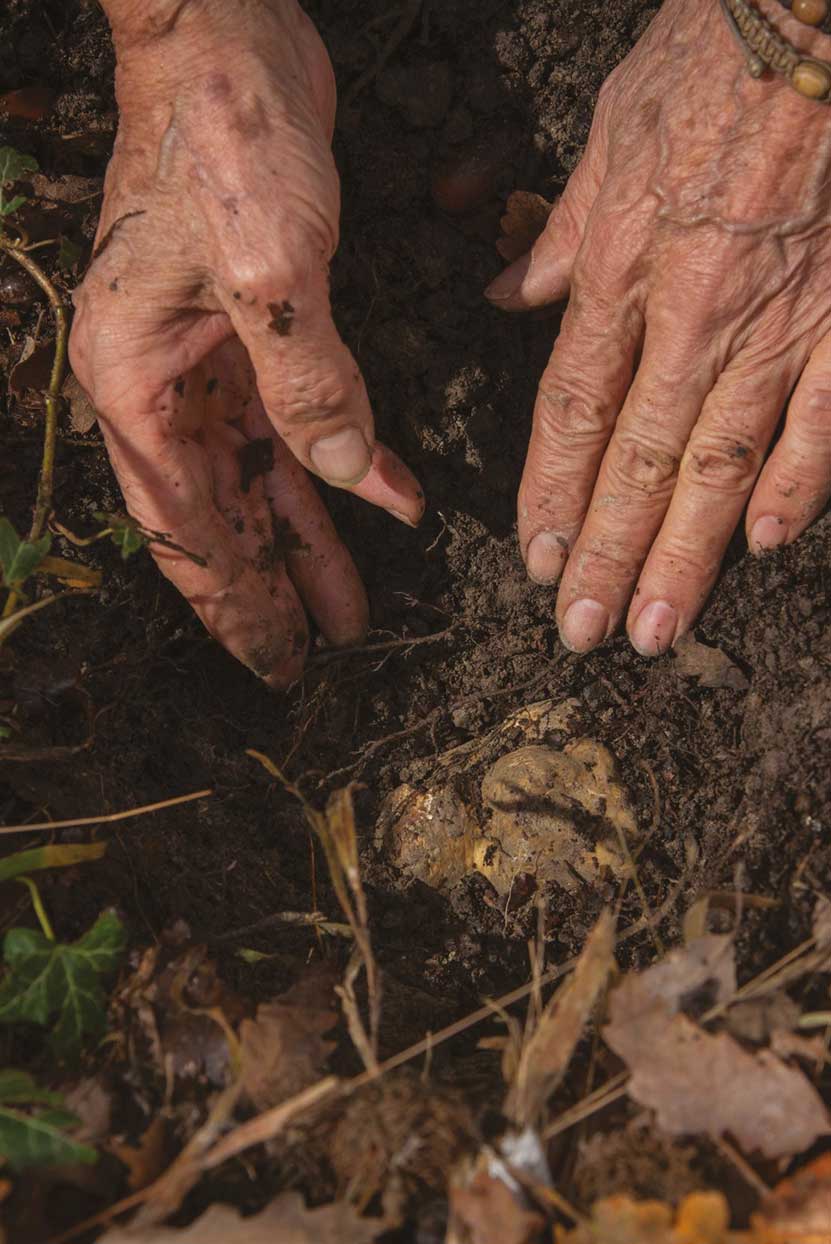
Alta Langa and Alba White Truffles
From an essay byAntonio Degiacomi
New Pairings and New Experiments in Gastronomy
The debut came when Alta Langa spumante was paired with dishes concocted by prominent chefs, to accompany the truffles at the Fiera Internazionale del Tartufo Bianco d’Alba, the Alba Truffle Show.
The public, gourmets and journalists, mostly foreign, that attends the Alba cooking shows applauded the results of the experiments by national, international and local chefs and approved heartily of the pairings with our spumantes. This contributed to establishing Alta Langa’s reputation as a gastronomic wine and not just for toasting at celebrations.
Then someone had the idea of celebrating the truffle “New Year”: a spirited vigil fueled by Alta Langa, a strongly symbolic event preceding the opening of the truffle hunting season.
At the stroke of midnight on the first of October, the official opening of the Alba white truffle harvest in Piedmont, truffle hunters and their dogs set off for the woods in the dark, kicking off a season that will end on the last day of January. The harvest is preceded by a “rest period” – from the first to the last day of September – during which harvesting truffles is forbidden. The weather is still quite warm and the insects are very active, so the purpose of the ban is to ensure the collection of only good, healthy truffles and, above all, favor the propagation of the spores.
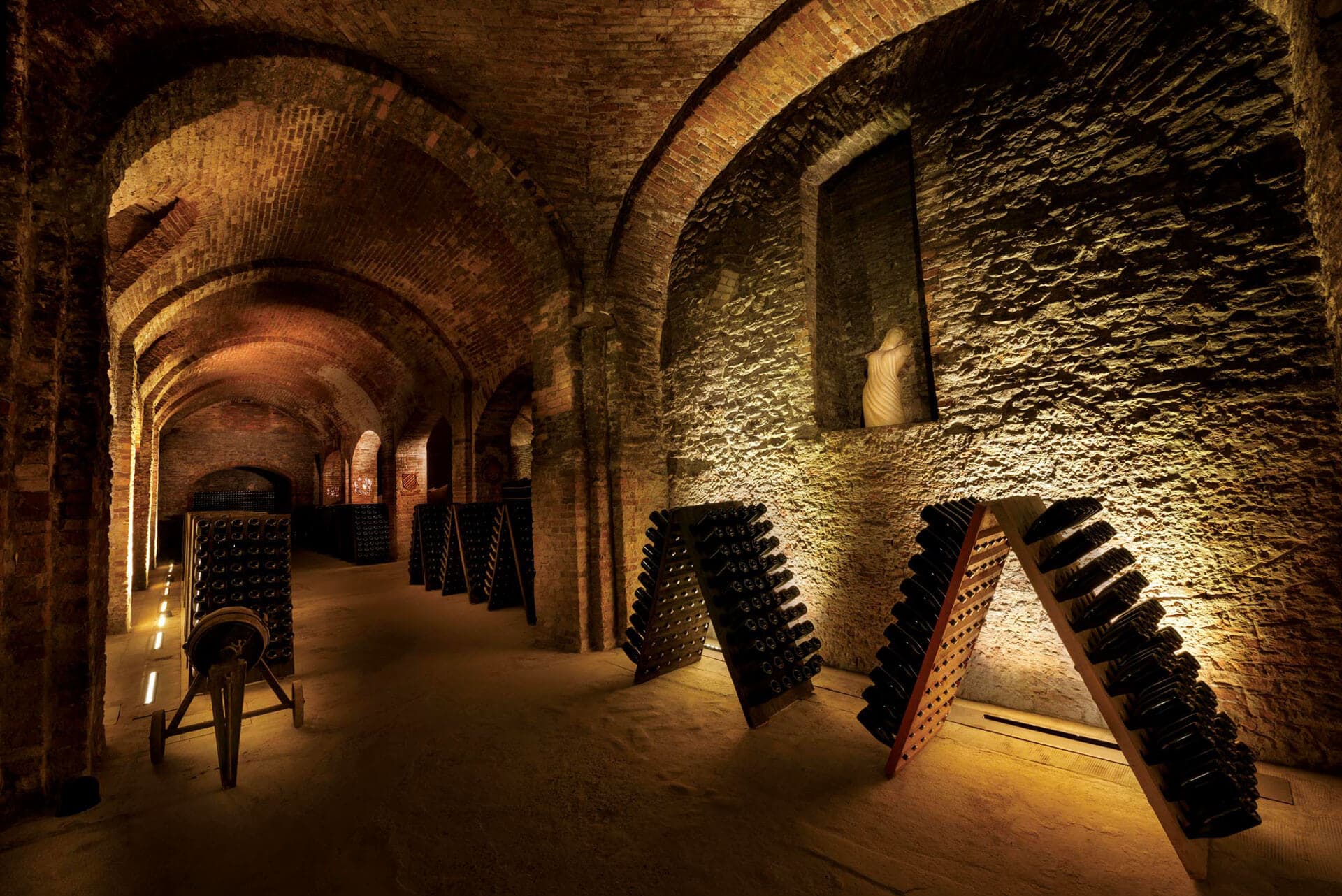
This underscores a virtue shared by both truffles and Alta Langa wines: patience, the willingness to wait. Wait for the trees to grow; wait for the vineyard to develop before it produces anything; wait for the truffle to grow and ripen underground, where the dog’s nose will find it, a dog that has been patiently trained over time to do its job; wait for the passing of the seasons and the right times to tend the vines; wait for many months as the wine ages in the bottle, down in the cool cellars.
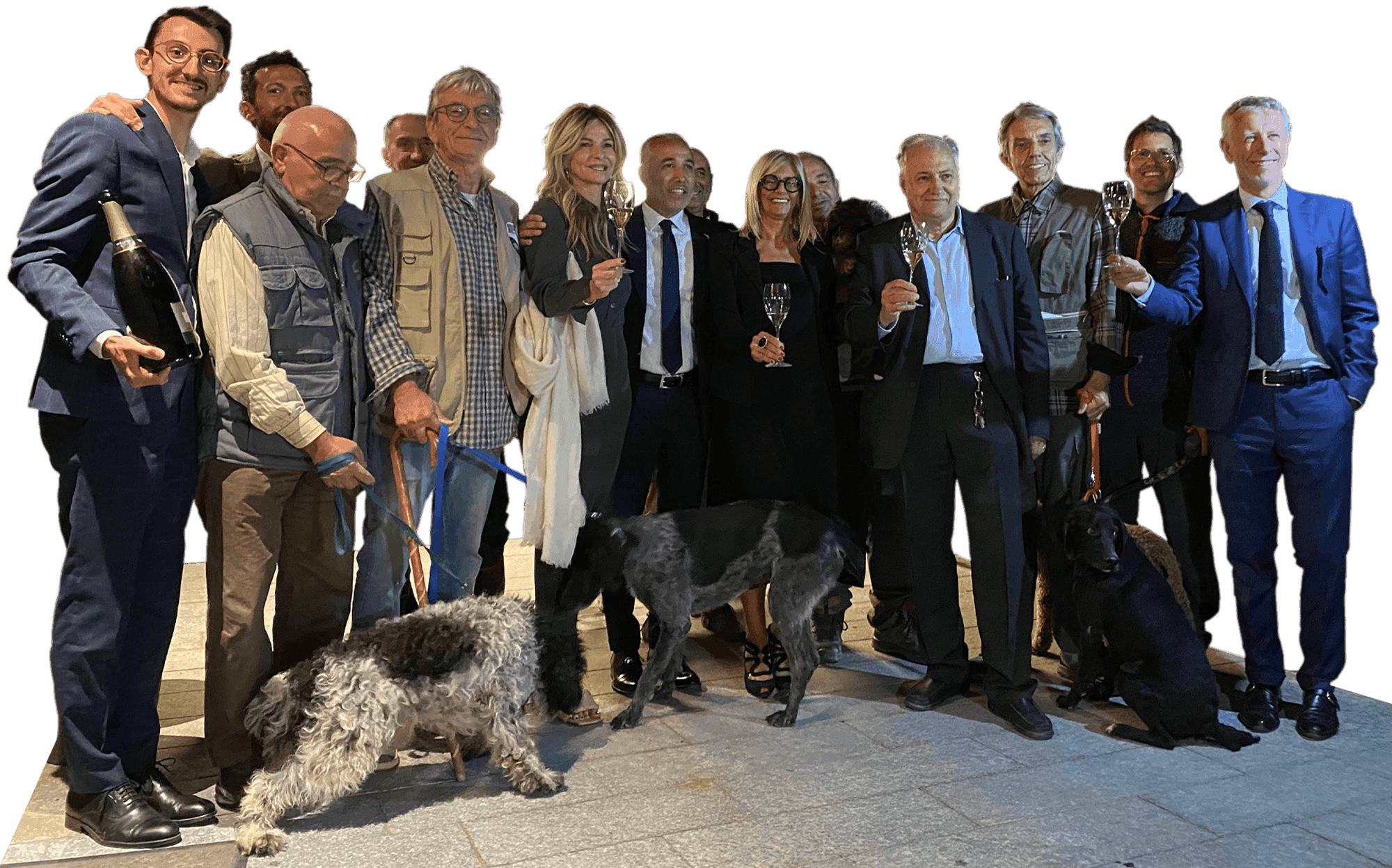
The Truffle, Herald of Piedmont
In a web survey conducted by the Research Center in 2016, 150 restaurants serving international haute cuisine, particularly in the USA and in Asia, had Alba white truffles on their menus.
Foreign tourists who explore the winemaking lands of Langhe, Roero and Monferrato, discovering wine cellars and restaurants, are attracted by and curious about the famous truffles.
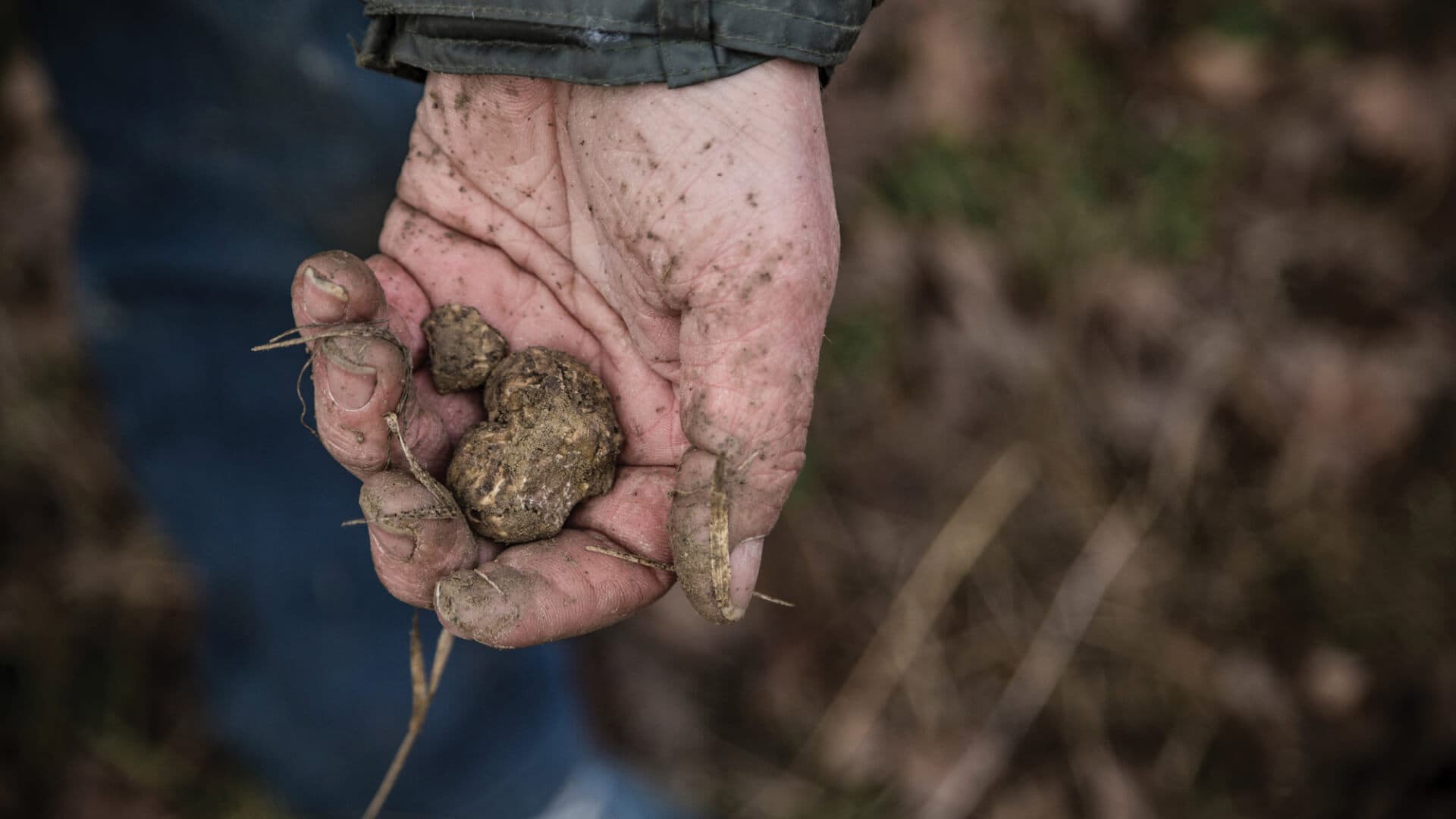
They are even more fascinated when they learn, thanks to explanations and hunting demos, that truffles aren’t cultivated: they grow in symbiosis with certain trees, and man and truffle hound, perfectly in synch, find them by walking for miles through fields and woods.
In the 1900s, truffles benefited from much promotion through the fairs, starting with the one in Alba, then Moncalvo, in the province of Asti, Murisengo, in the province of Alessandria and another twenty or so villages and towns in Langhe, Roero and Monferrato.
Giacomo Morra was the first to understand the importance of communication, gaining exposure by giving large truffles to heads of state and film stars. Merchants like Roberto Ponzio followed in his footsteps, and the fairs themselves did the rest, building an export market composed of refined gourmets and famous chefs.
Oeno-gastronomic societies, restaurateurs and winemakers have promoted the beauty of the Piedmont’s hill country, the quality of its wines and its cuisine, and every gift sent abroad or given to visitors always included truffles.
But the truffle’s prestige goes back centuries, to when local communities would offer them as gifts to visiting royal functionaries and nobles contested the peasants’ right to harvest truffles on their land.
The Savoys gave truffles as gifts of distinction, increasing their prestige through correspondence and diplomatic exchanges with the courts of Vienna, London, Paris and Berlin.
Napoleon’s brief annexation of Piedmont to France augmented the reputation of truffles in Paris.
During the eighteen hundreds, truffles gradually expanded their presence, going from the banquets of the aristocracy to the dinner tables of the bourgeoisie and from the royal kitchens to restaurants.
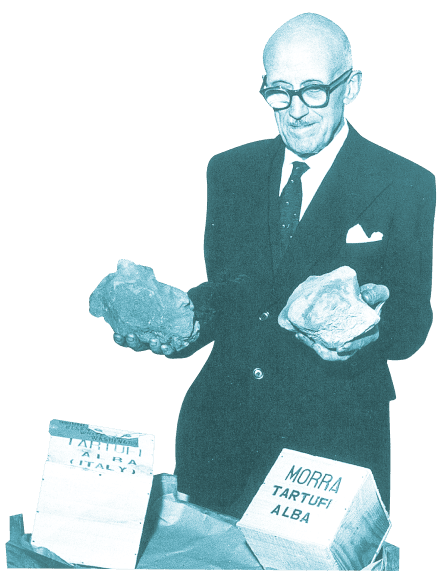
Giacomo morra
The Truffle Hunters: “Wild Men”
In the past, most truffle hunters belonged to farming families. After the harvest and the sowing of next year’s wheat, they crept out in the dead of night with their dogs, clambering through the undergrowth beset by superstition and competing against other men and dogs.
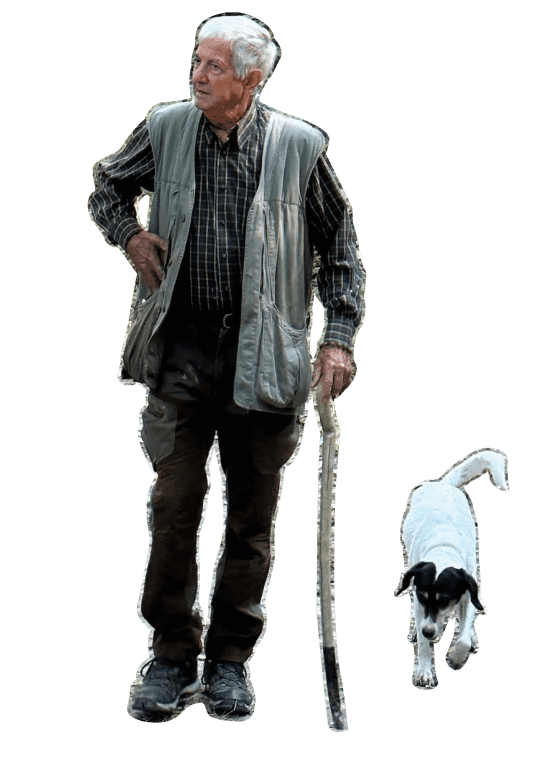
Today’s truffle hunters might be factory workers or white collars, professionals or craftsmen, with generations of ancestors from the countryside or not, but they too, to some extent, are “wild men”. They move according to memorized maps, pieced together by observing signs and tracks, or tips handed down. They move alone, in silence, during the hours of day and night when they are least likely to be seen, eager to be the first to search an area, leading their dogs to places known to be worth exploring and following their noses, then digging when they find something, in an intimate exchange of glances and with only few words.
Why has it always been the custom to search for truffles at night, or at least in the late evening or at daybreak?
In the essays by Baldassare Molino, Davide Bobba and Franca Garesio Pelissero, Di tartufi e di masche (2017), we find documents that show how contested the right to search for truffles on others’ land was in the past.
In those times, each community had its “field rules”, specific regulations governing farming and logging activities, established by local councils and the feudal lord. In some townships, it was prohibited, with relative sanctions, to “dig truffles” for foreigners, in others people were kept out of the vineyards and alteni (vineyards with trees or poles for support) during the months of September and October, to protect the grapes before the harvest, while in others still, it was forbidden to “hunt truffles” on land belonging to someone else and “not diligently refill” the holes dug in the ground.
Particularly significant is the 1737 document from Vezza d’Alba, in which the feudal lord Traiano Giuseppe Roero proclaims a prohibition on “the excavation of truffles”.
Two centuries later, in Hard Labor (1936), Cesare Pavese’s poem Landscape II echoes the tensions of the past:
Here, in the damp, pretending to go after truffles, they sneak into the vineyard and steal the grapes
Today’s truffle hunters say their dogs’ sense of smell is sharper at night. But the main reason remains the same: to keep the other truffle hunters from finding out your spots, your paths, your markers.
The practice of truffle hunting and digging, if done correctly, favors the maintenance of the ecological balance and plant biodiversity while ensuring the seasonal biological regeneration of the truffles’ host species.
Today, everyone is allowed to look for truffles in the woods and in uncultivated land in general. Truffle hunters are not allowed on private property and in the truffle-bearing areas marked as off limits according to applicable laws and regulations, In Piedmont, it is also allowed at night.

Truffle Harvesting Rules
- Truffles may only be hunted using appropriately trained dogs. Each hunter, or gatherer, may use a maximum of two dogs simultaneously;
- Truffles must be dug out of the ground using appropriate tools (small shovels or hoes) equipped with a metal blade, and only when and where the dog has indicated the presence of a truffle and begun to dig at the ground;
- The holes dug to extract the truffles must be refilled with the dirt removed and the surface of the soil smoothed over properly;
- It is prohibited to dig multiple holes;
- Truffles not indicated by dogs, immature truffles and damaged or spoiled truffles cannot be collected;
- All other applicable laws must be respected, and conduct appropriate to civil coexistence is urged.
The truffle hunter knows the biological cycles of the symbiotic growth of each truffle species, in relation to the phases of the moon, habitats and the amount of precipitation. They have a profound relationship with their dogs, who, after special training, learn to distinguish the particular odor that each truffle species emits when it matures.
Among the many descriptions of the habitat of the prized white truffle (Tuber magnatum Pico), we cite the one contained in the pamphlet published by FNATI (National Federation of Italian Truffle Hunters) and the Associazione Nazionale Citta del Tartufo Cerca e cavatura del Tartufo in Italia – Traditional practices and know-how.
“White truffles are very demanding fungi. They are not very adaptable, and can only develop in specific soils, found in circumscribed areas, preferably cool and fairly well shaded, like valley floors, the banks of canals, in the woods, along watercourses or around the pools that collect in the hollows. Soils in these places always remain moist, and are loose and unstructured. The vegetation in these areas, generally fairly luxuriant, is mostly composed of ‘hygrophilous’ plants, i.e. plants that love water, and it is with these kinds of plants that truffles form a symbiotic relationship. They might be poplars or willows, lindens or hazelnut trees, and so on: and it is no accident that amongst all the species of oak, truffles prefer – beyond the shadow of a doubt – those that grow in deep, fresh soil, like English oak, durmast oak and turkey oak. Truffles are harvested in autumn, even though they are often ready in the late summer.”
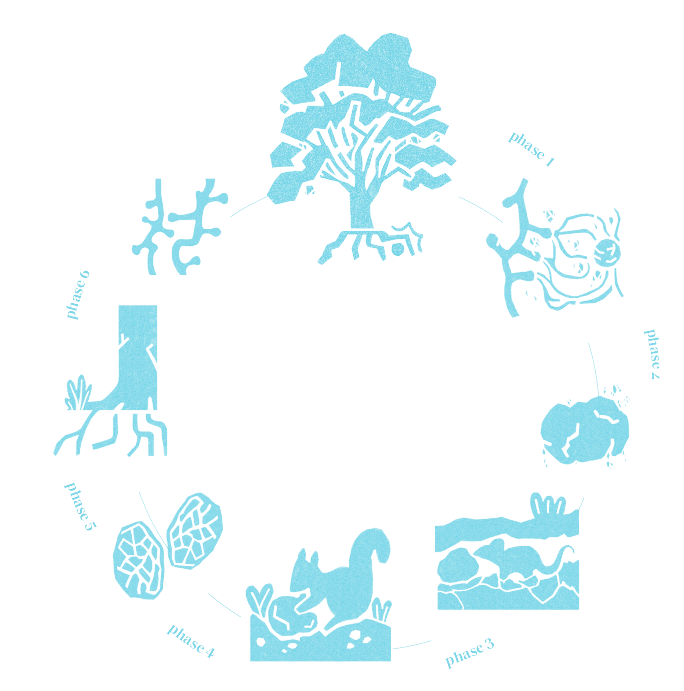
The Truffle Growth Cycle
- Phase 1: Exchange of substances between the roots of the host plant and the truffle, formation of mycorrhizae
- Phase 2: Hyphae give rise to the fruiting body
- Phase 3: Spores are spread through mammals and insects that feed on underground fungi
- Phase 4: The spores are dispersed by winds
- Phase 5: Exchange of substances between spores and roots
- Phase 6: Formation of the mycorrhizae (formed by the union of the hyphae and the roots of the host plant)
Best Practices for Management and Protection of the Truffle Grounds
We must act responsibly towards the future, promote methods of cultivation that respect ecosystems, experiment with small, complementary supply chains and take into consideration the health and beauty of the crops. We must plant trees to combat climate change, reduce CO2 emissions and fight global warming. This is an excellent proposal, supported, among others, by the Laudato Si Community, which cites the Encyclical of Pope Francis (2015).
Among these trees, we would like to see many of the truffle’s symbionts. But we shouldn’t forget that there are unmanaged woodlands; where sheep used to graze, where timber used to be harvested every so often… There are dead trees, wild climbers and bushes, impenetrable undergrowth, landslides. And after they are planted, the trees must be tended with care, they have to be truly “adopted” (and protected from the excessive number of ungulates: roe deer and wild boar).
To benefit Piedmont’s truffles, it is more important to save a plant from being cut down, to plant a tree, to guarantee quality at the fairs, receive the judges’ plaudits and be highlighted on restaurant menus than to be the subject of myriad discussions and backyard disputes about where the best Piedmont truffles can be found, whether they all come from within the region and what their designation ought to be.
In Piedmont, we are trying to follow several paths.
- In order to protect the existing symbionts, landowners are compensated annually by the Piedmont Regional Authority for not cutting them down, using funds collected from truffle hunters for the identification card that authorizes them to gather truffles.
- Some municipalities try, by way of orders or resolutions, to obligate landowners to notify officials of their intention to fell trees of species that harbor truffles. Their aim is to start a proactive dialogue, to persuade the landowner to accept the incentive or to plant another species that is also a symbiont of truffles, in order to protect an asset that has value for the entire community.
- Some municipalities plant trees that could harbor truffles in city parks, or have taken action to maintain them and plant new ones on public land.
- Individual truffle hunters, or their associations, plant and raise new plants on their land, owned or leased or conceded temporarily in bailment, or they recover existing truffle grounds that have declined in production, removing dead wood, controlling weeds, pruning bushes and clearing or creating a web of waterways.
- Associations of various nature work alongside the Centro Studi Tartufo to plant new truffle symbionts.
- La Regione Piemonte nell’ambito del programma regionale di Sviluppo Rurale finanzia attraverso appositi bandi interventi per nuove tartufaie di tartufo bianco e nero con piante micorrizate e interventi a tutela della biodiversità (filari arborei, boschetti) che includono le piante tartufigene in aree vocate.
In Piedmont, many people, associations and official bodies have done much to promote truffles.
In recent years, the truffle hunting community has become aware that collective actions are needed if we are to protect an asset that benefits everyone.
Several truffle hunter associations have arisen, aiming both to spur the municipalities and the Region to act directly, by promoting the planting of new trees and carrying out of best practices for maintaining the truffle grounds. There have even been some timid attempts to open a dialogue with the landowners. Truffles have done much to enhance Piedmont’s reputation in the world, including its cuisine, its local products and its wines. The time has come for Piedmont to protect and manage its natural habitats in the best way possible, so that we can continue to harvest the precious underground fungi by maintaining the biodiversity and increasing the number of symbiont trees.
The Regional Authority, with the support of the Truffle Council, needs to develop a multi-year plan that favors interventions aimed at the proper management of natural truffle grounds, also through a special measure in the future Rural Development Plan, and supports research and training in the truffle sector in general.
The Consorzio Alta Langa and Truffles
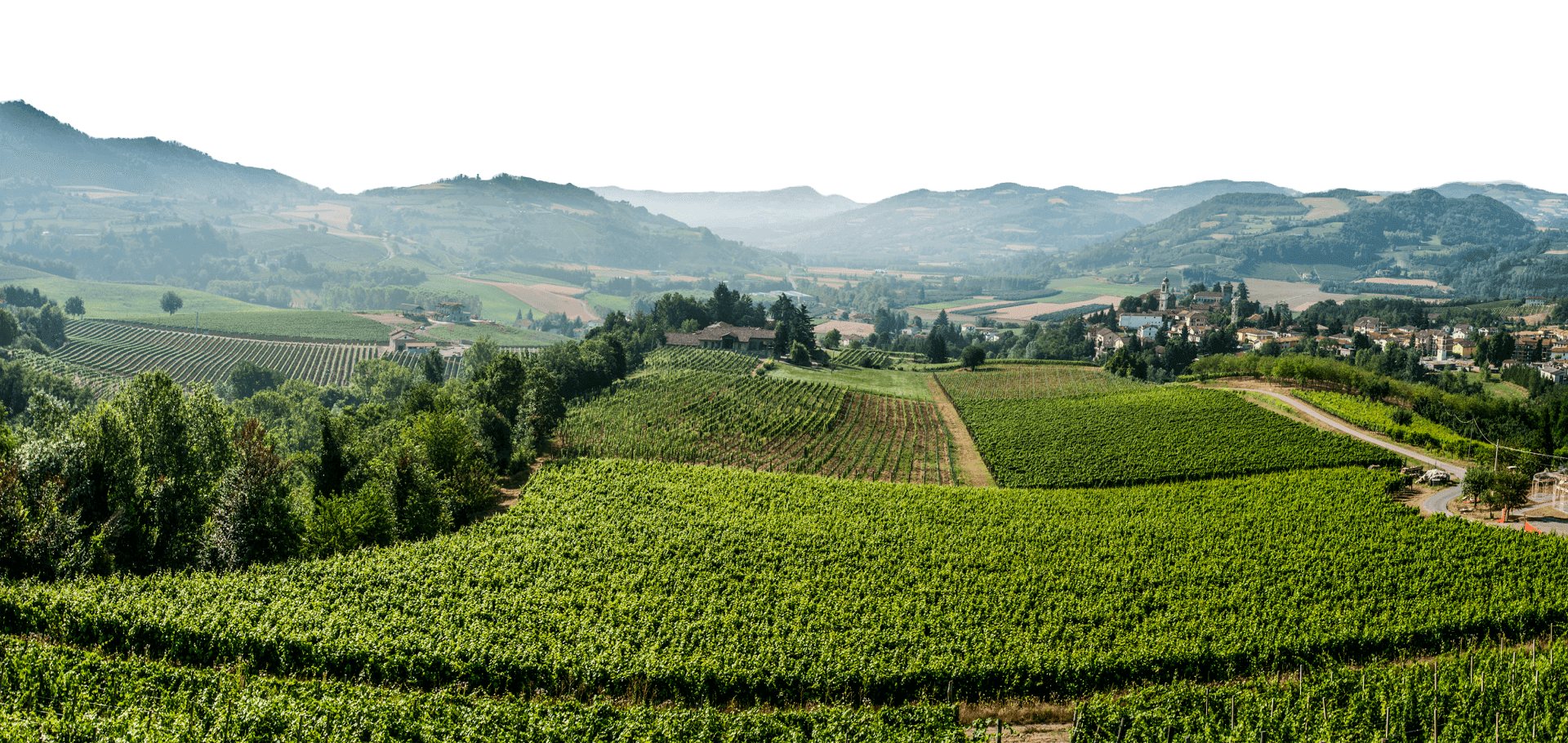
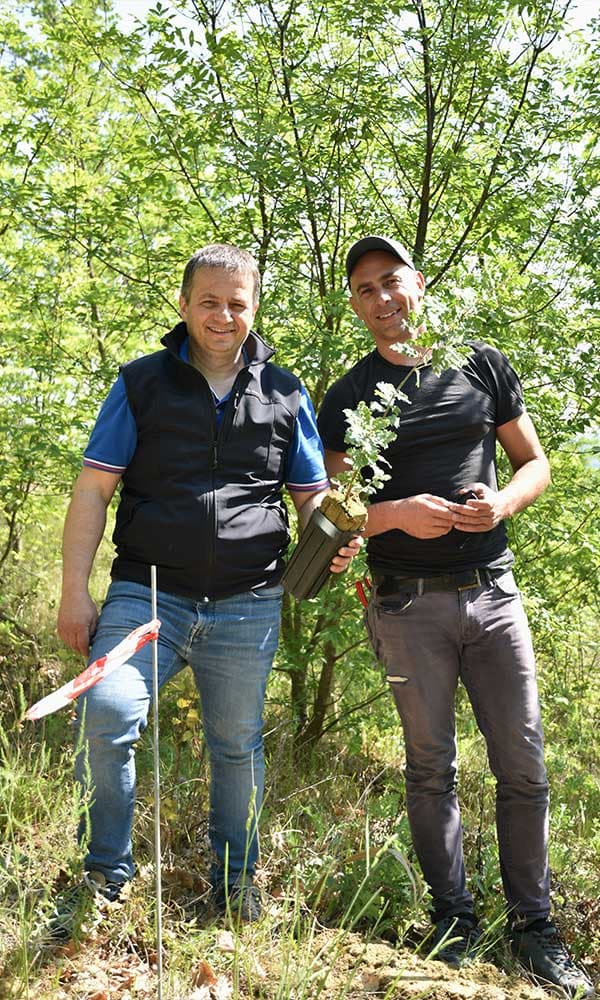
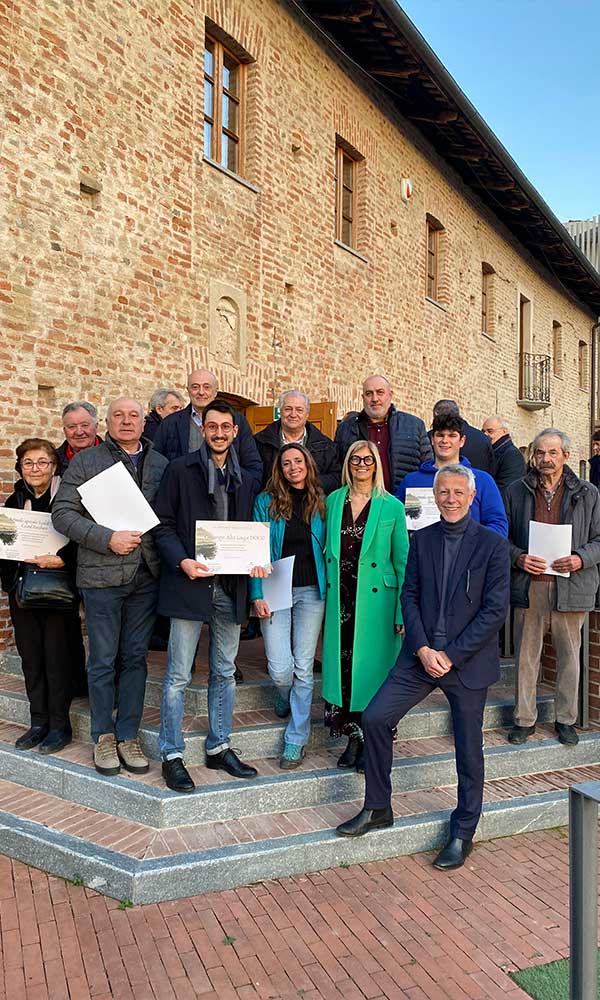
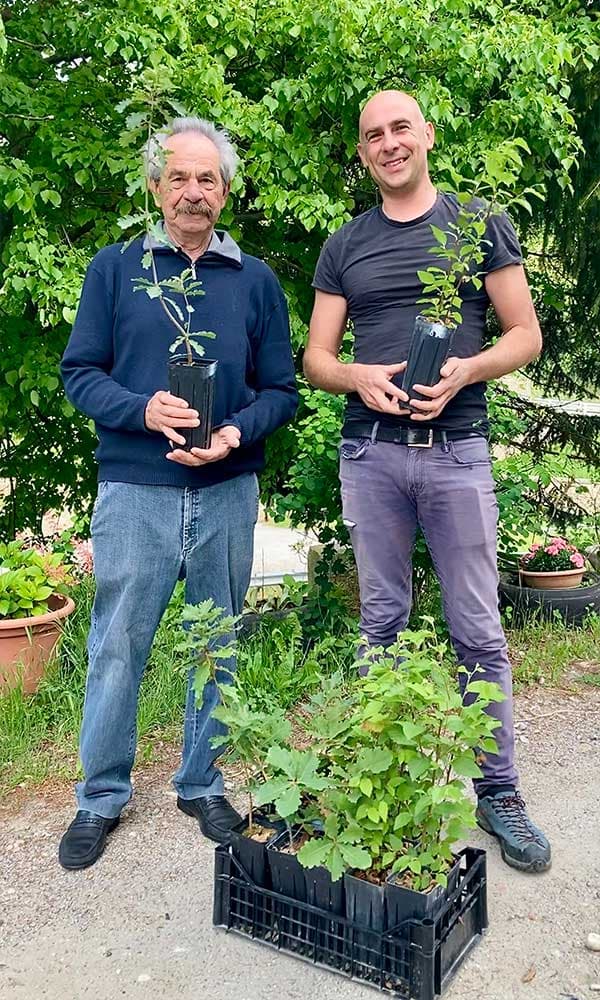
There is currently a project underway to persuade the vineyard owners who are members of the consortium to dedicate a portion of their land to trees that are symbionts of the truffle. These can be planted and tended directly by the vineyard owners, or agreements can be stipulated with truffle hunter associations, who will look after them. Concrete actions have already begun, involving 10 vineyard owners and the planting of 150 saplings.
It would be nice if, in a few years, we were able to write: «We have invested in the future, we have had the patience to wait. The new trees have made our hills even lovelier, the truffles greet visitors with their aroma and travel to the four corners of the world, together with Alta Langa wines».
As the old saying goes:
If you dream by yourself, it’s just a dream. If we dream together, it is the start of something real.
As those who kicked off and carried forward the Alta Langa spumante project know well.
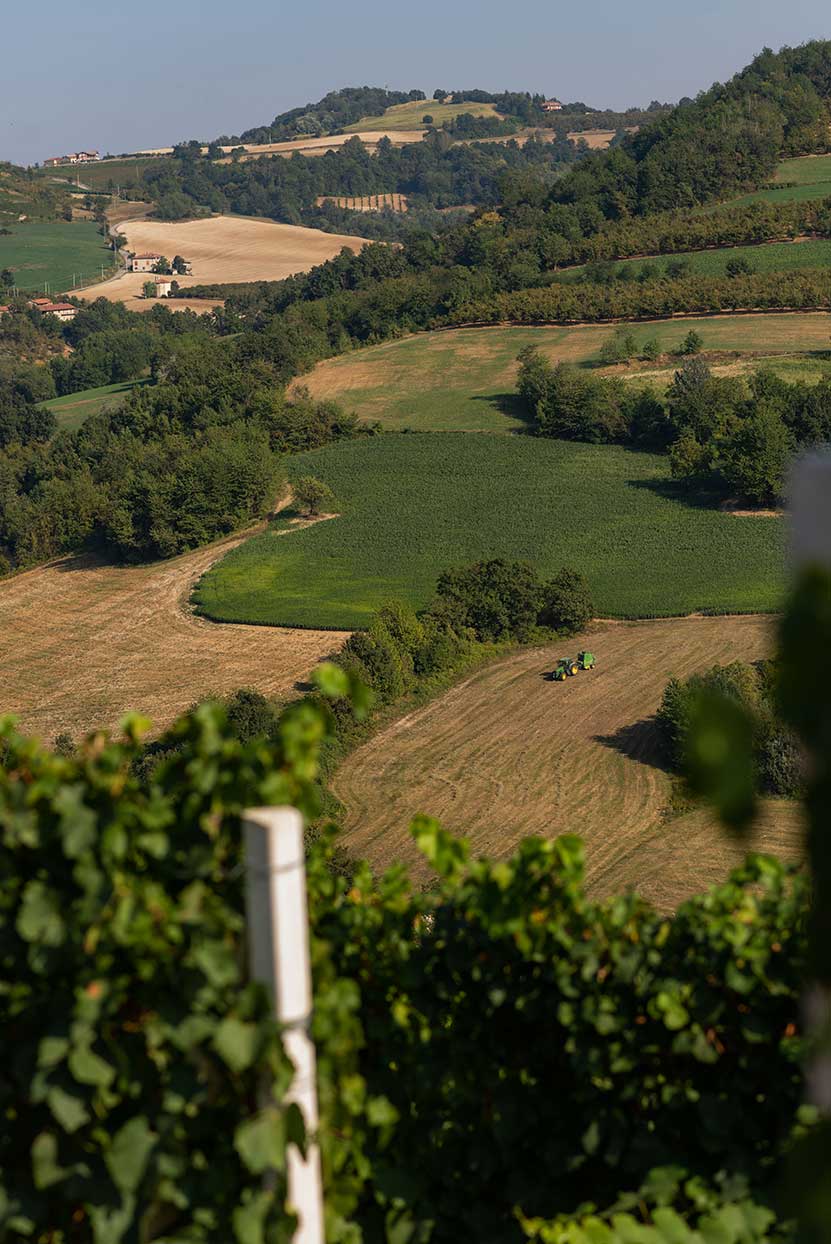
A Jaunt through the Lands of Alta Langa
Next page: