

intro
The Terroir and the Method
The Wines: Tasting, Serving and Matching

The Wines: Tasting, Serving and Matching

01Intro
02The method
Analysis of the Wines’ Sensory Profiles
Analysis of the Wines’ Sensory Profiles
From an essay byArmando Castagno
Introduction
This methodology permitted us to carry out an accurate sensory study of the profiles of 72 wines designated as “Alta Langa”. Instead of the standard protocols applied to this kind of analyses, we preferred a more relaxed and informal approach, stretched out over time, including verifications like repeating the tasting of the same sample in subsequent tastings or sampling of “pirated” versions – wines of the same category, but of different designations of origin, both Italian and French.
Fourteen tasting sessions were held over a period of nearly five months, lasting at least three hours each and with a ceiling of 24 wines per session.
The notes and comments of the various tasters were collected at the end of each session and processed later. Any limit on the length of the descriptions of the samples tasted was excluded, and there were no numerical evaluations for any characteristic of the wines.
Once the data had been collected – a total of ca. 520 descriptive reviews – they were coupled with the fact sheets of the 72 wines – containing data on location, altitude, exposure, geological matrices of the vineyards, composition and production protocols, then carefully filed according to their content.
The olfactory descriptors were collected in a specific list, with almost 1,600 entries; the same was done with the adjectives used to describe the wines’ taste (ample, fresh, pungent, creamy, sapid, persistent, etc.) and those used to delineate the general character (elegant, sober, expressive, coherent, pleasant, and so on).
The data collected on colour were not processed.
The nose of Alta Langa wines
The very high occurrence of descriptors from the mineral group in the tasting notes can be accounted for in several ways:
- The grapes may come from rather cold terroirs, and have been grown on meagre and scarcely fertile soils, which deprive the wine of some of its fruit flavours;
- The aromatic transparency of Metodo Classico wines – usually not marked by layered extraction, thick tannins and alcoholic warmth – allows the wine’s salinity to get across;
- The sustained acidity of Alta Langa wines enhances the sapid components;
- The presence of odours associated with sulfiting.
The prevalence of fruity notes is higher than that of other aroma groups.
In the aromatic profiles of Alta Langa, fragrance also plays a role in the bouquet, owing to the yeasts’ activity, as well as floral, vegetal and herbaceous hints. All the other notes lag far behind.
Fruit Descriptors
Present with at least one term in 83.8% of the reviews analysed, the descriptors related to fruit summarise the wine’s general character very clearly.
The most commonly mentioned descriptor in the fruit category for Alta Langa wines is apple (fairly often with specific types, like green, pippin or golden). Citrus in general comes in a close second and, at some distance, references to a specific fruit (peach, plum, pineapple, pear, gooseberry, medlar, lemon, kumquat, lychee and mango).
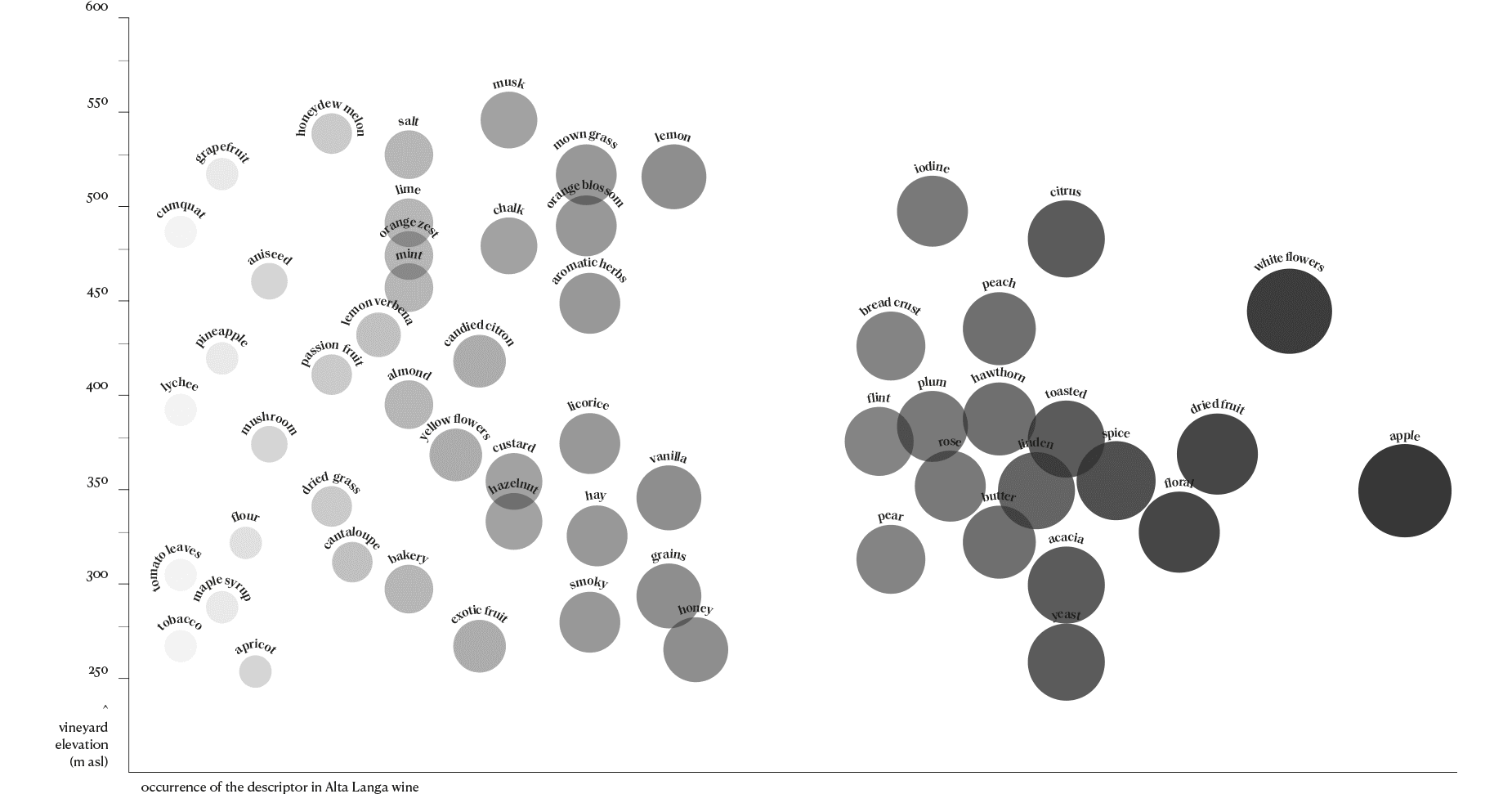
It is interesting to note that the descriptor ‘apple’ is applied to wines whose vineyards lie below 360 meters in altitude (88%), which may be accounted for by higher sugar content and, in general, less acidity.
Fruit descriptors are used significantly more often when there are more Pinot nero grapes in the blend (over 30%).
Conversely, the terms associated with citrus fruit in general, or specifically to citron, lemon and tangerine and the like, are strictly linked to vineyards at higher altitudes: almost seven out of ten appear in tasting reviews of Alta Langa wines made from grapes grown at altitudes higher than 340 meters.
There are years, like 2016 and 2014, when the citrus notes appear more frequently than in others. The presence of these descriptors is associated with the wines’ acidity, usually the result of greater altitude or irregular climatic conditions.
Alta Langa wines with a proportion of Chardonnay ranging from 80% to 100% accounted for 64.6% of the total samples in which a citrus note was sensed.
The link between fruit descriptors and geological context is another essential and fundamental element of the terroir. In sandy and arenaceous soils, Alta Langa wine is often more textured and has a tighter structure, even at extreme altitudes. The wine’s fruity aroma was described using terms like apple, peach and pear, candied citron or nectarine, underscoring the presence of both an acidic and a sweet component. Instead, for wines from prevalently calcareous soils – calcareous marl, white clays and carbonate rocks – there was a greater frequency of descriptors related to citrus fruit.
Mineral Descriptors
By the term “mineral”, we mean a series of olfactory sensations emitted by inorganic sources: flint, gypsum, algae, talc, rock salt, naphtha, limestone, kerosene, iodine, sea salt, hydrocarbons, etc.
The most frequently reported in Alta Langa wines were those with a “light tone”: from chalk to iodine to the various declinations of salt (smoked, grey, iodised, sea salt, etc.).
Flint was present with some frequency, more so when the base wine was aged in wooden containers.
There is no correlation between the “mineral” notes and the principal elements of the terroir.
Instead, if one considers the climatic conditions over the season, one finds that in years that are relatively low in sunlight, colder and with greater day-night temperature differences during the summer months, the mineral notes become darker (iron). In warmer years with more sunlight, the “light” mineral notes prevail, like iodine, sea salt, talc and chalk.
Finally, insofar as the link between these notes and the grape varietal utilised, there was no significant difference between Chardonnay and Pinot nero.
Floral Descriptors
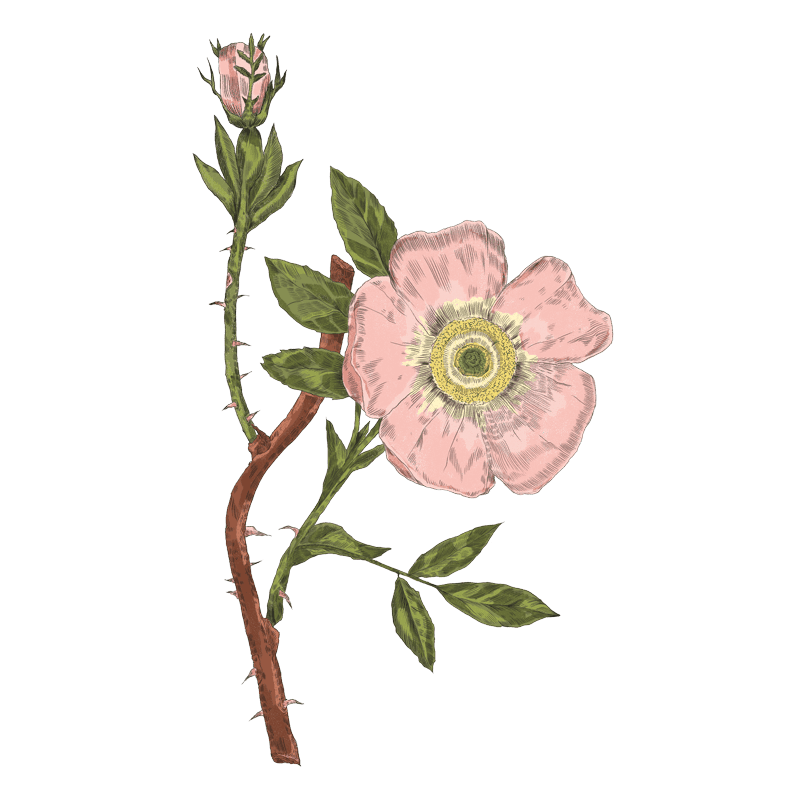
Over 55% of the reviews included at least one descriptor associated with flowers, sometimes with specific nuances (wilted roses, dog rose, yellow jasmine), sometimes precise and taxonomic (hawthorn, linden, wisteria, peony, acacia, orange blossom, etc.) and sometimes more generic (yellow flowers, white flowers, wildflowers, or even just ‘floral’).
The term most frequently reported by far – white flowers – was used above all to describe Alta Langa wines made with a greater proportion of Chardonnay (at least 70%).
Alta Langa wines (other than rosés) with a greater proportion of Pinot nero (>70%) are described with specific flower names: linden, yellow flowers, wisteria, yellow jasmine, dandelion, and also lavender and iris. Of the above, the most frequently cited was linden.
Orange blossom was a constant descriptor for wines from vineyards at high altitudes (over 520 meters asl).
Regarding the relationship between floral aromas and geological matrix, there was a tendency to report white flowers for Alta Langa wines coming from vineyards planted on calcareous marls, and yellow flowers for vineyards planted on sandy or arenaceous soils and stratified formations.
Fragrance Descriptors
The generic descriptor ‘yeast’ was associated with just 5% of the samples tested. It was followed, in diminishing order, by the classic descriptors: bread crust and smell of fresh bread, pastry, toasted bread, brioche and shortbread. The last two were only mentioned in association with Alta Langa whose base wine had been aged in oak.

Spice Descriptors
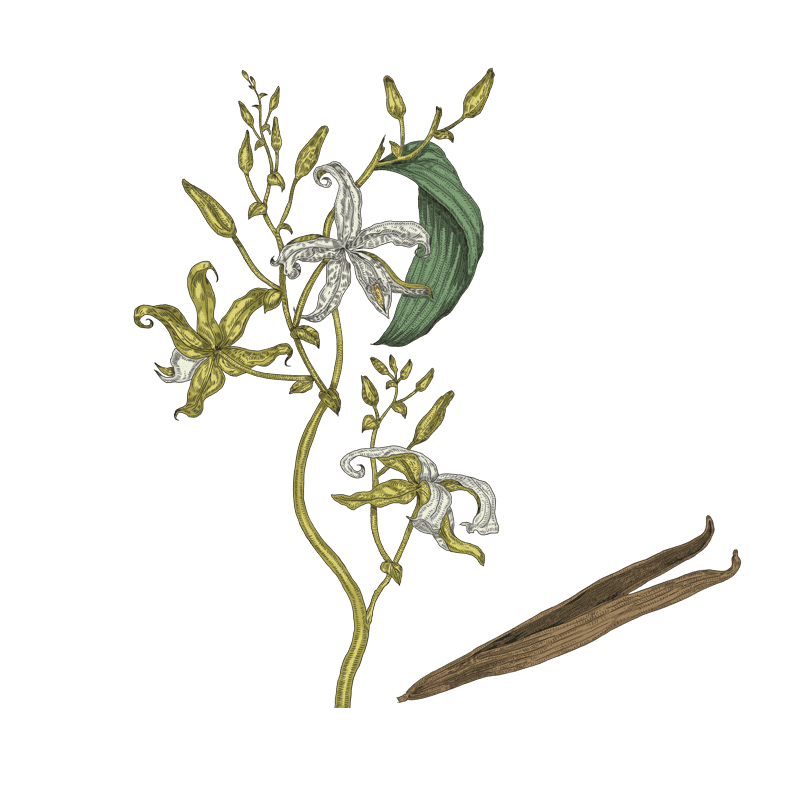
Ageing base wine in wooden containers accounts for the many mentions of spiced aromas in the final product. Apart from the commonly used general descriptor – spices, without any further specification – the aroma most frequently reported for wines aged in wood was vanilla (20%).
Cinnamon was also often mentioned in the tastings, as well as boisé (oaky), with equal frequency.
Other spices mentioned, in order of frequency, were: pepper (more often white pepper), coriander, aniseed, ginger, cumin and saffron. White pepper was far and away the most frequently reported spice descriptor for Alta Langa wines that had not “touched” wood in any of the production stages.
Plant and Herbal Descriptors
Apart from the aromas described above, the quality of the profile is also augmented by the presence of fresh scents of herbs and plants.
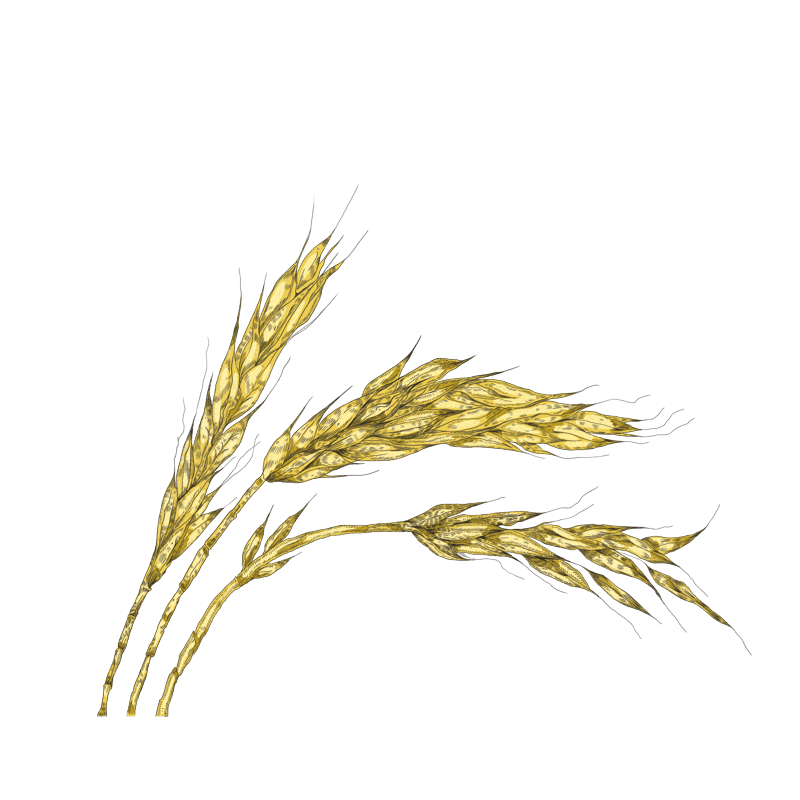
For Alta Langa wines, the descriptor used most often is grain, in general, and much less frequently, specific types of grain (barley, malt, wheat and rice flour).
Alongside these we have some other derivatives, i.e. those associated with fermentation: the generic dried plants and the more specific hay, straw, sorghum and tobacco.
Grasses appear with the generic term (grass, mown grass, sorrel or lemon verbena, fern, horseradish, glasswort and seaweed) or with descriptors from the subfamily of aromatic herbs (thyme, mint, sage). A final word for the term moss, reserved for Alta Langa wines from high altitude vineyards: above 450 meters asl.
Other Descriptors
Dried fruit aromas were often reported by tasters of Alta Langa wines (hazelnut and almond, walnut husk, peanut butter and walnut oil).
Other descriptors mentioned that cannot be easily classifiable in any of the above categories accounted for less than 2% of the total responses.
Toasted, balsamic and smoky are descriptors associated with ageing the base wine in wood, at least in part (100% of cases for smoky, 66% for toasted and 50% for balsamic).
Graph showing increasing frequency of descriptors for Alta Langa wines
Alta Langa Rosé
We collected data from 38 sheets resulting from repeated and cross-tastings of 14 wines, which contained an exceptional and surprising variety of sensorial perceptions.
Diverging hypotheses and dissimilar profiles, some more “winy”, others more technical and precise, made this part of the study more fragmented and complex.
In the end, the descriptors most often used refer to the fruity category, which appears in 84% of the cases
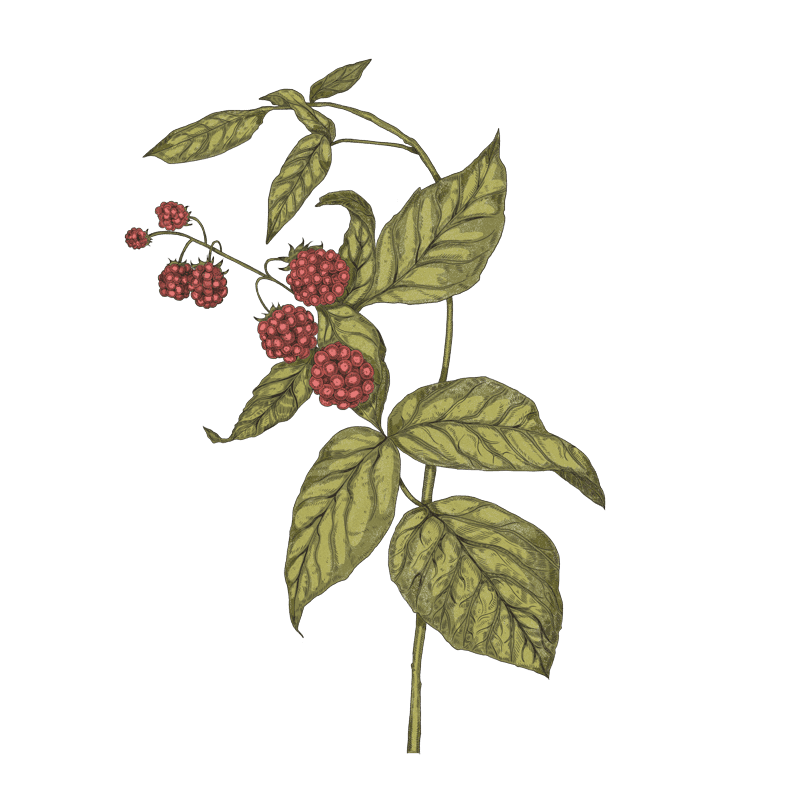
The terms most often used were berries (generically, in 13% of the sheets), followed by raspberry, peach, cherry, blood orange, red currants, wild strawberries, pomegranate, banana, red apple, melon, watermelon, mandarin orange and even blueberry juice, kiwi and mulberry.
The floral category was also well represented, with notes of rose, violet, peony and hibiscus, as well as freesia, acacia, orange blossom, peach blossom and the usual generic white flowers.
At some distance, present in 5% to 12% of the reports, were the various mineral groups (chalk, iodine, sea salt, hydrocarbons, silica, rust, gunpowder) and the plant/herb category (grass, sage, mint, eucalyptus, pine resin, juniper, camphor).
Spice descriptors were few and far between.
The Characteristics of Alta Langa Wines
So far, the study has identified some distinctive characteristics of Alta Langa DOCG. The study findings depict a wine of high quality on average and considerable complexity. Despite its provenance – different locations within an ample production area – the wine showed a common character, some qualifying traits of significant frequency and a deliberately pursued and achieved evenness of outcome, at least from a stylistic standpoint.
The characteristic that seemed most typical to us is the wine’s balance between palate and nose. Alongside its notable “hard” qualities, such as its sharp acidity and its savory mineral-driven taste, Alta Langa wine often brings a softer tone, a subtle gradation of nuances and an undeniable touch of class.
All these elements not only compose the aromatic profile defined by the aromas, but also and above all call into play the vigorous dynamics of the taste, excelling in firmness and liveliness at least as much as in refinement and elegance of texture.
At the tastings, “Alta Langa Rosé” was represented by a series of very enjoyable wines with a serious side, in which the delicacy of the fruit and floral bouquet is combined with solid taste profiles, marked by a distinct background salinity that provides a virtuous balance.
The decision to choose a production rulebook for all types based on compulsory vintage indication testifies to the high esteem held for the potential of the vineyards of Alta Langa, considered able to yield, year after year, grapes that will become balanced and assertive wines.
Our analysis confirmed that this faith is well-placed. Over time and with the consequent maturation of the vineyards, which are still moderately young, as well as the growing awareness on the part of the local communities, the specificities of the varietals and the synergies between grapevines and the local area and with the new generation of producers, the situation, already favourable to start with, can improve considerably. Compared to other Italian and European bottle-fermented method wines, then, Alta Langa holds a strong hand and can reasonably expect exciting further margins of improvement.
How to Best Appreciate a Bottle of Alta Langa docg
Next page: